Best Supplements for PMS Sugar Cravings: A Root-Cause, Safety-First Guide
If you find yourself hunting for chocolate 3 to 10 days before your period — even though you eat well the rest of the month — you are not weak-willed. You are experiencing a predictable hormonal shift. The best supplements for PMS sugar cravings target the actual biology behind those cravings: magnesium (200–400 mg of a well-absorbed form like glycinate), vitamin B6 (50–100 mg, staying under the 100 mg/day safety ceiling), and chromium (200 mcg daily), ideally started in the luteal phase and given 2 to 3 full cycles to show their effect.
Here's the short version before we go deep: your premenstrual sugar cravings are driven by falling estrogen and progesterone, a dip in serotonin, and less stable blood sugar — not a lack of discipline. The supplements below work by supporting serotonin production, stabilizing blood glucose, and easing the neuromuscular and mood symptoms that make you reach for sweets. Below you'll get exact doses, forms, timing, realistic timelines, birth-control interactions, and a food-first plan so you can start fixing this this cycle.
Why You Crave Sugar Before Your Period (It's Hormonal, Not Willpower)
The two-week stretch between ovulation and your period is called the luteal phase. During it, your body goes through several changes that quietly push you toward sugar:
- Estrogen and progesterone drop. After ovulation, both hormones rise and then fall sharply in the days before bleeding. Estrogen normally helps keep serotonin — your "feel-good" and satiety neurotransmitter — steady. When estrogen falls, serotonin tends to fall with it.
- Serotonin dips, and carbs are the fastest fix. Your brain knows that carbohydrate intake triggers a short-term serotonin boost. So when serotonin sags, your body sends up a very specific craving flare: sugar, chocolate, bread, anything sweet.
- Your metabolic rate rises. In the luteal phase, resting energy expenditure can increase by roughly 100–300 calories a day. You are genuinely hungrier.
- Blood sugar becomes less stable. Progesterone can slightly reduce insulin sensitivity, so blood glucose swings more, and each dip triggers another craving.
- Cortisol and sleep shifts in the late luteal phase make cravings and impulsivity worse.
The takeaway: your premenstrual sweet tooth is a coordinated biological signal, not a personal failing. That's exactly why "just eat less sugar" advice fails — it treats a hormone problem like a motivation problem. The right approach supports the underlying chemistry so the craving signal never gets so loud in the first place.
The Serotonin–Blood Sugar Connection in the Luteal Phase
Two systems drive premenstrual sugar cravings, and understanding both explains why certain supplements work.
1. The serotonin pathway. Serotonin is made from the amino acid tryptophan. Eating carbohydrates raises insulin, which helps tryptophan cross into the brain, where it's converted to serotonin. So when your luteal-phase serotonin is low, sugar is a rapid — but short-lived — self-medication. Nutrients that support serotonin production (vitamin B6 is a required cofactor) can reduce the intensity of that pull.
2. The blood-sugar rollercoaster. When you give in to a sugar craving, you spike blood glucose, insulin surges, glucose crashes, and 60–90 minutes later you crave sugar again. Add reduced insulin sensitivity from progesterone, and you get a loop that feels impossible to break with willpower alone. Nutrients that stabilize glucose (chromium, magnesium) and pairing sugar-triggering carbs with protein and fiber flatten those swings.
The best supplement strategy hits both levers: support serotonin and steady blood sugar. That combination is why the shortlist below is short — a few well-chosen nutrients cover most of the mechanism.
Best Supplements for PMS Sugar Cravings: Quick Comparison Table
| Supplement | Primary job for cravings | Typical evidence-based dose | Best form | When to take | Time to notice |
|---|---|---|---|---|---|
| Magnesium | Eases PMS mood, water retention, and craving intensity; supports blood-sugar handling | 200–400 mg elemental/day | Glycinate or citrate (avoid oxide for absorption) | Evening; luteal phase or all month | 1–3 cycles |
| Vitamin B6 | Cofactor for serotonin synthesis; classic PMS symptom relief | 50–100 mg/day (do not exceed 100 mg) | P5P (active) or pyridoxine HCl | With food, morning | 1–3 cycles |
| Chromium | Blunts carbohydrate cravings and steadies blood glucose | 200 mcg/day (up to 600 mcg in studies) | Picolinate | With a meal | 4–12 weeks |
| Calcium | Reduces overall PMS symptom load including cravings | 1,000–1,200 mg/day (diet + supplement) | Citrate | Split doses with food | 2–3 cycles |
| Vitamin D | Supports mood and calcium function; low D worsens PMS | 1,000–2,000 IU/day (test first) | D3 | With a fatty meal | 8–12 weeks |
| Gymnema sylvestre | Temporarily blunts sweet taste, reducing sugar intake | 200–400 mg standardized extract | Standardized to gymnemic acids | Right before a craving/sweet | Immediate (taste) |
Use this as your map. The next sections explain how to use each one safely.
Magnesium: The Top Pick for Cravings and PMS Mood
If you only add one supplement, make it magnesium. It's the most consistently useful nutrient across the whole PMS picture — mood swings, irritability, water retention, cramps, and yes, cravings. Many women in the 18–30 range are running low to begin with, and magnesium is involved in over 300 enzyme reactions, including how your body uses glucose and produces serotonin.
Why magnesium helps with cravings specifically:
- It supports insulin sensitivity and glucose metabolism, smoothing the blood-sugar swings that trigger repeat cravings.
- It calms the nervous system, reducing the stress-and-irritability spiral that makes you reach for chocolate.
- Chocolate cravings themselves are sometimes a rough signal of low magnesium — cocoa is magnesium-rich — so addressing the deficiency can quiet that particular craving.
How Much Magnesium to Take and Which Form
Dose: 200–400 mg of elemental magnesium per day. Start at 200 mg to check tolerance and build up.
Form matters more than most articles admit:
- Magnesium glycinate — best for PMS. Well absorbed, gentle on the stomach, and the glycine has a mild calming effect that helps sleep and mood. This is the top pick.
- Magnesium citrate — well absorbed and affordable, but can loosen stools at higher doses (useful if you also get premenstrual constipation).
- Magnesium malate or taurate — good alternatives; taurate is often favored for mood.
- Magnesium oxide — cheap and common, but poorly absorbed. Skip it if cravings and mood are your goal.
Timing: Take it in the evening — it aids sleep and you avoid daytime drowsiness. You can take it all month or focus on the luteal phase (see the cycle-syncing section). Taking it with food reduces any stomach upset.
Note on birth control: Hormonal contraceptives can lower magnesium status, so if you're on the pill, you may benefit more from consistent supplementation.
Magnesium, B6, and chromium work best as a coordinated stack timed to your cycle — which is exactly the kind of targeted, luteal-phase support "Sweet" from Feme is designed to make simple instead of a shelf full of separate bottles.
Vitamin B6: Serotonin Support (and the Safety Limit You Must Know)
Vitamin B6 (pyridoxine) is a required cofactor in the conversion of tryptophan into serotonin. Since low luteal-phase serotonin is a big driver of the carb-and-sugar craving, giving your body the raw material to make serotonin more efficiently can take the edge off. B6 has a long track record for general PMS symptoms — mood, irritability, and cravings included — which is why it appears in most premenstrual formulas.
Dose: 50–100 mg per day. Many studies use around 50 mg, and there's rarely a reason to go above 100 mg for PMS.
Form: Either pyridoxine HCl (standard, effective) or P5P (pyridoxal-5-phosphate), the already-active form some people prefer.
Timing: With breakfast. B6 is water-soluble and easy on the stomach.
Birth control note: This one is important for you. Hormonal contraceptives can deplete vitamin B6, which may partly explain low mood or cravings in some women on the pill. That makes moderate B6 supplementation particularly relevant for this audience — but it also makes the safety ceiling non-negotiable.
The B6 Neuropathy Risk and Upper Limit
Here's the safety fact almost no craving article mentions clearly: too much B6 is harmful. Chronically high doses of vitamin B6 can cause sensory peripheral neuropathy — tingling, numbness, or nerve pain in the hands and feet. It's usually reversible when you stop, but not always if intake was very high for a long time.
Rules to follow:
- Keep total B6 at or below 100 mg per day from all sources (standalone pills + your multivitamin + any PMS complex — read every label).
- Neuropathy risk climbs sharply at daily doses in the hundreds of milligrams sustained over months. You have no reason to be near that range.
- If you notice tingling or numbness in your hands or feet, stop and see a doctor.
- B-complex products and "hormone balance" blends often stack B6 on top of your other pills — check the math so you don't accidentally double up.
Used within 50–100 mg/day, B6 is safe and useful. The problem is only megadosing — so respect the ceiling and you get the benefit without the risk.
Chromium: The Carbohydrate-Craving Specialist
If magnesium is the all-rounder and B6 is the serotonin helper, chromium is the targeted carb-craving tool. Chromium is a trace mineral that enhances the action of insulin, helping your cells take up glucose more efficiently and keeping blood sugar steadier — which directly reduces the crash-and-crave loop.
Chromium picolinate shows modest but real appetite and carbohydrate-craving reductions in multiple human trials [2]. It's been studied specifically in people with strong carb cravings and atypical depression (which features carb craving), where it reduced the urge to overeat sweets and starches.
Dose: 200 mcg per day is a sensible, well-tolerated starting point. Some studies use up to 600 mcg for stronger carb cravings, but start low.
Form: Chromium picolinate is the most-studied form for cravings.
Timing: With a meal, ideally one containing carbohydrates, to support glucose handling around that meal.
Cautions and interactions:
- If you take medication for blood sugar or insulin (or have diabetes), talk to your doctor first — chromium can enhance those effects.
- It may interact with thyroid medication absorption, so separate them by several hours.
- Chromium is best thought of as a support for a food-first plan, not a standalone fix.
Chromium's job is to quiet the specific "I need something sweet right now" carbohydrate signal — the exact premenstrual symptom you're trying to solve. If you want that carb-craving support paired with magnesium and B6 without assembling three products yourself, "Sweet" is built around this luteal-phase need.
Calcium, Vitamin D, and Other Supporting Nutrients
These aren't front-line craving fighters, but they reduce your overall PMS burden — and lower symptom load means fewer craving flares.
- Calcium (1,000–1,200 mg/day, diet + supplement). Among the best-studied nutrients for PMS as a whole. Calcium metabolism shifts across the cycle, and adequate intake is linked with fewer premenstrual mood and appetite symptoms. Use calcium citrate, split into doses (your body absorbs ~500 mg at a time better than one big dose), with food.
- Vitamin D3 (1,000–2,000 IU/day). Works hand-in-hand with calcium and supports mood. Low vitamin D is common and associated with worse PMS. Ideally, test your level and dose accordingly; take with a fatty meal for absorption.
- Omega-3 fatty acids (EPA/DHA, ~1,000 mg/day). Help with PMS mood and inflammation, which indirectly supports steadier eating.
- Zinc and B-complex round things out, but avoid stacking extra B6 beyond your ceiling.
Gymnema Sylvestre and Other Craving-Blunters
Gymnema sylvestre is a fascinating short-term tool. Its active compounds temporarily bind to the sweet-taste receptors on your tongue, so sugar literally tastes bland for a while afterward. In small human trials, gymnema produces immediate taste-blunting effects that reduce short-term sugar intake [1]. Practically, this means if you take it right before a craving hits — or before a dessert you're trying to skip — the sweet reward is muted, making it far easier to stop at a bite or two.
- Dose: 200–400 mg of a standardized extract (standardized to gymnemic acids).
- Timing: Right before a sweet temptation or an anticipated craving window.
- Best used as: An in-the-moment tactic, layered on top of the daily foundation (magnesium, B6, chromium), not a replacement for it.
Other options you'll see marketed — berberine, cinnamon, alpha-lipoic acid — mainly work by improving blood-sugar stability. They can help, but the evidence for premenstrual cravings specifically is thinner than for the core three.
Food-First: Beat Cravings Without (or Before) Pills
Supplements work best on top of a diet that isn't setting you up to crash. Frankly, some women fix most of their premenstrual cravings with food changes alone. Here's the food-first plan.
1. Eat magnesium-rich foods daily (especially in the luteal phase):
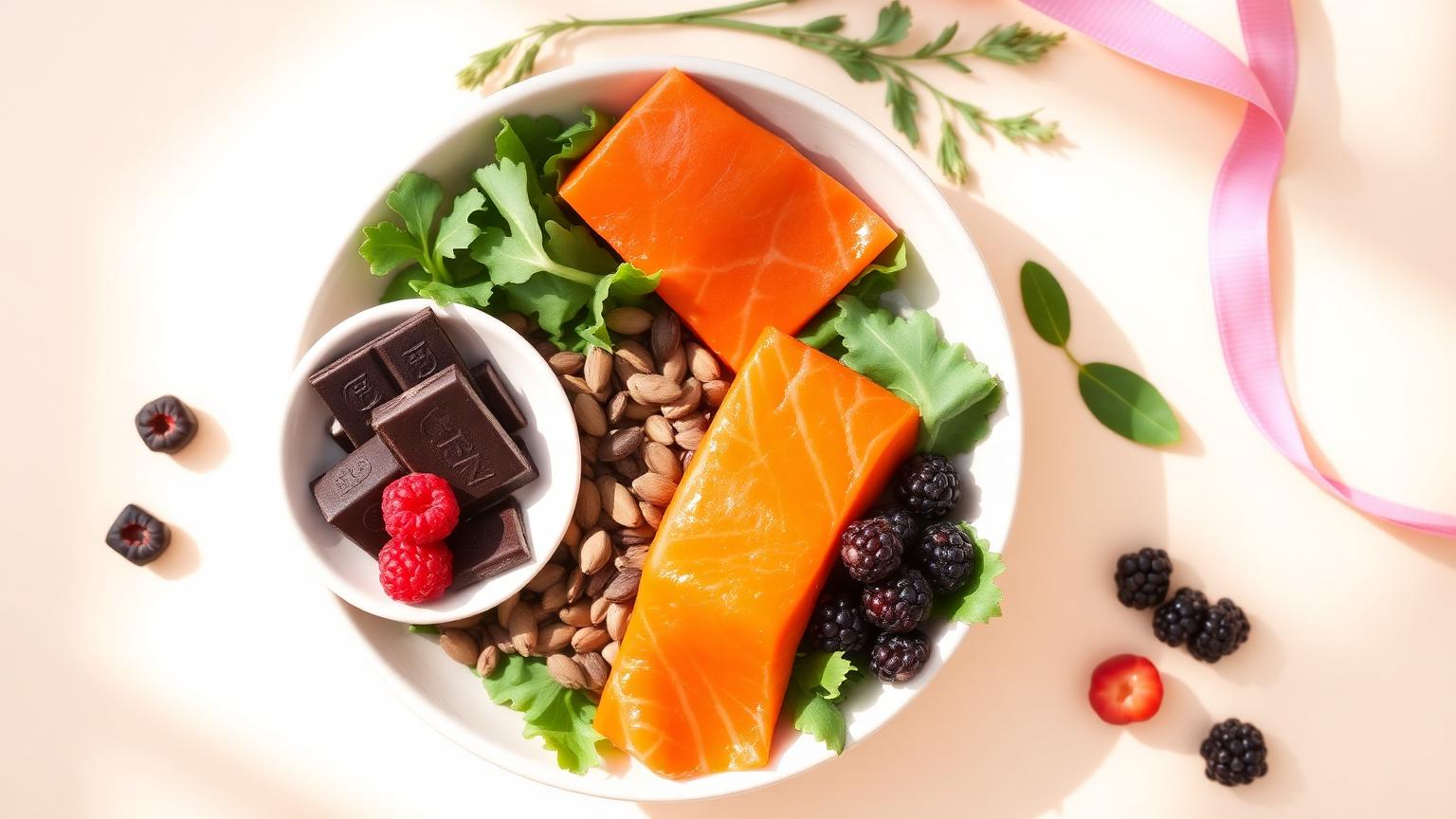
- Dark chocolate (70%+), pumpkin seeds, almonds, cashews
- Spinach, Swiss chard, black beans, edamame
- Avocado, banana, whole grains
2. Pair every carb with protein and/or fat. Never eat a sweet or starchy food naked. Pairing flattens the blood-sugar spike and the crash that follows.
- Apple + peanut butter
- Dark chocolate square + a handful of almonds
- Toast + eggs, not toast alone
3. Anchor each meal with protein and fiber. Aim for 20–30 g protein per meal. Protein and fiber slow digestion and keep glucose and appetite steady, which quiets cravings at the source.
4. Don't let yourself get ravenous. In the luteal phase your metabolism is genuinely higher. Under-eating during the day guarantees an evening sugar binge. Eat enough, especially at breakfast.
5. Choose smarter sweet swaps when a craving wins:
| Craving | Swap that satisfies without the crash |
|---|---|
| Chocolate | 1–2 squares 70%+ dark chocolate + nuts |
| Ice cream | Greek yogurt + berries + cocoa nibs |
| Candy | Fresh fruit + a few nuts or cheese |
| Baked goods | Oat-based snack with protein added |
| Soda | Sparkling water + fruit |
6. Steady your blood sugar with basics: consistent meal timing, enough sleep (poor sleep amplifies cravings), and managing stress, since cortisol worsens the sugar pull.
How to Cycle-Sync Your Supplements to the Luteal Phase
You don't have to take everything all month. Cycle-syncing means concentrating support during the window your symptoms actually appear — the luteal phase, roughly the two weeks after ovulation and before your period.
A simple approach for a ~28-day cycle (day 1 = first day of bleeding):
- Days 1–14 (menstrual + follicular): Foundation nutrients you take all month for baseline status — magnesium, and vitamin D/calcium if you use them.
- Around day 14 (ovulation): Your craving-prevention window begins soon. This is when to ramp up.
- Days 15–28 (luteal phase — your craving zone): Add or emphasize the targeted trio: magnesium, vitamin B6, and chromium. Keep gymnema on hand for in-the-moment sweet temptations.
Practical tips:
- Track your cycle with an app so you can predict your luteal phase and start 2–3 days before cravings usually hit — prevention beats rescue.
- Magnesium can be daily for simplicity; it's safe long-term and many women feel better keeping it constant.
- Keep B6 within the 100 mg/day ceiling whether you take it all month or just luteal.
- If your cycles are irregular (or you're on birth control with no true ovulation), taking the core nutrients consistently every day is the easier and equally valid route.
How Long Until Supplements Work? Setting Realistic Expectations
This is where most people quit too early. Supplements for PMS are not painkillers — they usually need 2 to 3 full cycles to show their real effect. You're correcting nutrient status and nudging hormone-related pathways, and that takes time.
Realistic timeline:
- Cycle 1: You may notice small changes — slightly less intense cravings, better sleep from magnesium, or milder mood swings. Don't judge success yet.
- Cycle 2: More noticeable reduction in craving intensity and frequency for many women.
- Cycle 3: The clearest picture. If something works for you, you'll usually know by now.
Exceptions:
- Gymnema works immediately on taste — but only in that moment, not as a long-term cure.
- Magnesium's calming and sleep benefits can appear within days.
How to run your own trial:
- Pick your core supplements and doses.
- Rate your cravings 0–10 each luteal phase in your cycle-tracking app.
- Change one thing at a time so you know what's working.
- Give it three cycles before deciding.
Consistency is everything — a bottle taken sporadically won't produce the nutrient status changes that reduce cravings.
Safety First: Birth Control Interactions and When to See a Doctor
Because most of this audience is on hormonal contraception and self-dosing, these details matter.
Birth control interactions to know:
- Vitamin B6: Hormonal contraceptives can lower B6 status. That makes moderate supplementation reasonable — but respect the 100 mg/day ceiling and count B6 from all products.
- Magnesium: The pill can reduce magnesium levels too, so supplementation is often more beneficial (not less) if you're on hormonal birth control.
- Chromium: No major issue with contraceptives, but caution with blood-sugar or thyroid medications — check with your doctor.
- Herbal "hormone balancers": Be cautious. Some herbs (e.g., certain formulations marketed for hormones) can theoretically interact with contraceptive effectiveness. Stick to the well-characterized nutrients above and clear anything herbal with a pharmacist.
General safety rules:
- Read every label and add up totals so you don't unknowingly megadose (especially B6 and magnesium across multiple products).
- Start one supplement at a time so you can spot side effects.
- Magnesium's most common side effect is loose stools — lower the dose or switch form (glycinate) if it happens.
See a doctor if you:
- Have cravings so severe or mood symptoms so intense (deep depression, hopelessness, rage) that they disrupt your life — this could be PMDD, which deserves real treatment.
- Notice tingling or numbness in hands or feet (possible B6 issue — stop and get evaluated).
- Have diabetes, thyroid disease, kidney disease, or take regular medication.
- Are pregnant or breastfeeding.
- See no improvement after 3 cycles of consistent, sensible supplementation.
A safe, specific, root-cause plan you can start this cycle is exactly the goal — and combining that plan with a purpose-built formula like "Sweet" takes the guesswork out of dosing the luteal-phase trio.
FAQ
Why do I crave sugar so badly before my period?
Because estrogen and progesterone drop in the luteal phase, dragging serotonin down with them, while your metabolic rate rises and insulin sensitivity dips. Your brain knows carbohydrates give a fast serotonin boost, so it sends a strong, specific craving for sugar and chocolate. It's biology, not weak willpower.
What is the best supplement to stop PMS sugar cravings?
There's no single magic pill, but the most useful core is magnesium (200–400 mg glycinate), vitamin B6 (50–100 mg), and chromium (200 mcg), ideally emphasized during the luteal phase. Magnesium is the top pick if you can only choose one, because it helps mood, blood sugar, and cravings together.
Does magnesium stop sugar cravings?
Magnesium can meaningfully reduce them. It supports glucose metabolism and calms the nervous system, and since chocolate is magnesium-rich, chocolate cravings sometimes signal low magnesium. Many women notice softer cravings and better mood within one to three cycles.
How much magnesium should I take for PMS?
200–400 mg of elemental magnesium per day. Start at 200 mg and increase if tolerated. Choose glycinate (best for mood and sleep) or citrate, and avoid oxide, which is poorly absorbed. Take it in the evening with food.
Does vitamin B6 help with PMS cravings?
Yes. B6 is a required cofactor for making serotonin, so it supports the pathway whose deficit drives premenstrual carb cravings, and it has a long history of easing PMS mood symptoms. Keep the dose at 50–100 mg/day and never exceed 100 mg/day, because high chronic doses can cause nerve damage.
Can chromium reduce carbohydrate cravings?
Yes — chromium picolinate shows modest but real reductions in appetite and carbohydrate cravings in multiple human trials [2]. It works by enhancing insulin's action and steadying blood sugar. A typical dose is 200 mcg/day with a meal; check with your doctor if you take blood-sugar or thyroid medication.
What vitamin am I missing if I crave sugar?
Persistent sugar cravings can be linked to low magnesium (especially chocolate cravings), and premenstrual cravings involve B6 (serotonin support) and chromium (blood-sugar control). Cravings aren't a perfect diagnostic sign, but correcting these nutrients often reduces them.
How long do supplements take to work for PMS?
Usually 2 to 3 full cycles. You may feel small improvements in the first cycle (better sleep, milder mood swings), but the clearest craving reduction typically shows by the second or third cycle. Consistency matters — sporadic use won't correct nutrient status. Gymnema is the exception, working immediately on taste.
What can I eat instead of sugar on my period?
Reach for options that satisfy without a blood-sugar crash: a couple of squares of 70%+ dark chocolate with almonds, Greek yogurt with berries and cocoa nibs, fruit with nuts or cheese, or a protein-rich snack. Always pair sweet or starchy foods with protein or fat.
Is it normal to crave sweets during PMS?
Completely. Premenstrual sugar and chocolate cravings are one of the most common PMS symptoms and are directly tied to the hormonal and serotonin shifts of the luteal phase. It's normal — and manageable.
Can I take magnesium and B6 together?
Yes, they're commonly combined and often work better together — B6 can support magnesium's function, and both help PMS mood and cravings. Just keep B6 at or below 100 mg/day across all products, and take magnesium in the evening for best sleep benefit.
Are PMS supplements safe with birth control?
The core nutrients (magnesium, B6, chromium, calcium, vitamin D) are generally safe with hormonal contraception, and the pill can actually lower B6 and magnesium, making supplementation reasonable. Stay within B6's 100 mg/day limit, be cautious with herbal "hormone" blends that could theoretically affect contraception, and check with your doctor or pharmacist if you take other medications.