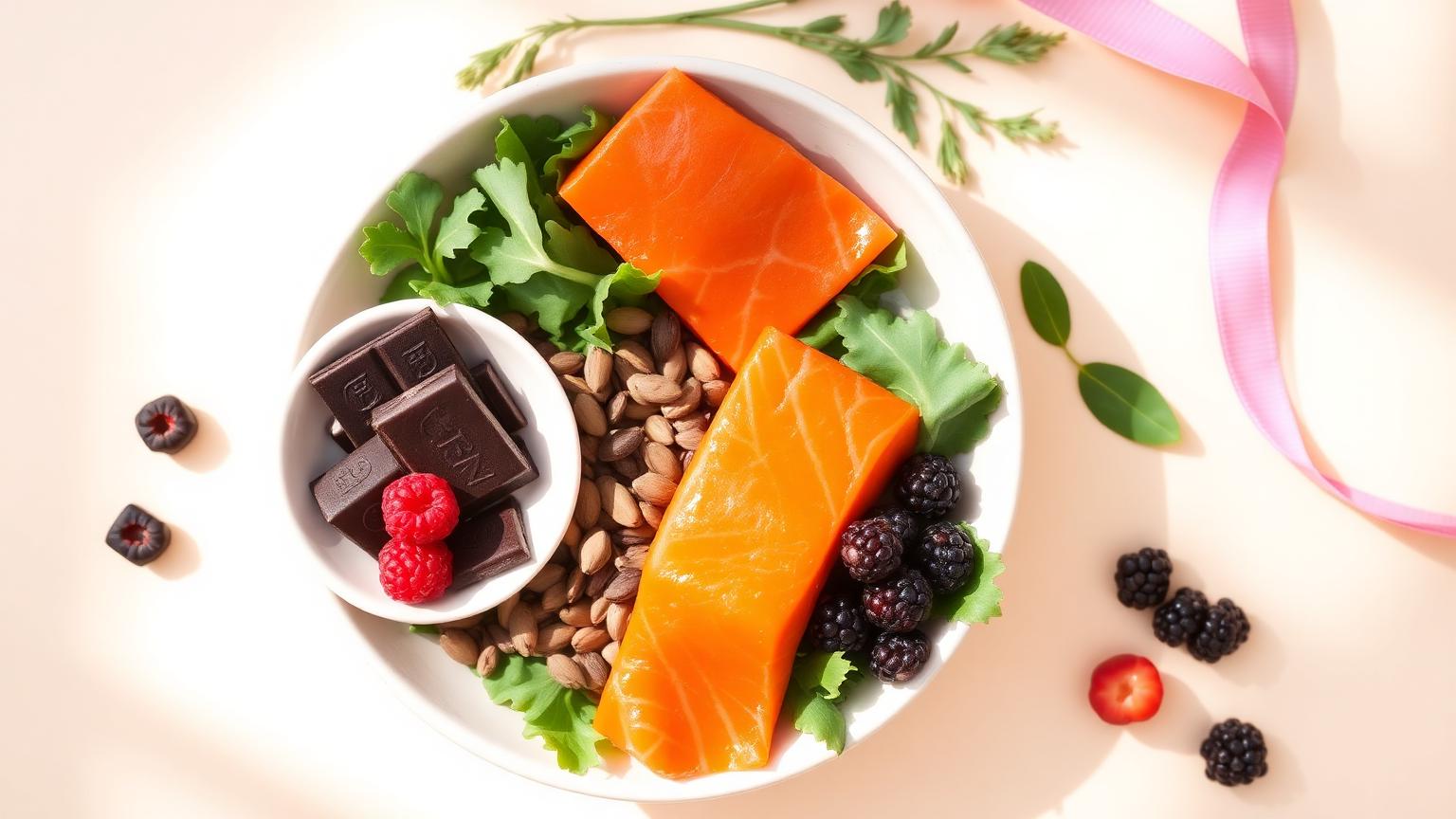
Calcium and Vitamin B6 for PMS Symptoms: What Research Shows
If your cycle reliably brings cramps, bloating, a short fuse and a pull toward the cookie jar, you've probably seen calcium and vitamin B6 recommended for PMS symptoms. Both have been tested in randomized trials, but the quality of that evidence varies a lot. This guide walks through the studies, the doses researchers actually used and the B6 toxicity risk many articles leave out. It ends with a checklist for judging any PMS formula, including ours.
Key takeaways
- Calcium has the stronger evidence. One large multicenter trial and several smaller ones found that calcium, mostly at 1,000–1,200 mg a day, eased mood, bloating, cravings and pain.
- B6 helps a little, and the evidence is mixed. It may help mood-related symptoms, but a major review found that most of the trials were low quality.
- Give it time. In the calcium trials, benefits built over 2–3 cycles.
- B6 is safe only at sensible doses. Taking high doses for a long time can damage nerves. The US upper limit is 100 mg a day, and Europe's is now 12 mg.
- Neither one is a cure. Treat them as one part of a broader routine, and talk to a healthcare provider about severe symptoms.
The Short Answer: Do Calcium and Vitamin B6 Help PMS Symptoms?
Calcium and vitamin B6 may help PMS symptoms, but the evidence behind them isn't equal.
Calcium has some of the strongest clinical trial evidence of any nutrient studied for PMS. In trials, it improved emotional symptoms, water retention, food cravings and pain.
Vitamin B6 shows modest, inconsistent benefits, mostly for mood. Many of the trials are old, small or poorly designed.
Neither works like a switch, and results vary. Some women notice a real change, while others notice very little. Many women experience some premenstrual symptoms during their reproductive years, but common doesn't mean you have to put up with it. If your symptoms derail your work or relationships, raise it with a healthcare provider.
Why Nutrients May Influence PMS in the First Place
The luteal-phase shift
After ovulation, progesterone rises and estrogen fluctuates, and then both fall in the days before your period. These hormones affect brain chemistry, especially serotonin, which plays a part in mood, appetite and sleep. They also influence fluid balance and muscle contraction. Researchers think this helps explain why irritability, bloating, cravings and cramps tend to show up together.
Calcium and your cycle
Calcium regulation appears to change across the menstrual cycle, and researchers have proposed that disturbances in calcium regulation may underlie PMS. Low calcium can cause mood changes and muscle cramping. Those symptoms overlap with PMS, which is partly why researchers started testing supplements.
B6 and neurotransmitters
In its active form, vitamin B6 helps your body make serotonin and dopamine. That's the main theory for why it might ease PMS mood swings.
A reality check
These mechanisms are plausible but still under study. A good theory doesn't prove a supplement works. That's what the trials below are for.
Calcium for PMS Symptoms: What the Clinical Trials Found
The landmark 1998 trial
The best-known calcium study is a multicenter randomized controlled trial led by Susan Thys-Jacobs. Researchers screened 720 women, enrolled 497 and analyzed 466 for efficacy. Participants took 1,200 mg a day of calcium carbonate or a placebo.
According to the trial report (summarized here), by the third cycle calcium had reduced total luteal-phase symptom scores by about 48%, compared with 30% on placebo. All four symptom groups improved: negative mood, water retention, food cravings and pain. The placebo response was large, which is typical in PMS research and one reason controlled trials matter.
Smaller trials and reviews
Earlier, Thys-Jacobs ran a crossover trial in which 33 women completed six months of treatment: three months of 1,000 mg calcium carbonate a day and three months of placebo. More recently, a double-blind trial in 66 students tested just 500 mg a day for two months and found improvements in PMS-related mood symptoms.
A 2020 systematic review concluded that serum calcium tends to be lower in women with PMS and that supplementation may improve symptoms.
| Study | Participants | Calcium dose | Main finding |
|---|---|---|---|
| Thys-Jacobs 1989 | 33 completed | 1,000 mg/day | Crossover, early support |
| Thys-Jacobs 1998 | 466 analyzed | 1,200 mg/day | 48% vs 30% symptom drop |
| Shobeiri 2017 | 66 students | 500 mg/day | Mood symptoms improved |
| 2020 review | Multiple studies | Varied | Broadly supportive |
Limitations: Most trials after 1998 were small and lasted only two or three cycles. They also used different symptom scales, which makes them hard to compare.
Why patience matters
In the large trial, the clearest difference showed up by the third cycle. If calcium helps you, expect the change to come gradually over a few months.
Food counts too
In a study nested within the Nurses' Health Study II, women with the highest calcium intake from food (a median of 1,283 mg a day) had a relative risk of developing PMS of 0.70, compared with women with the lowest intake (a median of 529 mg). Observational data like this can't prove cause and effect, but it suggests your plate matters as well as your pill organizer.
Vitamin B6 for PMS Symptoms: Promising but Mixed Evidence
The 1999 BMJ review
The key analysis is a systematic review by Wyatt and colleagues in the BMJ. Women taking B6 were more likely to report improvement in overall symptoms (odds ratio 2.32). For depressive symptoms, the odds ratio was 1.69, based on four trials with 541 patients.
The authors were cautious. As an American Family Physician summary notes, most of the trials were of low quality, which limits firm conclusions. Doses ranged from 50 to 600 mg a day, and some trials combined B6 with other nutrients. The reviewers advised against doses above 100 mg a day.
Newer, smaller trials
More recent trials have generally used 50–100 mg a day, often alongside magnesium. A two-cycle trial in 126 women compared magnesium, B6 and placebo. In another small trial, magnesium plus B6 produced the largest drop in PMS scores and placebo the smallest. These studies are small, so treat them as encouraging rather than conclusive.
Why results conflict
- Dose: Trials ranged from 50 mg to several hundred mg.
- Symptom scales: Studies measured different symptoms with different tools.
- Design: Samples were small, blinding was sometimes unclear, and B6 was often mixed with other nutrients.
- Participants: Some women had mild PMS and others had severe, PMDD-like symptoms.
Bottom line
If your main PMS symptoms are mood-related, B6 is reasonable to discuss with your provider. Keep your expectations modest and watch the dose closely (see below).
Calcium and Vitamin B6 Dosage for PMS: How Much Is Studied and What's Safe
Studied doses
| Nutrient | Studied range | Adult upper limit (US) |
|---|---|---|
| Calcium | 1,000–1,200 mg/day | 2,500 mg/day (ages 19–50) |
| Vitamin B6 | Usually 50–100 mg/day | 100 mg/day |
The trial doses were supplemental calcium. The upper limits cover food and supplements combined. For comparison, the NIH's recommended calcium intakes for adults range from 1,000 to 1,200 mg a day from all sources.
B6 safety: the part most articles skip
B6 is water-soluble, but that doesn't make any amount safe. The NIH warns that taking high amounts of vitamin B6 from supplements for a year or longer can cause severe nerve damage. Watch for tingling, numbness or loss of coordination, usually in the hands and feet. The US upper limit for adults is 100 mg a day from all sources.
Europe is stricter. In 2023, the European Food Safety Authority set an adult upper limit of 12 mg a day after reviewing the evidence linking B6 to peripheral neuropathy. EFSA's calculation was based on a study of women attending a clinic for PMS treatment who took supplemental B6 for months or years. In other words, the safety data regulators rely on came largely from women taking B6 for PMS.
Calcium safety
- Upper limit: 2,500 mg a day for adults aged 19–50, from all sources.
- Constipation and gas: These are common with supplements, especially calcium carbonate.
- Kidney stones: High supplemental intake has been linked to higher risk in some people. If you've had stones, ask your doctor first.
- Absorption: Your body absorbs calcium best in doses of about 500 mg or less, so split larger amounts. Calcium carbonate absorbs best with food, while calcium citrate can be taken with or without it.
Interactions to know
- Calcium can reduce absorption of iron, thyroid medication (levothyroxine) and some antibiotics (tetracyclines and quinolones). Take them several hours apart.
- B6 can interact with certain medications. For example, the NIH notes that the asthma drug theophylline can lower B6 levels.
- If you use hormonal birth control, antidepressants or any regular medication, check with a pharmacist or doctor before adding supplements.
How to avoid stacking B6
B6 shows up in multivitamins, B-complexes, energy drinks, "stress" formulas, hair-skin-nails gummies and PMS blends. To keep track:
- Check the Supplement Facts panel of every product you take.
- Add up the vitamin B6 (pyridoxine or P5P) milligrams.
- Keep the daily total well within your region's upper limit, and note how long you've been taking it.
Other Evidence-Based Nutrients for PMS Worth Knowing
- Magnesium: In one trial, 200 mg a day of magnesium reduced fluid-retention symptoms, but only in the second month. Researchers often pair it with B6.
- Vitamin D: In the Nurses' Health Study analysis, women with the highest vitamin D intake from food had a relative risk of 0.59 compared with the lowest group. Vitamin D also helps you absorb calcium.
- Chasteberry (vitex): A meta-analysis of randomized trials found a positive overall effect on PMS symptoms, though the authors cautioned that many studies had a high risk of bias. Vitex is a botanical that may act on hormone pathways, so ask your provider first if you use birth control or are trying to conceive.
- Omega-3s and zinc: Early research is interesting, but the studies are small.
| Nutrient | Evidence strength | Best-studied for |
|---|---|---|
| Calcium | Moderate–strong | Mood, bloating, cravings, pain |
| Vitex | Moderate | Overall PMS (botanical) |
| Magnesium | Moderate | Fluid retention, mood |
| Vitamin B6 | Limited–moderate | Mood symptoms |
| Vitamin D | Mostly observational | PMS risk |
| Omega-3s, zinc | Emerging | Various |
Food First: Getting Calcium and B6 From Your Plate
Calcium-rich foods
- Milk, yogurt and cheese
- Fortified soy, oat or almond milk
- Tofu made with calcium sulfate (check the label)
- Canned sardines or salmon with bones
- Leafy greens such as kale, bok choy and collards
- Almonds and tahini
B6-rich foods
- Chickpeas
- Salmon and tuna
- Chicken and turkey
- Potatoes
- Bananas
- Fortified breakfast cereals
Luteal-phase meal ideas
- Breakfast: Greek yogurt with banana, almonds and a sprinkle of cinnamon
- Lunch: A chickpea and salmon grain bowl over sautéed greens with tahini dressing
- Snack: A fortified soy latte with a handful of almonds
- Dinner: Calcium-set tofu stir-fry with bok choy, or roast chicken with baked potato and greens
Pairing protein, fiber and healthy fats can help steady blood sugar, which may take the edge off luteal-phase cravings.
Food also carries very little toxicity risk. The NIH notes that people almost never get too much vitamin B6 from food. The nerve risk comes from high-dose supplements taken over long periods.
How to Judge an Evidence-Based PMS Supplement
Green flags
- Doses match the ranges used in studies, or the label explains why they don't
- Every active ingredient is listed with its exact amount
- B6 sits comfortably within safe limits, with no mega-doses
- The product is third-party tested or made in certified facilities
- Claims are honest ("may support," not "cures PMS")
Red flags
- "Proprietary blends" that hide the dose of each ingredient
- Promises of instant or guaranteed results
- Unexpected hormone-containing or hormone-active ingredients
- B6 doses far above upper limits with no warning
- Testimonials standing in for evidence
Set honest expectations. Track your symptoms daily for 2–3 cycles, in an app or a notebook, before deciding whether something helps. Rate cramps, bloating, mood, cravings and energy on a simple 0–3 scale.
Where cycle syncing fits. Cycle-synced routines pair a steady daily foundation with extra support during the luteal phase, when symptoms peak. Keep in mind that the calcium trials used daily dosing, and luteal-only use hasn't been tested in those studies. Some women still prefer extra support only in the days before their period. If you try it, track your symptoms so you can see what works for you.
Where Feme Fits In: Hormone-Free, Cycle-Synced Support
Feme makes hormone-free, cycle-synced supplements with vitamins, minerals and naturally derived ingredients, built around the four phases of the menstrual cycle.
- Full Balance is the daily foundation formula for all-month support.
- PMS SOS is targeted support for the days before your period. Feme reports results from its own consumer test of PMS SOS with 46 women. This is a consumer test, not a clinical trial, and individual results vary.
- Sweet Balance is an optional add-on for luteal-phase sugar cravings.
- Mojo is an optional add-on for energy and desire.
Apply the checklist above to these products too. Read each label for exact nutrient amounts, and add up your B6 across everything you take. If you're not sure where to start, Feme's hormone wellness quiz can help you narrow it down.
These products are dietary supplements and are not intended to diagnose, treat, cure or prevent any disease. Consult a healthcare provider if you have severe symptoms or suspected PMDD, or if you take medication or use birth control.
When to See a Healthcare Provider
Book an appointment if any of these apply:
- Symptoms disrupt your life. They affect your work, relationships or daily functioning.
- You have severe mood changes. Depression, hopelessness, anxiety or rage before your period may signal PMDD, a condition that needs medical care. If you have thoughts of self-harm, seek help immediately.
- Your periods are very painful. Pain that over-the-counter relief doesn't touch may point to conditions such as endometriosis.
- Your bleeding is heavy or your cycles are irregular. These can be signs of PCOS, thyroid issues or other conditions.
- Supplements might not be safe for you right now. Talk to a provider before starting if you're pregnant, breastfeeding, on medication or managing a health condition.
Bring a symptom diary covering two or three cycles. It makes the conversation faster and more concrete. Speaking up for yourself is not overreacting.
FAQ
How long does it take for calcium to help PMS symptoms?
Usually a few cycles. In the large 1998 trial, which used 1,200 mg a day, the clearest difference from placebo showed up by the third cycle. Take it consistently and track your symptoms daily for two to three cycles before judging. If nothing changes after three cycles, talk with your provider about other options.
What is the best vitamin B6 dosage for PMS, and is 100 mg too much?
Most PMS trials used 50–100 mg a day. The US upper limit for adults is 100 mg a day from all sources, and Europe's newer limit is 12 mg. Long-term high intake can damage nerves. There isn't one "best" dose. Discuss it with your provider and add up the B6 across all your products. If you notice tingling or numbness, stop and seek advice.
Can I take calcium and vitamin B6 together with magnesium?
Usually, yes. Several trials have tested B6 and magnesium together, and calcium is often taken alongside both. Large doses of calcium and magnesium may compete for absorption, so consider taking them at different times of day. Keep each nutrient within safe limits. If you take medication or have kidney issues, check the combination with a pharmacist first.
Is it safe to take PMS supplements while on birth control?
Most vitamins and minerals have no known problems with hormonal birth control. Botanicals such as chasteberry may act on hormone pathways, though. Every formula is different, so show your doctor or pharmacist the full label before you start. Hormonal contraception can also change your PMS pattern, so track how you feel in your current cycles before adding anything new.
Should I take PMS supplements every day or only before my period?
It depends on the nutrient and the product. Calcium trials used daily dosing, and benefits built up over cycles. Some targeted formulas are designed for the luteal phase only. A cycle-synced approach combines both: daily foundation support plus extra help in the days before your period. Follow each product's label and track your results for a few cycles.
Are calcium and vitamin B6 effective for PMDD?
PMDD is more severe than PMS and deserves medical care. Some calcium and B6 trials included women with severe symptoms, but the evidence isn't strong enough to treat these nutrients as PMDD treatments. Established options include certain antidepressants (such as SSRIs), hormonal therapies and cognitive behavioral therapy. Supplements may play a supporting role, but only with guidance from your healthcare provider.