How to Curb Sugar Cravings in Luteal Phase: A Day-by-Day Playbook
If you've ever found yourself two chocolate bars deep the week before your period, wondering what happened to your willpower — nothing happened to your willpower. Your hormones shifted, your serotonin dipped, your cells got a little less responsive to insulin, and your body started asking for quick fuel. The fastest way to curb sugar cravings in your luteal phase is to stop white-knuckling it and start working with the biology: eat protein and fat with every carb, feed the specific nutrients your body is running low on (magnesium, B6, chromium, zinc), keep your blood sugar steady with small frequent meals, and match your tactics to where you are in the two-week window.
That last part is the game-changer. Cravings aren't a flat line across the luteal phase — they build. Early luteal (roughly Days 15–19) is calm; mid-luteal (Days 20–24) is when insulin resistance climbs; late luteal (Days 25–28) is when the intensity peaks, about 5–10 days before your period begins [3]. Below is a genuine day-by-day plan mapped to that curve, with concrete snacks, realistic supplement doses, and zero shame. Let's get into why this happens, then exactly what to do about it.
Why You Crave Sugar in Your Luteal Phase (The Quick Science)
Premenstrual cravings are not a personal failing — they're nearly universal. PMS symptoms affect around 85% of women, and roughly 70% of those experience food cravings, mood changes and fatigue [1]. Some surveys put the number even higher, with as many as 80–90% of menstruating women reporting premenstrual symptoms [2]. So if it feels like everyone around you is reaching for snacks the week before their period, that's because they probably are.
There are three overlapping mechanisms driving it.
The Serotonin & Dopamine Dip
In the luteal phase, estrogen drops while progesterone rises, and this shift directly affects your feel-good neurotransmitters serotonin and dopamine. When serotonin dips, the body instinctively reaches for sugar and refined carbs for a quick mood boost [5]. That serotonin dip is most pronounced in the 5–10 days before your period — which is exactly why cravings cluster there [3].
The catch: sugar delivers a genuine short-term lift, but you pay for it with a crash later, which sends you looking for the next hit [3]. It's a loop, not a fix. Understanding this is what lets you interrupt it.
Luteal Insulin Resistance
Here's the piece most mainstream articles skip. During the luteal phase, hormonal changes make your cells less responsive to insulin — meaning glucose doesn't get shuttled into cells as efficiently [5]. In a study monitoring over 250 women, insulin resistance was significantly higher in the luteal phase than the follicular phase, with both estradiol and progesterone positively associated with that resistance [6].
Translation: the same cookie you ate on Day 8 hits your bloodstream harder on Day 24, producing a bigger spike and a steeper crash — and that crash is what triggers the next craving. This is why blood-sugar management becomes far more important in the second half of your cycle.
You're Actually Burning More Calories
Your body genuinely needs more fuel in the luteal phase. Basal metabolic rate rises to support the elevated progesterone maintaining your uterine lining, which requires additional energy and drives a demand for quickly digestible carbohydrates [9]. Energy expenditure can jump by as much as 8–16%, translating to an extra 89–279 calories burned per day [2], with estimates averaging around 300 extra calories daily [4].
So part of that "hunger" is real, legitimate demand. The goal isn't to eat less — it's to eat smarter so those extra calories stabilize you instead of spiking you.
When Cravings Peak: Understanding Your Luteal Timeline
The luteal phase typically runs Days 16–28 of a 28-day cycle — roughly the two weeks between ovulation and your period [2]. (Everyone's cycle length differs; if yours is shorter or longer, shift the days accordingly.) Cravings don't arrive on Day 15 and stay flat. They ramp up in the mid-to-late luteal window, appearing about 5–10 days before bleeding starts [3].
Chocolate deserves a special mention: US women are twice as likely to crave chocolate as men, and they crave it more intensely and frequently around 4 days before their period [1]. A 2016 study in The FASEB Journal found women with higher estradiol reported more carbohydrate and sweet-food cravings, and those with higher progesterone consumed slightly more sweet drinks [1].
Here's the intensity map to anchor the rest of this guide:
| Luteal Window | Days (28-day cycle) | Craving Intensity | What's Happening |
|---|---|---|---|
| Early luteal | Days 15–19 | Low / building | Progesterone rising, appetite creeping up |
| Mid-luteal | Days 20–24 | Moderate / climbing | Insulin resistance increasing, energy needs up |
| Late luteal | Days 25–28 | Peak | Serotonin dips hard, chocolate/carb cravings strongest |
The Day-by-Day Luteal Craving Guide
This is the core playbook. Each phase builds on the last, so start early — the biggest mistake is waiting until Day 26 to react.
Days 15–19: Early Luteal (Set Your Foundation)
Cravings are mild right now, which makes this the easiest and most important time to act. Whatever habits you set here carry you through the hard days.
Do this now: - Front-load protein at breakfast. Aim for 25–30g. A protein-anchored morning flattens your blood sugar for hours and reduces afternoon snacking. - Switch your seeds. If you follow seed cycling, this is the luteal window: about 2 tablespoons of sunflower and sesame seeds daily to support progesterone [8]. Toss them on yogurt or a salad — cheap and effortless. - Stock your kitchen. Buy the snacks (list below) before cravings hit. A prepared kitchen on Day 16 saves you from a vending machine on Day 26. - Start magnesium. Begin a nightly magnesium habit now (details in the nutrient section) rather than scrambling when cramps and cravings arrive.
Mindset: You're not "getting ahead of a problem" — you're setting up a body that feels good. Frame it as maintenance, not restriction.
Days 20–24: Mid-Luteal (Insulin Resistance Rising)
This is where the science of insulin resistance becomes tactical. Your cells are less responsive to insulin now [5][6], so a naked carbohydrate (toast alone, a plain banana, a handful of dry cereal) spikes higher and crashes harder than it would earlier in your cycle.
Do this now: - Never eat carbs naked — always pair them with protein or fat (full formula below). This single rule does the most heavy lifting during these days. - Shift to smaller, more frequent meals. ACOG notes that a complex-carbohydrate-rich diet may reduce mood symptoms and cravings, and recommends smaller, more frequent meals over three big ones [1]. Try 4–5 mini-meals to keep glucose level. - Ease off caffeine. Caffeine spikes cortisol and destabilizes blood sugar, and both effects hit harder in the luteal phase [7]. Swap your second coffee for matcha or a decaf, or at least pair coffee with food. - Add a 10-minute walk after lunch or dinner. Even a short walk raises serotonin, lowers cortisol and blunts the post-meal glucose spike [8].
Mid-cycle is exactly when a little targeted support pays off, and steadier blood sugar means fewer of those out-of-nowhere sweet cravings. If you want a simple, non-restrictive way to back up your food-first habits during these harder days, Sweet is designed specifically for people navigating menstrual sugar cravings.
Days 25–28: Late Luteal (Cravings Peak)
This is the hardest stretch. Serotonin is at its lowest, chocolate cravings are most intense [1], and your body genuinely needs more fuel [2][4]. The strategy here is harm reduction and self-compassion, not iron discipline.
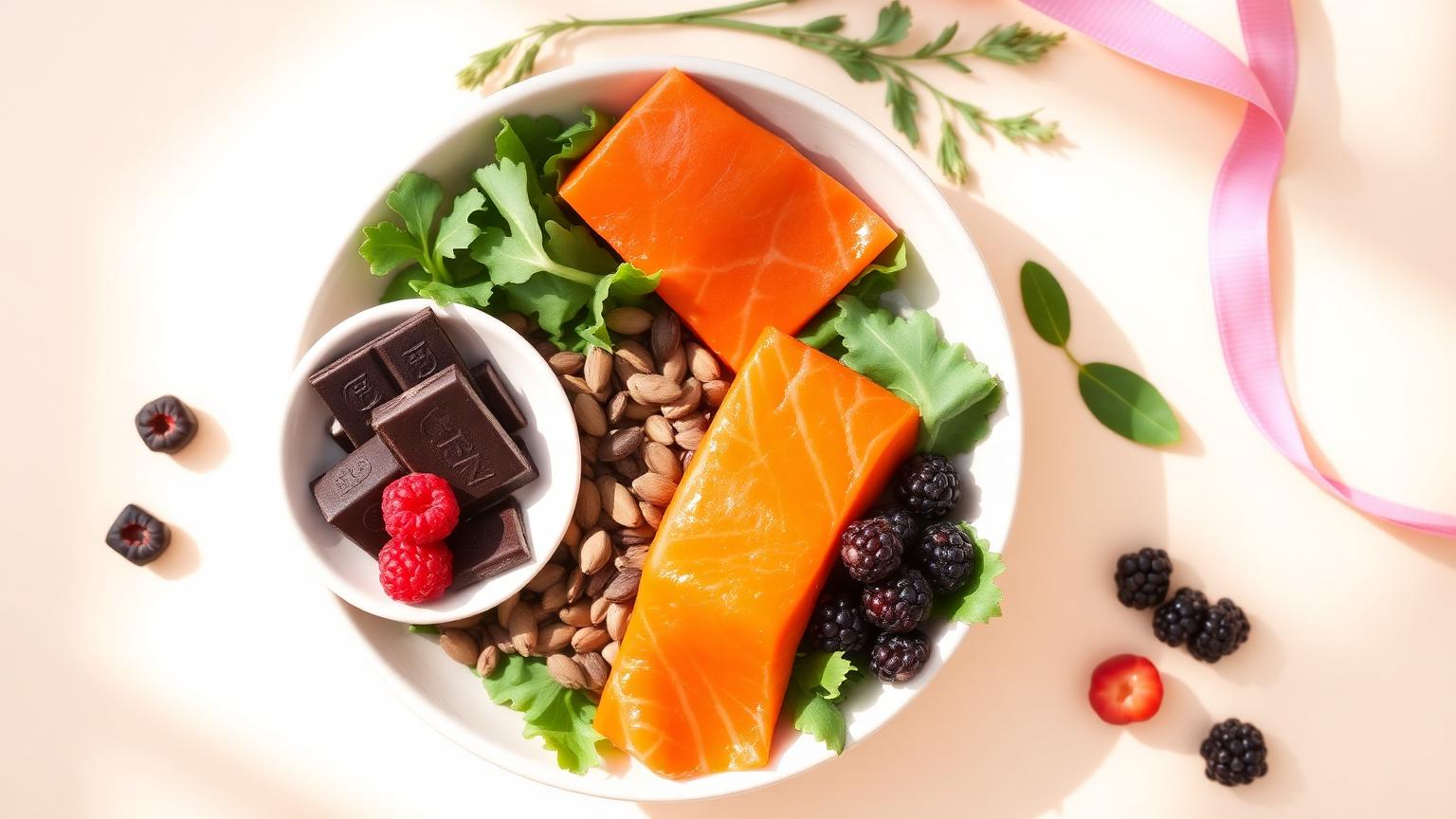
Do this now: - Eat enough. Restricting food only intensifies sugar cravings as blood sugar falls [6]. Honor the extra ~300 calories your body actually needs [4] with balanced food, so your brain isn't screaming for a fast fix. - Reach for the "smart chocolate" swap. Craving chocolate? Have dark chocolate (70%+) with a small handful of almonds. You get the magnesium your body may be seeking [5], plus fat and protein to slow the sugar. - Prioritize sleep now above all. This is the week to protect 7–8 hours (see below) — under-slept days multiply cravings. - Give yourself a planned treat. A chosen dessert eaten mindfully after a real meal is completely different from a blood-sugar-crash binge at 4pm. More on this below.
Mindset: The goal for these four days is "steady, fed, and kind," not "perfect." You are not failing — you are at the deepest point of a monthly hormonal dip, and it ends when your period starts.
The Nutrient Cheat Sheet: What Your Body Is Really Asking For
A lot of luteal cravings are your body flagging a nutrient it's running low on. Low levels of magnesium, chromium, B vitamins (especially B6) and zinc are commonly associated with increased cravings, because these nutrients help regulate insulin, stabilize mood and support energy metabolism [5].
Magnesium, B6, Chromium, Zinc & Calcium
- Magnesium supports over 300 enzymatic reactions, including those regulating blood sugar. Low magnesium can mimic hunger and stress — one reason chocolate (a magnesium source) is so commonly craved — and luteal hormonal shifts increase your magnesium needs [5].
- Chromium helps insulin shuttle glucose into cells and prevents the glucose spikes that trigger strong sweet and carb cravings, while improving insulin sensitivity [6].
- B vitamins (especially B6): During the luteal phase your body has a higher demand for B vitamins to support progesterone production and stabilize blood sugar [2].
- Zinc supports energy metabolism and is linked to fewer cravings when levels are adequate [5].
- Calcium: A 2017 study in Obstetrics & Gynecology Science suggests a positive effect of calcium on PMS symptoms [2].
Food Sources vs. Supplements (and Realistic Doses)
You do not need a cabinet full of expensive powders. Food first, supplements to fill gaps. Here's a realistic reference:
| Nutrient | Food-first sources | Typical supplement range* |
|---|---|---|
| Magnesium | Dark chocolate, pumpkin seeds, spinach, black beans, almonds | Commonly 200–400mg, often taken at night |
| B vitamins (B6) | Whole grains, dark leafy greens, nuts, seeds, eggs, salmon [2] | ~50–100mg B-complex [2] |
| Chromium | Broccoli, whole grains, green beans | Often included in blood-sugar formulas |
| Zinc | Pumpkin seeds, shellfish, chickpeas, cashews | Modest daily doses |
| Calcium | Yogurt, leafy greens, fortified plant milks, sardines | Food-first preferred |
*Ranges reflect commonly cited amounts; check with a pharmacist or doctor, especially if you take other medication or are pregnant.
Notice how much overlap there is: pumpkin seeds cover magnesium and zinc, dark chocolate covers magnesium, leafy greens cover B6 and calcium. A handful of the right foods does a lot. Supplements are a convenience, not a requirement — don't fall into the trap of thinking you need an expensive stack to cope.
Grab-and-Go Snacks That Actually Curb Cravings
The winning formula for every luteal snack is fiber + protein + fat — the combination that slows glucose release and keeps you full [6]. These are budget-friendly, need minimal prep, and travel well for class or work.
- Apple + 1 tbsp peanut butter — fiber from the apple, protein and fat from the peanut butter. ~7g protein, ~4g fiber, healthy fats.
- Greek yogurt + berries + 1 tbsp pumpkin/sunflower seeds — ~15g protein, magnesium and zinc, plus fiber. A perfect luteal combo.
- Dark chocolate (2 squares, 70%+) + small handful of almonds — satisfies the chocolate craving, delivers magnesium, and the almond fat slows the sugar [5].
- Hard-boiled egg + a few whole-grain crackers — cheap, portable protein with a complex carb.
- Hummus + carrot and cucumber sticks — fiber, plant protein, and healthy fat; keeps for days.
- Cottage cheese + cherry tomatoes + olive oil drizzle — high protein, very filling.
- Roasted chickpeas — crunchy, salty craving-crusher with fiber and protein you can make in bulk.
- A small square of dark chocolate melted over banana slices with a spoon of nut butter — a "dessert" that's actually balanced.
Keep at least three of these stocked from Day 15 so the easy choice is also the smart choice.
Blood-Sugar Rules to Live By in Your Luteal Phase
Because insulin resistance rises in the luteal phase [5][6], stable blood sugar is your single most powerful lever. Three rules cover most of it.
Never Eat Carbs Naked (The FFP Formula)
Pairing carbohydrates with protein or fat slows the glucose spike — the "never eat carbs naked" principle [7]. Build every carb-containing snack or meal with Fiber + Fat + Protein:
- Toast → add eggs and avocado.
- Banana → add nut butter.
- Rice → add beans and olive oil.
- Crackers → add cheese or hummus.
This isn't about avoiding carbs (complex carbs actually help PMS symptoms [1]) — it's about never eating them alone.
Caffeine, Morning Light & Meal Timing
- Caffeine: Ease up in the luteal phase. It spikes cortisol and destabilizes blood sugar, worsening the crash-craving cycle [7]. If you keep it, pair it with food and cap it earlier in the day.
- Meal timing: Don't skip meals. Cleveland Clinic recommends keeping a routine, avoiding skipped meals, and eating several small balanced meals [3]. Skipping breakfast almost guarantees an afternoon sugar hunt.
- Frequency: Smaller, more frequent meals beat three large ones for craving control [1].
Building steady blood-sugar habits is easier when your cravings aren't screaming at you all day. Sweet is made to support women who want a healthy, non-restrictive way to handle menstrual sugar cravings alongside these food-first strategies.
Lifestyle Levers: Sleep, Movement & Stress
Food is only half the story. Three lifestyle levers directly change how strong your cravings feel.
- Sleep 7–8 hours. This is non-negotiable in the luteal phase. Sleep deprivation impairs glucose metabolism and disrupts your hunger hormones leptin and ghrelin, driving cravings for higher-calorie foods [4]. One bad night can undo a day of careful eating.
- Move — even a little. Experts suggest about 30 minutes of exercise 4–6 times a week, but even a 10-minute walk raises serotonin, lowers cortisol, and curbs both cravings and cramps [8]. A walk after dinner in the late luteal days is one of the highest-return habits you can build.
- Manage stress. Cortisol and blood sugar are linked; chronic stress keeps glucose dysregulated and cravings high. Gentle movement, slower breathing, and protecting downtime all lower the cortisol that fuels the craving loop.
Should You Just Give In? The Non-Shaming Truth About Treats
Yes — sometimes. Giving in occasionally is completely fine [3]. The problem isn't a single treat; it's the pattern.
Cleveland Clinic notes that the foods we crave — fried foods, sugar, refined carbs — are often inflammatory and can worsen PMS symptoms when they become the whole diet [3]. And restricting food entirely backfires: it only intensifies cravings as blood sugar drops [6]. So the answer isn't "never" and it isn't "no rules." It's this:
- Eat the treat after a balanced meal, not on an empty, crashing stomach — the protein and fat blunt the spike.
- Choose it, don't grab it. A planned square of good chocolate feels satisfying; a stressed handful of whatever's around feels like losing control.
- Portion it onto a plate instead of eating from the bag.
- Drop the guilt. Guilt drives the restrict-binge cycle. A treat eaten calmly and enjoyed is the opposite of a problem.
You are working with your body, not policing it. That mindset is what makes any of this sustainable past one cycle.
When It's More Than Cravings: PMS vs. PMDD and When to See a Doctor
Most luteal cravings are normal PMS. But for some, symptoms are severe enough to disrupt daily life — that can be PMDD (premenstrual dysphoric disorder), a more intense condition than typical PMS.
| Typical PMS | PMDD | |
|---|---|---|
| Symptoms | Cravings, bloating, mild mood shifts, fatigue | Severe depression, anxiety, irritability, hopelessness |
| Impact | Annoying but manageable | Significantly disrupts work, school, relationships |
| Timing | Luteal phase, eases at period | Luteal phase, often intense, eases at period |
| Management | Diet, lifestyle, self-care | Often needs medical treatment |
See a doctor if: your mood symptoms are severe, you feel depressed or hopeless in the luteal phase, cravings come with binge episodes that distress you, symptoms interfere with your daily functioning, or self-care strategies simply aren't touching it. These are medical concerns, not willpower problems, and effective treatments exist. Track your symptoms across two to three cycles (this is where cycle apps shine) and bring that data to your appointment — it makes diagnosis far faster.
Steadier blood sugar and fewer cravings make the whole luteal phase easier to move through — and a supportive tool alongside good food, sleep and movement can help. If you're looking for a healthy way to manage menstrual sugar cravings, Sweet was built with exactly that in mind.
FAQ
Why do I crave sugar so much in my luteal phase?
Because estrogen drops and progesterone rises, lowering your feel-good neurotransmitters serotonin and dopamine — and when serotonin dips, your body instinctively seeks sugar and refined carbs for a quick boost [5]. On top of that, your cells become less responsive to insulin [5] and you're burning more calories [2], so the demand for quick fuel is real.
How long is the luteal phase and when do cravings peak?
The luteal phase is typically Days 16–28 of your cycle, the roughly two weeks before your period [2]. Cravings usually peak in the mid-to-late luteal phase, about 5–10 days before bleeding starts [3].
Is it normal to crave sugar before my period?
Extremely normal. PMS affects about 85% of women, and around 70% of them experience food cravings [1]; some surveys report as many as 80–90% of menstruating women have premenstrual symptoms [2]. You're not doing anything wrong.
What deficiency causes sugar cravings before my period?
Low levels of magnesium, chromium, B vitamins (especially B6) and zinc are commonly linked to increased cravings, since these nutrients regulate insulin, stabilize mood and support energy metabolism [5].
Does magnesium help with PMS sugar cravings, and what dose?
Magnesium supports over 300 enzymatic reactions including blood-sugar regulation, and low magnesium can mimic hunger and stress — which is why chocolate (a magnesium source) is so craved; luteal needs increase [5]. Commonly cited supplement doses fall in the 200–400mg range, often at night, but get food sources first (pumpkin seeds, dark chocolate, spinach) and check with a professional on dosing.
What should I eat in my luteal phase to stop cravings?
Complex carbs plus balanced snacks combining fiber, protein and healthy fat, eaten as smaller, more frequent meals rather than three big ones [1][6]. Think Greek yogurt with seeds and berries, apple with peanut butter, or hummus with veggies.
Why do I crave chocolate specifically before my period?
Partly the serotonin dip [5], partly because chocolate is a magnesium source and luteal magnesium needs rise [5]. Studies also show women crave chocolate about twice as much as men, most intensely around 4 days before their period [1].
Do you burn more calories in your luteal phase?
Yes. Energy expenditure can rise 8–16%, an extra 89–279 calories per day [2], averaging around 300 extra calories daily [4], because elevated progesterone requires additional energy [9].
Should I just give in to my period cravings?
Occasionally, yes — giving in sometimes is fine [3]. Just don't let inflammatory foods dominate your diet (they can worsen PMS [3]) and don't restrict, which intensifies cravings as blood sugar falls [6]. Eat treats after balanced meals, portion them out, and skip the guilt.
What snacks curb sugar cravings on your period?
Anything combining fiber, protein and fat: Greek yogurt with pumpkin seeds and berries, apple with nut butter, dark chocolate with almonds, hard-boiled eggs with whole-grain crackers, or hummus with veggie sticks [6].
Does seed cycling actually work for PMS cravings?
Seed cycling suggests pumpkin and flax seeds in the follicular phase (Days 1–14), then sunflower and sesame seeds in the luteal phase (Days 15–28), around 2 tablespoons daily to support progesterone [8]. Evidence is limited, but the seeds themselves deliver magnesium, zinc and healthy fats that genuinely help — so it's low-risk and nutritious even beyond the theory.
Does caffeine make luteal cravings worse?
It can. Caffeine spikes cortisol and destabilizes blood sugar, which feeds the crash-craving cycle — so easing up in the luteal phase helps [7].
Can PMS cravings be a sign of PMDD, and when should I see a doctor?
Cravings alone usually aren't PMDD, but if you also have severe depression, anxiety, irritability or hopelessness in the luteal phase, or symptoms disrupt your daily life, that may be PMDD — see a doctor. Track symptoms across a few cycles and bring that record to your appointment.
References
- What do your period cravings mean? — Clearblue
- 4 Ways to Curb the Dreaded Period Cravings — Hormone Rebalance
- Cause of Period Cravings and How To Manage Them — Cleveland Clinic
- How to Curb Sugar Cravings in 9 Steps — Camille Styles
- How Do You Stop Craving Sugar? — Dr. Brighten
- Sugar and Your Cycle — Fertile Gut
- Balancing Blood Sugar in Your Luteal Phase — Moon Affair
- Demystify Your Menstrual Cravings — Helping Women Period
- Stop Luteal Phase Sweet Cravings — The Craving Ideas