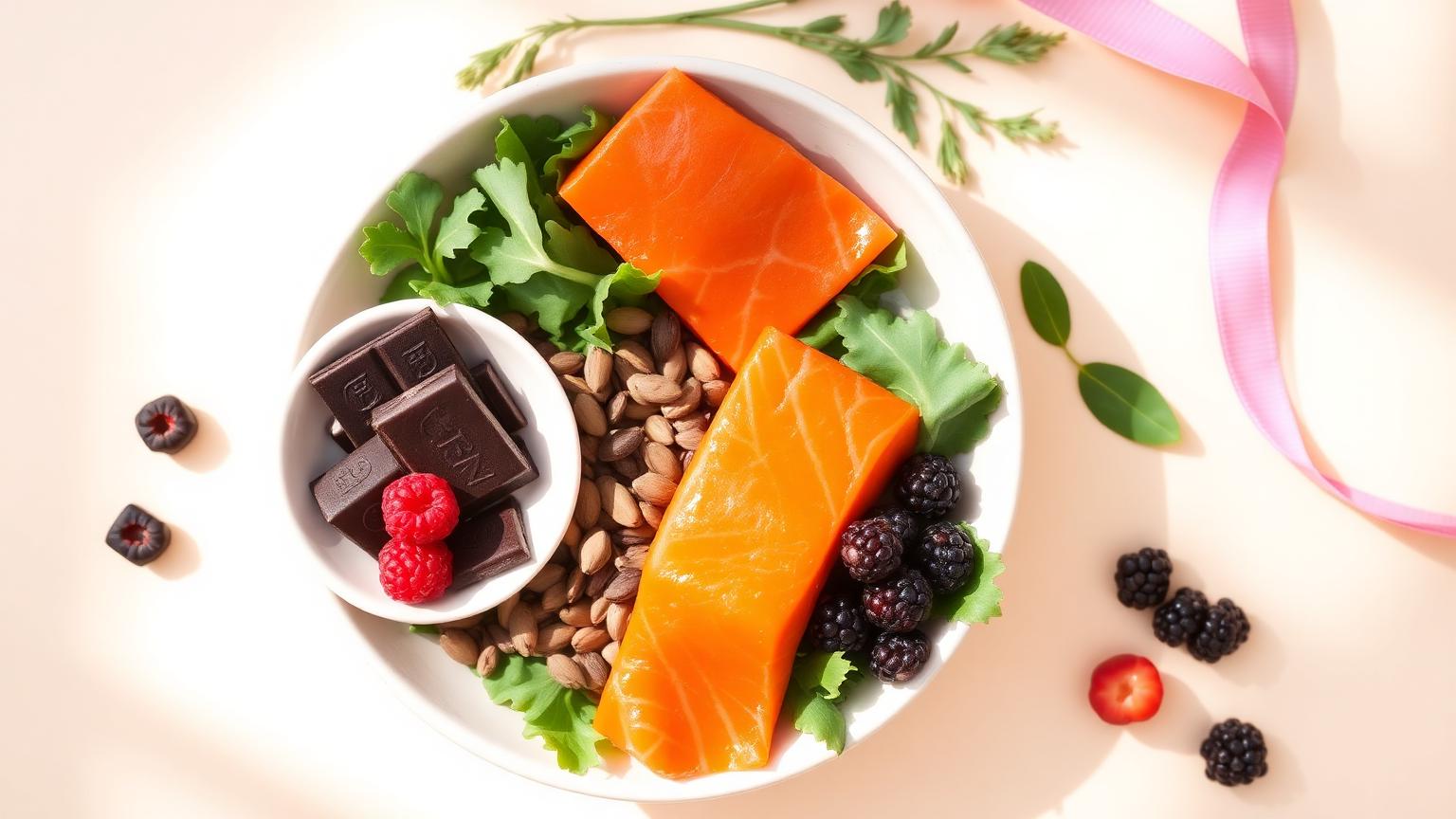
How to Calm PMS Anxiety Naturally: A Phase-Smart Plan
You're fine all month. Then, about a week before your period, your chest tightens, your thoughts start racing and small things feel huge. If that sounds familiar, you're not imagining it, and you don't have to just put up with it. This guide shows you how to calm PMS anxiety naturally by treating premenstrual anxiety as a symptom in its own right and matching practical, evidence-aware tools to each phase of your cycle. It also explains when the pattern may point to PMDD or something that needs a professional.
The Short Answer: How to Calm PMS Anxiety Naturally
Premenstrual anxiety is common and well recognized. More than 90% of women say they get some premenstrual symptoms, and tension or anxiety and irritability are among the recognized emotional symptoms. Symptoms usually appear one to two weeks before your period and tend to ease within a few days after bleeding starts.
Key takeaways:
- Track it. Log your anxiety against your cycle days for two to three cycles so you can see your pattern.
- Keep your blood sugar steady. Regular meals with protein, fiber and complex carbs may soften both the jitters and the cravings.
- Cut back on caffeine and alcohol in the week or so before your period, mainly to protect your sleep and nerves.
- Protect your sleep and keep moving, at an intensity that suits your energy that week.
- Use quick calming tools such as long exhales, grounding and a short walk.
- Check key nutrients. Calcium, magnesium and vitamin B6 have been studied for PMS mood, with mixed but sometimes encouraging results.
- Know your limits. Anxiety that is severe or disabling, or that comes with panic or dark thoughts, needs a healthcare provider, not just home remedies.
Results vary from person to person. Think of this as care you deserve, not a guaranteed fix.
Why Anxiety Spikes Before Your Period
The luteal phase, in plain language
After ovulation you enter the luteal phase. Progesterone climbs, and if you don't get pregnant, progesterone and estrogen both fall in the days before bleeding. Researchers think PMS happens when these hormone levels fall sharply after ovulation.
Sensitivity, not "too many hormones"
Research suggests that most women with PMS or PMDD have normal hormone levels. Instead, some brains seem to react more strongly to the normal ups and downs. Progesterone is converted into allopregnanolone, which acts on GABA-A receptors, part of the brain's main "brake" system. One review links PMDD to altered GABA-A receptor sensitivity to allopregnanolone. In that model, shifts in allopregnanolone may leave the nervous system more reactive. An ongoing clinical trial is studying allopregnanolone and GABA-A receptor changes in PMDD that responds to SSRI medication. Scientists are still working this out, so treat it as a strong lead rather than settled fact.
The amplifiers
Hormone sensitivity sets the stage, and everyday factors can turn up the volume:
- Poorer sleep. Sleep problems are a common PMS symptom, and tired brains worry more.
- Blood sugar swings from sugary cravings followed by crashes.
- Caffeine sensitivity, so your usual coffee can feel like rocket fuel.
- Built-up stress from the rest of the month. Research suggests women with PMS may respond differently to psychological stress.
Why irritability and anxiety come as a pair
PMS irritability and anxiety often arrive together, possibly because they share a source: a nervous system that's more on edge. A shorter fuse can be anxiety showing up as anger. Your symptoms are real and have a physical basis. They are not "all in your head."
PMS Anxiety, PMDD or Something Else?
Not all premenstrual anxiety is the same, and the differences matter.
- Everyday premenstrual anxiety is uncomfortable but manageable.
- PMDD (premenstrual dysphoric disorder) involves severe mood symptoms that disrupt work or relationships. The U.S. Office on Women's Health says it affects up to 5% of women of childbearing age. Estimates vary depending on how strictly it's diagnosed.
- PME (premenstrual exacerbation) is the premenstrual worsening of an existing condition such as generalized anxiety disorder or depression. This overlap is common. ACOG notes that about half of women seeking PMS relief have another health problem, such as depression or an anxiety disorder, that may get worse before their period.
| Condition | Timing | Severity |
|---|---|---|
| PMS anxiety | Late luteal only | Mild–moderate |
| PMDD | Late luteal only | Severe |
| PME | All month, worse premenstrually | Varies |
| Condition | Daily impact | Next step |
|---|---|---|
| PMS anxiety | Annoying, manageable | Lifestyle tools, tracking |
| PMDD | Disrupts work, relationships | See a provider |
| PME | Ongoing struggle | Treat the underlying condition |
Red flags that call for prompt professional help:
- Panic attacks
- Being unable to work, study or look after yourself
- Hopelessness that feels overwhelming
- Thoughts of self-harm or suicide. These need urgent support right away.
If you take medication, use hormonal birth control or are pregnant, talk to a provider before you add any supplement.
Step One: Track Your Anxiety Against Your Cycle
Tracking is one of the most useful ways to calm PMS anxiety naturally. A clear pattern turns vague dread into something you can plan around. ACOG notes that diagnosing PMS involves confirming a pattern of symptoms, so your log is useful medical information too.
Log these daily for at least two to three cycles:
- Cycle day (day 1 = first day of bleeding)
- Anxiety level from 1 to 10
- Hours and quality of sleep
- Caffeine and alcohol
- Cravings
- Major stressors
Look for patterns. Does your anxiety start a set number of days before bleeding? Does it lift within a few days of your period starting? If it runs all month, that points more toward PME or an anxiety disorder.
Put the data to work. Schedule demanding presentations, hard conversations and big decisions outside your toughest days, and plan extra support for the days you know will be hard. A printed log also makes a doctor's appointment faster and more productive.
If you'd like a structured starting point, the Feme hormone wellness quiz can help you start noticing your patterns. It works alongside a symptom log, not instead of one.
Calm-in-the-Moment Techniques That Work Fast
When luteal phase anxiety hits mid-meeting or at 2 a.m., you need tools that work in minutes.
1. Extended-exhale breathing
- Breathe in through your nose for 4 counts.
- Breathe out slowly through your mouth for 6 to 8 counts.
- Repeat for 2 to 3 minutes. A longer out-breath than in-breath helps signal your body to settle.
2. Box breathing
- Inhale for 4, hold for 4, exhale for 4, hold for 4.
- Repeat four rounds.
3. 5-4-3-2-1 grounding for racing premenstrual thoughts. Name 5 things you see, 4 you can touch, 3 you hear, 2 you smell and 1 you taste. It pulls your attention out of the "what if" spiral and back into the room.
4. Move it out. A 10-minute walk, a few neck and hip stretches or shaking out your hands can release physical tension.
5. Cool down. Splash cold water on your face or run it over your wrists for 30 seconds.
6. Name the feeling and the phase. Tell yourself: "This is anxiety, and I'm on cycle day 25. My brain is louder right now. It will pass." This doesn't dismiss the feeling. It puts it in context.
7. A script for PMS irritability in conversations:
- Pause: "Give me a second."
- Name it: "I'm feeling really reactive today, and I don't want to say something I don't mean."
- Return later: "Can we come back to this tomorrow evening? It matters to me."
Luteal-Phase Habits: Food, Caffeine, Sleep and Movement
Steady your blood sugar
Eat regular meals that combine protein, fiber and complex carbs, such as eggs with whole-grain toast, lentil soup, or yogurt with oats and berries. Skipping meals and then grabbing sugar can cause a crash that feels a lot like anxiety. Steadier meals may also help with sugar cravings.
Rethink caffeine and alcohol
Cutting back in the week or so before your period is a sensible experiment. Caffeine can make you jittery and alcohol can disrupt sleep, and both matter more when your nervous system is already on edge. The evidence is mixed, though: one large prospective study found caffeine intake wasn't linked to developing PMS. That doesn't mean caffeine won't affect your anxiety on a given day, so let your tracking log decide. Taper gradually, because quitting suddenly can cause headaches and irritability.
Protect your sleep
- Keep the same bedtime, even on weekends.
- Keep your room cool and dark.
- Wind down for 30 minutes with no work email.
Poor sleep magnifies anxiety, and the luteal phase already makes sleep harder for many women.
Move to match your energy
Walking, yoga, swimming and moderate cardio all count. You don't need to push through peak-intensity workouts on a day when you feel flat. Moving consistently matters more than moving hard.
| Anxiety amplifier | Calmer swap |
|---|---|
| Third coffee | Decaf or herbal tea |
| Skipped lunch | Protein-rich snack |
| Wine to unwind | Warm bath, sparkling water |
| Late-night scrolling | Phone out of bedroom |
| Punishing HIIT | Brisk walk or yoga |
Natural Remedies for PMS Mood: What the Evidence Says
Here's where the research stands on the most-discussed natural remedies for PMS mood.
Calcium: A 2020 systematic review found that most of the studies it included suggested calcium may ease PMS symptoms, though the authors called for larger, better-designed trials. In a large prospective study, women with higher intakes of calcium and vitamin D from food had a lower risk of developing PMS. For severe PMS or PMDD, however, calcium appears less effective than an SSRI.
Vitamin B6: Reviews of the research suggest B6 may ease some PMS mood symptoms, but many of the trials have been small or of poor quality. Very high doses over long periods can cause nerve problems, so stick to label directions.
Magnesium: A systematic review on magnesium and anxiety found some positive results in studies of women with PMS, but the overall quality of the evidence was limited. That's promising but not definitive.
Chasteberry (vitex): NCCIH describes the PMS research as limited in quality. It may interact with hormonal birth control and with medications that affect dopamine, and it may not be suitable for people with hormone-sensitive conditions.
Mindfulness and CBT-style skills: You can use these alongside or instead of supplements. They work by changing how you respond to anxious thoughts, and some women find them very helpful. Researchers are also testing mindfulness-based stress reduction programs for PMS.
| Option | Used for | Evidence | Key caution |
|---|---|---|---|
| Calcium | Mood, bloating | Encouraging, mainly for milder PMS | Don't exceed upper limits |
| Vitamin B6 | Mood, irritability | Mixed, some positive | High doses risk nerve issues |
| Magnesium | Tension, sleep | Promising, mixed | Can upset stomach |
| Chasteberry | Overall PMS | Limited quality | Birth control interactions |
| Mindfulness/CBT | Anxious thoughts | Supportive | Needs regular practice |
A Phase-Smart Plan to Calm PMS Anxiety Naturally
Calm starts long before the luteal phase. Here's how to spread the work across your whole cycle.
Menstrual phase (days 1–5ish): Rest, move gently and look back. What helped last luteal phase? What didn't? Note it in your log.
Follicular phase (days 6–13ish): Energy is usually higher, so build habits now. Stock your kitchen with calming staples, prep meals and schedule demanding projects for this window.
Ovulatory phase (around days 14–16): Social energy often peaks, so enjoy it. Take a minute to check in on your sleep and stress before the luteal phase starts.
Luteal phase (last 10–14 days): Lower your caffeine, guard your calendar, keep your calm-in-the-moment tools handy and build in buffer time between commitments.
| Phase | Focus | Mindset |
|---|---|---|
| Menstrual | Rest, reflect | "What worked?" |
| Follicular | Build habits | "Prepare ahead" |
| Ovulatory | Connect, check in | "Notice stress early" |
| Luteal | Protect, soothe | "Fewer demands, more care" |
| Phase | Food | Movement |
|---|---|---|
| Menstrual | Warm, iron-rich meals | Gentle walks, stretching |
| Follicular | Fresh, varied, meal prep | Strength, cardio |
| Ovulatory | Fiber, colorful produce | Higher intensity, group classes |
| Luteal | Protein, complex carbs | Yoga, walking, moderate cardio |
Where Feme Fits In Your Calm-Down Routine
Supplements work best on top of the habits above, not instead of them. Every formula in the range is hormone-free and made with vitamins, minerals and naturally derived ingredients, and each is designed around the four phases of the cycle.
- Full Balance is a daily foundation formula for steady support all month.
- PMS SOS offers targeted support for the premenstrual days. Individual results vary.
- Sweet Balance may suit you if luteal sugar cravings feed your crash-and-worry cycle.
If two products fit your pattern, Feme also offers them as discounted duos.
Supplement disclaimer: These products are not intended to diagnose, treat, cure or prevent any disease. Consult a healthcare provider before use if you take medication, use hormonal birth control, are pregnant or breastfeeding, or have severe symptoms.
When to Get Extra Support
See a provider if:
- Your symptoms persist after two to three cycles of lifestyle changes
- Anxiety interferes with your work, studies or relationships
- Symptoms feel severe, or include panic attacks
- Your log shows anxiety all month long
Professional options include:
- Therapy, especially CBT, which teaches skills for managing anxious thinking
- A medical evaluation for PMDD, PME or other conditions with overlapping symptoms
- Treatment choices. For PMDD these may include SSRIs or a birth control pill the FDA has approved for PMDD
If you have thoughts of self-harm, contact local emergency services or a crisis line right away. In the U.S., you can call or text 988.
You don't have to accept premenstrual anxiety as normal. Learning your pattern, adjusting your habits and asking for help when you need it are all ways of taking care of your cycle, and of yourself.
FAQ
Why do I get so anxious right before my period?
Estrogen and progesterone fall sharply in the days before bleeding. Some women's brains seem more sensitive to that drop, possibly because of how allopregnanolone, a byproduct of progesterone, affects the calming GABA system. Poor sleep, blood sugar dips, caffeine and stress can add to it. The anxiety is real and has a physical basis. It isn't a personal failing.
How many days before my period does PMS anxiety usually start?
PMS symptoms usually show up one to two weeks before your period, often peaking in the last few days, and typically ease within a few days of bleeding starting. Everyone's timing is different, though. Tracking your anxiety level by cycle day for two to three cycles is the most reliable way to learn your personal window and plan around it.
Can magnesium or vitamin B6 help with premenstrual anxiety?
Possibly. A systematic review found some positive results for magnesium and anxiety in women with PMS, and vitamin B6 has some encouraging but mixed research behind it. Neither is guaranteed to work. Stick to label doses, avoid long-term high-dose B6, and check with your provider if you take medication or have kidney issues.
How do I know if my PMS anxiety is actually PMDD?
PMDD involves severe mood symptoms, such as intense anxiety, panic, hopelessness or rage. They appear in the late luteal phase, lift after your period starts and disrupt work or relationships. Only a provider can diagnose it, usually from at least two cycles of daily symptom tracking. If your symptoms ever include thoughts of self-harm, seek help right away.
Does cutting caffeine really help luteal phase anxiety?
The research is mixed. One large study found caffeine wasn't linked to developing PMS. Still, caffeine can increase jitteriness and disrupt sleep, which may make anxiety worse during a sensitive phase. Try tapering in the week before your period for one or two cycles and compare your anxiety scores. Your own data is the best guide.
Can I take cycle support supplements while on birth control?
Many vitamin and mineral supplements are generally considered compatible with birth control, but some herbs, especially chasteberry, may interact with hormonal contraception. Hormonal birth control also changes your natural cycle phases, which affects how phase-based routines apply to you. Talk to your doctor or pharmacist before starting any supplement, and bring the label with you.