The PMS diet: what to eat and what to skip
A PMS diet isn't a restriction plan. It's four shifts — steadier blood sugar, more magnesium, enough protein, less alcohol — timed to the two weeks between ovulation and your period, when your body's needs genuinely change.
Why food matters more in the luteal phase
After ovulation, progesterone rises, insulin sensitivity dips slightly, resting metabolic rate ticks up, and serotonin availability falls as estrogen declines. That combination is why the same lunch that felt fine on day 8 leaves you shaky and irritable on day 24.
What to eat before your period
| Focus | Foods | Why it helps |
|---|---|---|
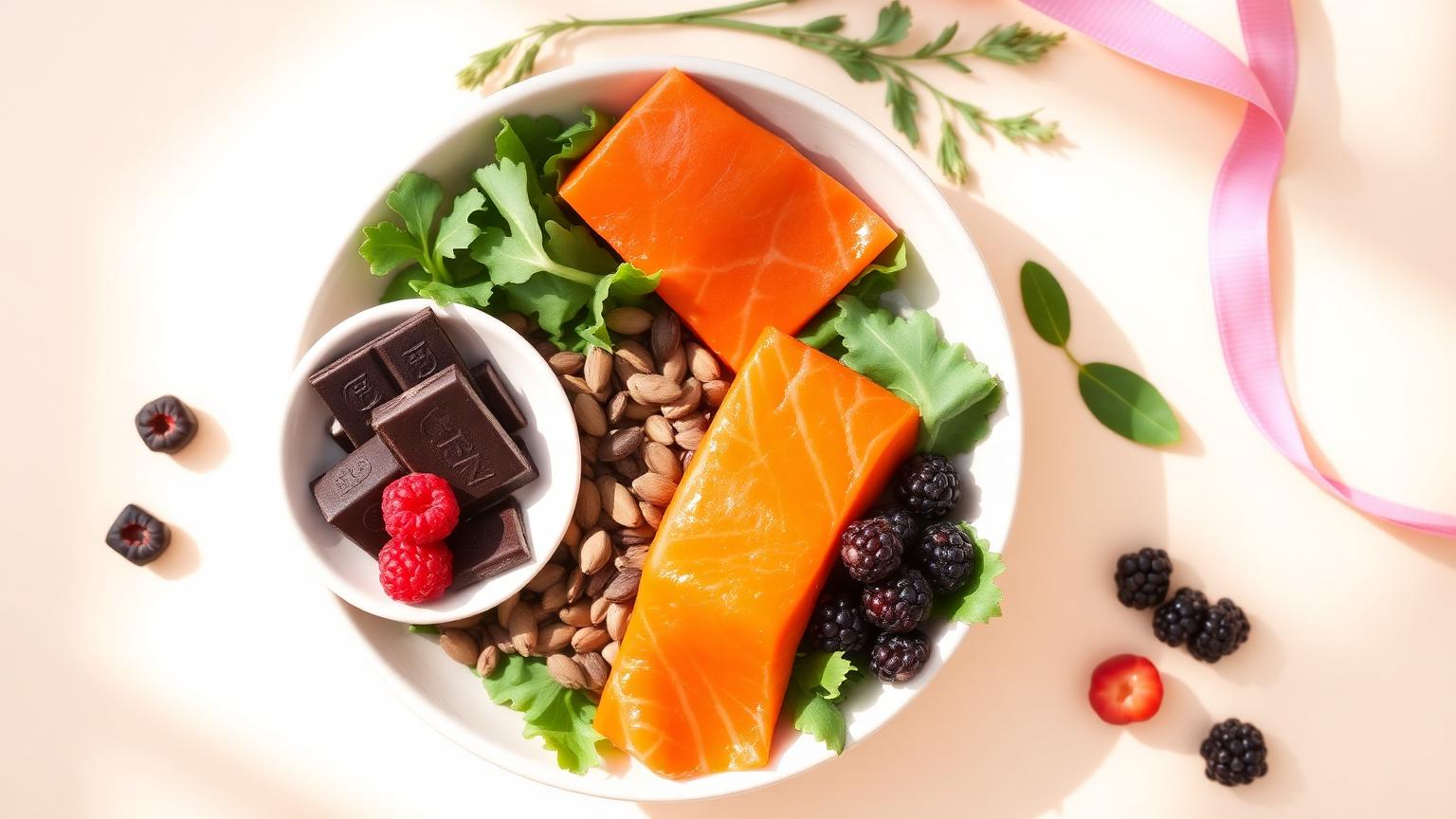
| Magnesium | Pumpkin seeds, spinach, black beans, 70% dark chocolate | Muscle relaxation, sleep, serotonin production |
| Protein at every meal | Eggs, fish, tofu, Greek yoghurt, lentils | Flattens blood-sugar swings; blunts evening cravings |
| Complex carbohydrate | Oats, brown rice, sweet potato, barley | Raises serotonin without the crash of refined sugar |
| Omega-3 | Salmon, mackerel, walnuts, flaxseed | Studied for menstrual pain and mood |
| Calcium + vitamin D | Yoghurt, fortified milk, sardines, tofu | Among the better-supported nutrients in PMS trials |
| Iron (during bleeding) | Red meat, lentils, tofu with vitamin C | Replaces what the period costs |
What to skip — and what's overblown
- Alcohol: worsens sleep quality and next-day mood in the exact week you can least afford it. The single highest-value thing to cut.
- Very salty processed food: drives the bloating and breast tenderness that make the week feel worse than it is.
- Refined sugar on an empty stomach: not forbidden — just pair it with protein or fat so the crash doesn't set up the next craving.
- Caffeine: worth reducing if you're anxious or sleeping badly. If neither applies, you don't have to give up your coffee.
You don't need to change your diet all month. Most people feel the difference by adjusting only the 10–14 days after ovulation.
A week-by-week premenstrual diet
Week 1 — your period (days 1–5)
Iron and warmth. Cooked food over raw, soups and stews, iron-rich protein paired with vitamin C. Keep hydration high; it helps with cramping more than people expect.
Week 2 — follicular (days 6–13)
Energy is naturally highest. This is the easiest week to eat lightly and train hard — fresh vegetables, lean protein, fermented foods.
Week 3 — ovulation (days 14–16)
Fibre and antioxidants support estrogen clearance: cruciferous vegetables, berries, leafy greens, plenty of water.
Week 4 — luteal / PMS (days 17–28)
The week that matters. Protein at every meal, magnesium daily, complex carbs at dinner for sleep, salt and alcohol down. Eat regularly — skipped meals are the most reliable way to make PMS mood symptoms worse.
Where supplements fit
Food first, always. Where food falls short — usually magnesium, omega-3 and vitamin D — a targeted supplement through the luteal phase is a reasonable top-up. That's the window PMS SOS is designed for. If you want the version of this plan built around your own symptoms, the hormone quiz produces a downloadable cycle-phase diet in about three minutes.
Frequently asked
What should I eat to reduce PMS symptoms?
Prioritise protein at every meal, magnesium-rich foods (pumpkin seeds, leafy greens, dark chocolate), omega-3 sources, calcium and complex carbohydrates, and keep meals regular through the two weeks before your period.
What foods make PMS worse?
Alcohol and very salty processed food are the two worth cutting first — one worsens sleep and mood, the other drives bloating and breast tenderness. Refined sugar eaten alone amplifies the craving-crash cycle.
Does a PMS diet actually work?
Diet won't remove PMS, but calcium, vitamin D, magnesium and omega-3 intake all have supportive evidence for symptom severity, and stable blood sugar reliably reduces the mood and craving side of the week.
Should I eat differently during my period than before it?
Yes. Before your period, the priority is blood sugar and magnesium. During it, the priority is iron, fluids and warm, easy-to-digest food.
Does cutting caffeine help PMS?
It helps most for people whose main symptoms are anxiety, breast tenderness or disrupted sleep. If those aren't your symptoms, reducing caffeine is optional.