PMS Medicine Over the Counter: What Works & What Doesn't
The PMS aisle is confusing on purpose. Four different kinds of product sit shoulder to shoulder, every box promises "relief," and none of them tell you which problem they actually solve. Here's the honest version — what each over-the-counter option does, what it doesn't, and where a hormone-free supplement fits (and doesn't).
Quick framing before the shelf tour: this article is about medicine you can buy without a prescription. Feme's products are supplements, not medicine — they sit in a different category with a different job, and we'll be clear about that line the whole way through. If your symptoms are severe or getting worse, the right answer is a doctor, not a longer shopping list.
PMS medicine over the counter: the honest shortlist
Strip the branding off and the PMS aisle is really four things:
- NSAIDs (ibuprofen, naproxen) — pain relievers that target the chemistry behind cramps.
- Combination "PMS" tablets — usually a pain reliever plus a mild diuretic plus a sedating antihistamine, bundled.
- Diuretics (pamabrom) — for water retention and the puffy-jeans week.
- Supplements — a different category entirely: nutrients and botanicals designed to support your body across the cycle, not to switch off a symptom in an hour.
Most of the confusion comes from treating those four as interchangeable. They aren't. The first three are for a bad day; the fourth is about how the whole week feels.
OTC PMS meds by symptom
For cramps and period headaches: NSAIDs
Ibuprofen and naproxen work by lowering prostaglandins — the compounds your uterus releases that make it contract (and ache). They're widely considered the most effective over-the-counter option for menstrual pain, and pharmacists will tell you the timing matters: they tend to work best taken at the first twinge, not once the pain has settled in for the afternoon. Take them with food and as directed on the label, and skip them if you've been told to avoid NSAIDs (stomach ulcers, kidney issues, certain medications). If you're not sure, ask the pharmacist — that's literally what they're there for.
If cramps are your main event, our full playbook on how to relieve period cramps fast covers heat, movement, and the rest of the ambush-day kit alongside the medicine.
For "all of it at once": combination PMS tablets
The boxes that say PMS in big letters typically combine acetaminophen (pain), pamabrom (a mild diuretic for bloating), and pyrilamine (an antihistamine with a calming, slightly drowsy effect). Convenient if all three match your symptoms on the same day. But here's the thing nobody on the box mentions: if cramps are your problem, plain ibuprofen is generally stronger for pain and cheaper. The combination products aren't a more powerful painkiller — they're a bundle.
For bloating and water weight: diuretics
Pamabrom-based products modestly reduce premenstrual fluid retention. Modestly is the operative word. Cutting back on salt, drinking more water (yes, more), and moving a little in the week before your period do a surprisingly similar job without a tablet — we walk through all of it in how to get rid of period bloating fast.
For mood swings: honestly, the shelf is thin
There is no over-the-counter medicine that reliably fixes premenstrual mood in the moment. The antihistamine in combination tablets takes the edge off for some people mostly by making them sleepy, which isn't the same thing. If mood symptoms are disrupting your life — your relationships, your work, your sense of who you are for a week every month — that's a conversation with a doctor, and it's a completely legitimate one to have. Our piece on PMS mood swings explains why it's hormones, not you.
The cheat sheet
| Symptom | Fastest OTC medicine | Non-medicine levers many women use |
|---|---|---|
| Cramps | Ibuprofen or naproxen, taken early, as directed | Heat, movement, magnesium-rich foods through the luteal phase |
| Bloating | Pamabrom diuretic (modest effect) | Less salt, more water, potassium-rich foods, a walk |
| Mood swings | Nothing reliable acutely | Sleep, blood-sugar steadiness, daily support; a doctor if severe |
| Breast tenderness | NSAID | Less caffeine and salt in the week before |
| Sugar cravings | None | Protein-led snacks; see our sugar-cravings guide |
Where supplements fit — and where they don't
This is the category the aisle explains worst, so let's be precise. Supplements are not medicine. They don't diagnose, treat, cure, or prevent anything, and no honest brand will tell you otherwise. What they are is nutritional support: nutrients like magnesium, vitamin B6, calcium, and vitamin D, and botanicals like chasteberry (vitex), that have been studied in the context of premenstrual comfort and that many women choose to take consistently across their cycle.
The practical difference from medicine is timing and expectation. A painkiller is for the next four hours. Supplements are about the baseline — many women describe the effect as the week feeling a notch more manageable rather than a symptom switching off. Research on the individual nutrients is genuinely mixed in places, so treat them as support you build a routine around, not a rescue. For a deeper look at the one nutrient that comes up most, read why magnesium matters before your period.
Where Feme fits in
PMS SOS lives firmly on the supplement side of that line. It's Feme's as-needed reset — hormone-free raspberry gummies designed to support you on the days that catch you off guard, with cramps, bloating, fatigue, stress, and the emotional ups and downs in mind. It is not a painkiller and it doesn't pretend to be one. Keep the ibuprofen for day one if that's what works for you; PMS SOS is the layer you toss in your bag for the rest of the week.
Not sure which of the symptom groups above is actually yours? Take the 3-minute quiz — it starts with what you're feeling, not with a product, and points you to the support designed for it.
When over-the-counter isn't enough
Some pain and some moods are your body asking for backup. Check in with a doctor or gynecologist if:
- Over-the-counter pain relief taken as directed barely touches your cramps.
- Pain is getting worse cycle over cycle, or shows up outside your period.
- You bleed very heavily or pass large clots.
- Mood symptoms in the week before your period regularly derail your life — that can be PMDD, and it's treatable with medical care. Our explainer on PMS vs PMDD covers the difference.
- You're considering taking any OTC medicine every month, long term. A pharmacist or doctor should know.
Doubling the dose is never the answer. Getting looked at is. Common does not mean acceptable, and "just deal with it" was never good medical advice.
Building a week that isn't guesswork
- The week before: steady sleep, a little less salt and alcohol, and whatever daily support you've chosen. This is the part most people skip and the part that changes how the week feels.
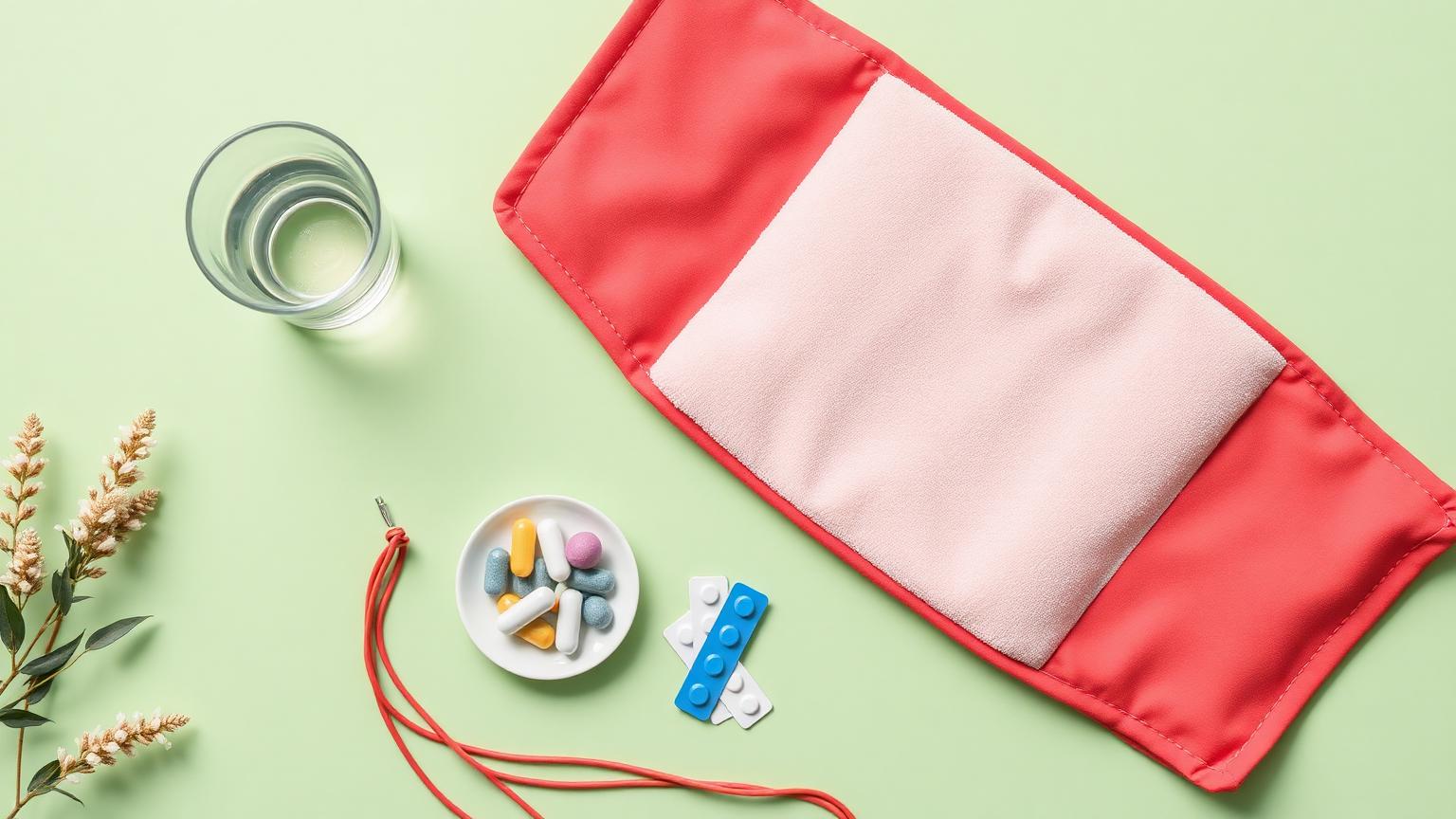
- Two days out: heat patch and PMS SOS into the bag. Water bottle full.
- Day one: if you use an NSAID, take it at the first twinge, as directed. Heat on. Move gently.
- After: note what actually helped. Next cycle, you're working from data instead of the aisle.
FAQ
What is the best PMS medicine over the counter?
For cramps and period headaches, an NSAID such as ibuprofen or naproxen, taken as directed at the first sign of pain, is widely considered the most effective over-the-counter option. Combination PMS tablets add a mild diuretic and a sedating antihistamine, which helps if you also have bloating and want a calming effect — but they aren't a stronger painkiller. Ask a pharmacist if you take other medication or have stomach or kidney concerns.
Can you take OTC PMS meds every month?
Many women do use an NSAID for a day or two each cycle, as directed on the label. But "every month, indefinitely" is worth a quick conversation with a pharmacist or doctor, especially if you have stomach, kidney, or blood-pressure history — and if you're finding you need more of it over time, that's a reason to get checked rather than a reason to keep buying.
Is there a hormone-free alternative to PMS medication?
Not an alternative in the medical sense — supplements aren't medicine and don't replace it. But many women build a hormone-free routine around nutrients that have been studied for premenstrual comfort, like magnesium and vitamin B6, and add an as-needed layer such as PMS SOS on the days that catch them off guard. Think of it as support for the whole week, with medicine kept for the moments that need it.
Do PMS supplements work?
Some research suggests nutrients like calcium, vitamin D, magnesium, and vitamin B6, and the botanical chasteberry, may support premenstrual comfort when taken consistently, though findings are mixed and they aren't medicine. Most women who find them helpful describe a steadier week rather than a symptom disappearing, and they typically give it two full cycles before judging.
What helps PMS bloating fast?
Less salt, more water, potassium-rich foods, and a walk are the fastest non-medicine levers, and pamabrom-based OTC diuretics have a modest effect. The full list is in our guide to getting rid of period bloating fast.
These statements have not been evaluated by a regulatory authority. Feme products are supplements, not medicine, and are not intended to diagnose, treat, cure, or prevent any disease. This article is educational and is not medical advice — talk to a pharmacist or doctor about any medication, especially if you take other medicines, are pregnant or breastfeeding, or have an ongoing health condition.