Why Am I So Tired Before My Period? The Luteal Energy Crash, Explained
It's 2pm. You've had coffee. You slept eight hours (allegedly). And yet your body is behaving like it just ran a marathon carrying a fridge. You're yawning through meetings, mentally rescheduling your entire evening to include a nap, and quietly wondering if you're just lazy now. Then your period shows up a few days later and the whole thing clicks into place.
If you've ever typed "why am I so tired before my period" into your phone at midnight while horizontal, welcome. You're not lazy, you're not broken, and you're definitely not imagining it. There's a real, well-documented reason your energy nosedives in the days before your period — and once you understand what's actually happening in there, you can stop fighting your own body and start working with it.
Let's get into the luteal energy crash, why it hits the way it does, and the practical stuff that actually helps.
First, what's the luteal phase — and why does it come for your energy?
Quick tour of your cycle, no biology degree required. After you ovulate (roughly the midpoint of your cycle), you enter the luteal phase — the stretch of about 10 to 14 days between ovulation and your period. This is prime PMS territory, and it's also when a lot of women notice their get-up-and-go quietly gets up and leaves.
The main character here is progesterone. It rises sharply after ovulation and stays elevated through most of the luteal phase. Progesterone is doing important work, but it also has a bunch of side effects that feel a lot like someone dimming your internal lights. And it's not working alone — blood sugar, sleep quality, and your body's demand for certain nutrients all shift at the same time. It's a full-body group project, and fatigue is the deliverable.
Here's the breakdown of what's actually going on.
1. Progesterone runs warm — and your sleep pays for it
Progesterone has a slightly sedating quality (many women describe feeling foggy or heavy-lidded in the luteal phase), which sounds like it should make you sleep better. Plot twist: it often does the opposite.
One reason is body temperature. Progesterone nudges your core body temperature up by roughly half a degree after ovulation — small on paper, meaningful in practice. Your body cools down at night to fall into deep, restorative sleep, so a warmer baseline can make it harder to drop into quality rest. You might be technically "asleep" for eight hours and still wake up feeling like you fought a bear.
So you get a double hit: a hormone that makes you feel drowsy during the day, and warmer, choppier sleep at night that leaves you under-rested. Tired-but-wired is the classic luteal combo, and it's not a personal failing — it's thermodynamics.
2. Your blood sugar goes on a rollercoaster
Ever notice you're absolutely feral for a snack in the week before your period, and then crash hard an hour later? That's not just cravings being dramatic — your body's sensitivity to insulin can shift during the luteal phase, which affects how steadily you burn through fuel.
When blood sugar spikes and then drops, your energy follows it down the slide. Cue the 3pm slump, the brain fog, the sudden and urgent need to lie on the floor. And because luteal cravings tend to point you toward fast carbs and sugar (hi, entire sleeve of cookies), it's easy to get stuck in a spike-crash-spike loop that keeps energy all over the map.
The fix isn't willpower or shame — it's steadier fuel. More on that in the stack below. And if the cravings themselves are the loudest part of your PMS, that's a whole conversation of its own; steadier cravings and steadier energy tend to travel together.
3. Your body's demand for iron and B vitamins goes up
This one's underrated. As your period approaches and arrives, your body loses iron through menstrual bleeding. Iron is central to carrying oxygen around your body — and low iron is one of the most common reasons women feel wiped out, foggy, and short of breath climbing a single flight of stairs.
Even if you're not clinically low, the monthly demand is real, and it stacks on top of everything else. B vitamins matter here too: they're key players in turning the food you eat into usable energy at the cellular level. When demand is high and intake is patchy (because who's eating perfectly during PMS week), your energy production doesn't have all the raw materials it wants.
Think of it like trying to run a busy kitchen when you're low on a few key ingredients. The kitchen still runs — it's just slower, crankier, and everything takes more effort. Supporting your body with the nutrients it leans on during this window is one of the most practical things you can do.
4. Sleep gets genuinely disrupted (not just "warm")
Beyond the temperature thing, the luteal phase can mess with sleep in other ways. Many women find their sleep gets lighter and more broken in the days before their period — more middle-of-the-night wake-ups, more tossing, more "why am I awake and thinking about a text I sent in 2019."
Add in the usual luteal companions — bloating, cramps, restlessness, mood swings, a brain that won't stop scrolling — and it's a lot to sleep through. Poor sleep tanks next-day energy, which makes cravings worse, which spikes blood sugar, which crashes your energy further. Everything in this list feeds everything else, which is exactly why a single-fix approach rarely works. You want to support the whole system, not play whack-a-mole with one symptom.
The daily fix stack: what actually helps with pre-period fatigue
Okay, enough about why you're tired. Here's what to actually do about it. None of this is about "fixing" yourself — you're not the problem. It's about giving your body better conditions to work with, so the luteal crash lands softer. Think of it as a stack, not a single hero move.
Protect your sleep like it's your job
- Cool it down. Since your core temp runs higher, lean into a cooler bedroom, lighter bedding, or a fan. Making it easier for your body to cool off can support the deeper sleep the luteal phase keeps stealing.
- Guard the wind-down. Screens off a bit earlier, lights dimmer, a boring-on-purpose routine. Give your restless luteal brain fewer reasons to spiral at 1am.
- Keep it consistent. Same-ish bedtime and wake time helps your body know what's coming, even when your cycle is doing chaos.
Eat for steady fuel, not spikes
- Lead with protein. Building meals and snacks around protein (and pairing carbs with protein or fat) helps flatten those blood-sugar peaks and drops. Steadier fuel, steadier energy, fewer floor-lying moments.
- Don't fear the carbs — just be strategic. Whole, fiber-rich carbs release energy more slowly than the sugar rush your cravings are begging for. Have the cookie if you want the cookie, but give it a protein buddy.
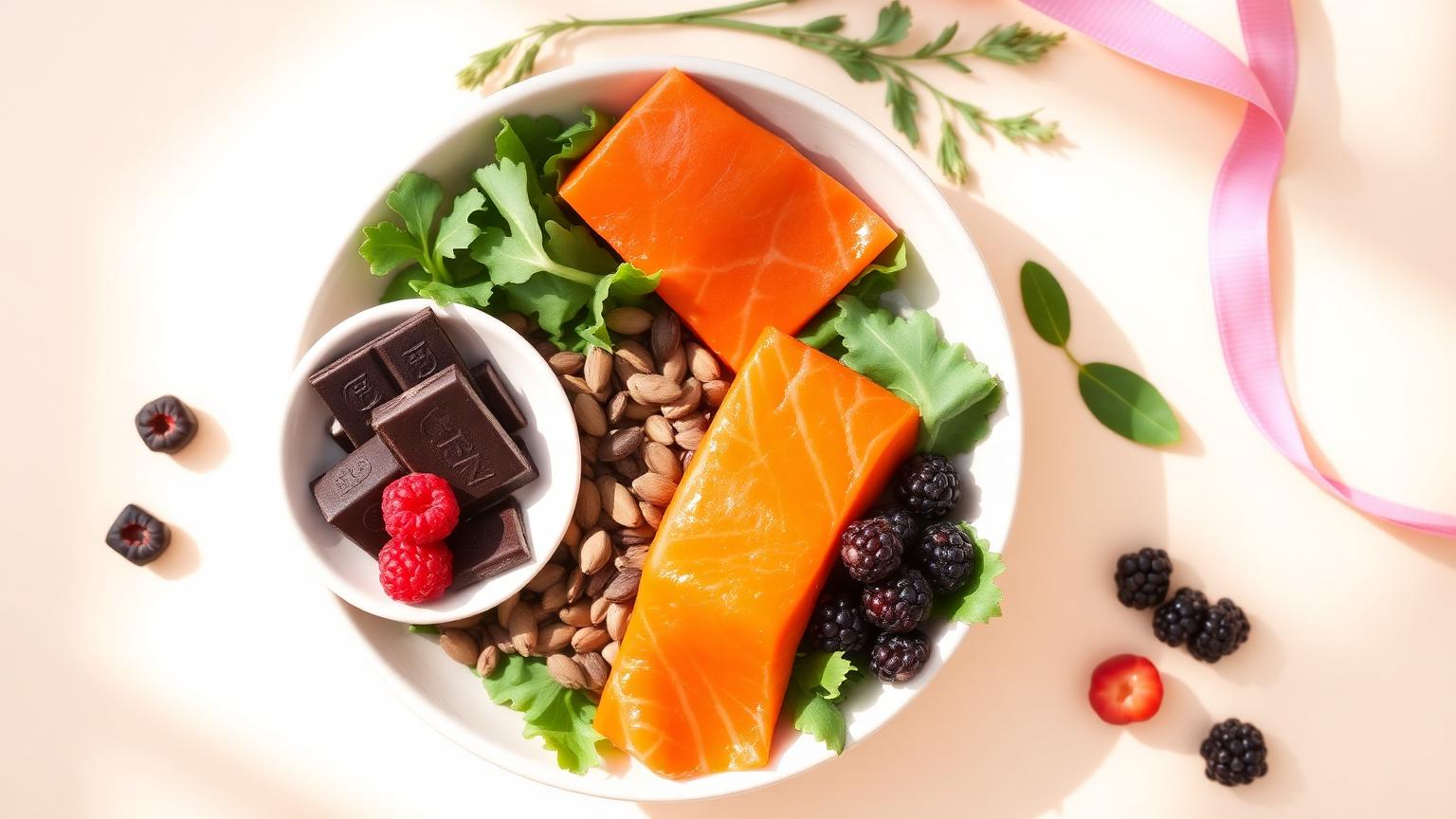
- Feed the iron demand. Iron-rich foods (leafy greens, legumes, red meat if you eat it, plus vitamin C to help absorption) support your body through the extra monthly demand.
Move — gently, on purpose
When you're exhausted, "go work out" sounds like a threat. But you don't need a brutal session. A walk, some stretching, an easy flow — gentle movement supports energy, mood, and sleep without adding stress your luteal body is already low on patience for. Match the effort to the day. Some days that's a run. Some days that's walking to the kitchen with intention. Both count.
Support with magnesium and B vitamins
Magnesium is a favorite of the luteal phase for good reason — many women find it helps them feel calmer and sleep more soundly during PMS week, and it plays a role in a huge range of body processes. B vitamins, as covered, support your body's energy production. Getting these through food is great; a targeted daily supplement can help fill the gaps when your diet is doing its best but the demand is high. For the full ingredient-by-ingredient rundown, see our guide to the best supplements for period fatigue.
Hydrate (yes, really)
Boring but true: even mild dehydration reads as fatigue and brain fog. Luteal bloating can make you feel like water is the enemy, but staying hydrated actually helps your body manage fluid balance better. Keep a bottle within arm's reach and make it stupidly easy.
Give your body daily foundational support
Here's the reframe: your energy in the luteal phase isn't a willpower problem, it's a support problem. That's exactly the gap Feme is built for.
Mojo is our daily formula designed for energy, desire, and vitality — the "more you" layer for when the luteal crash keeps flattening your spark. It's a daily capsule, so it's working with your body consistently rather than waiting for you to hit rock bottom before doing something. If pre-period tiredness is your main event, this is the one to look at first.
And underneath everything, there's Full Balance — our everyday foundation, designed to support overall balance, mood, and energy across your whole cycle, not just the luteal week. Think of Full Balance as the steady baseline and Mojo as the energy-and-vitality upgrade layered on top. Foundation plus spark.
Not sure which combo fits your body and your cycle? That's genuinely the whole point of our quiz. Take the 3-minute quiz and get a recommendation built around your actual patterns instead of a guess. Start with the need, not the phase — always.
When pre-period fatigue is a red flag (see a doctor)
Real talk, because you deserve the real version: a predictable dip in energy before your period is common and usually just part of the luteal ride. But sometimes fatigue is your body waving a bigger flag, and that's worth paying attention to — not panicking about, just checking.
Consider talking to a doctor if:
- The exhaustion is extreme or constant — not just a luteal dip, but wiped-out all cycle long, or bad enough to seriously disrupt your daily life.
- You have signs that can point to low iron or anemia — like unusual paleness, dizziness, shortness of breath with light activity, a racing heart, or ice cravings. This is especially worth checking if your periods are very heavy.
- Your periods have changed significantly — much heavier, longer, or more irregular than your normal.
- Something just feels off — persistent low mood, big unexplained changes, or a gut feeling that this is more than PMS. You know your body. Trust that.
A simple blood test can check your iron levels and rule things in or out, and it's a completely normal thing to ask for. Supplements support a healthy body — they're not a replacement for medical care when your body needs it. Advocating for yourself isn't dramatic; it's smart.
The bottom line
So — why are you so tired before your period? Because your body is running a genuinely demanding backstage operation: rising progesterone nudging your temperature and sleep, blood sugar on a rollercoaster, higher demand for iron and B vitamins, and lighter, more broken sleep, all at once. That's not you being weak. That's you being a person with a cycle.
The luteal crash isn't something you have to just white-knuckle through every single month. Protect your sleep, fuel steady, move gently, cover your nutrient bases, hydrate, and give your body consistent daily support. Common does not mean acceptable — and feeling flattened for a week out of every month is not the rent you have to pay for having a body.
Ready to stop guessing which support fits your energy and your cycle? Take the 3-minute quiz and let's build your stack. Less "just deal with it." More you.
These statements have not been evaluated by a regulatory authority. Feme products are supplements, not medicine, and are not intended to diagnose, treat, cure, or prevent any disease.
FAQ
Is it normal to feel exhausted before my period?
Yes — feeling more tired in the days before your period is very common. During the luteal phase (the roughly two weeks between ovulation and your period), rising progesterone, blood-sugar swings, higher nutrient demand, and disrupted sleep can all gang up on your energy. It's a normal part of many women's cycles. That said, if the fatigue is extreme, constant, or disrupting your life, it's worth checking in with a doctor.
How long before my period does the fatigue usually start?
It varies from person to person, but many women notice the energy dip somewhere in the week to ten days before their period — during the luteal phase. For some it's a gentle slump; for others it's a full nap-seeking situation. Tracking your cycle for a few months can help you spot your own pattern and plan around it, so the crash doesn't blindside you.
Can supplements help with pre-period tiredness?
Supplements are designed to support your body, not to treat or cure anything. Many women find that supporting their body with nutrients like magnesium and B vitamins — alongside good sleep, steady fuel, and movement — helps them feel more like themselves during the luteal phase. Feme's Mojo is designed for daily energy and vitality, and Full Balance is designed as an everyday foundation for overall balance across your cycle.
When should pre-period fatigue make me see a doctor?
See a doctor if your tiredness is severe or constant rather than a predictable luteal dip, if you have signs that can point to low iron or anemia (paleness, dizziness, breathlessness with light activity, a racing heart, ice cravings), if your periods have become much heavier or more irregular, or if something just feels off. A simple blood test can check your iron levels, and asking for one is completely normal.