Period Bloating Explained: Why It Happens & How Long It Lasts
Short answer: period bloating happens because progesterone and oestrogen shift in the second half of your cycle, which makes your body hold fluid and slows your digestion. It usually starts 1–5 days before bleeding, peaks the day before or the first day of your period, and clears 2–3 days after your period begins.
You know the moment. You get dressed, everything's fine, and then somewhere between lunch and 4pm your stomach decides to inflate like it's prepping for a long winter. The button on your jeans is now a personal enemy. You didn't eat differently. You didn't do anything wrong. Your body just… puffed. Welcome to period bloating — the uninvited guest that shows up a few days before your period, overstays its welcome, and leaves without so much as a thank-you note.
Here's the good news before we get into the science: bloating around your cycle is incredibly common, it's usually temporary, and there's a genuinely long list of things that can help you feel less like a balloon animal. Let's get into why it happens, how long it actually lasts, what to do about it, and when it's worth flagging to a doctor.
Why does period bloating happen?
Bloating that clusters around your period isn't one single thing — it's usually a few processes teaming up at the worst possible time. Understanding the "why" makes the "what to do about it" make a lot more sense, so stick with us for the quick tour.
Hormones are running the show
In the second half of your cycle (the luteal phase — roughly the week or so before your period), estrogen and progesterone shift around. Progesterone rises after ovulation and then drops right before your period starts. These hormonal swings influence how your body holds onto fluid and how your digestive system moves. When those hormones tip one way, your body tends to hang onto more water than usual. When they drop, things shift again — which is part of why bloating often eases once your period actually arrives.
Translation: you're not imagining it, and you didn't do anything to cause it. Your hormones are just doing their monthly renovation and the dust hasn't settled yet.
Water retention (aka the puffy tax)
That "I feel swollen everywhere" sensation? A big chunk of it is water retention. Hormonal shifts change how your body balances sodium and fluid, so you temporarily hold onto more water — in your abdomen, but sometimes also your fingers, face, and ankles. This is why the scale might tick up a pound or two before your period and then drop right back down after. It's fluid, not fat, and it's on its way out.
Your gut gets moody too
The same hormones that manage your cycle also influence your digestive tract. For a lot of people, digestion slows down in the days before their period, which can mean more gas, more fullness, and a stomach that feels sluggish and tight. Some people get the opposite mid-period and things speed up dramatically. Either way, your gut is very much part of the bloating story — it's not just water.
Add in the classic period-week trifecta — you're craving saltier, sweeter, more processed food, you're moving less because you feel rough, and you might be sleeping worse — and you've got a perfect storm for a bloated belly.
Is period bloating normal, and how long does it last?
Short answer: yes, bloating around your period is a normal, common part of the menstrual cycle for a lot of people. It's one of the most reported PMS symptoms out there, right up alongside cramps and mood swings.
As for timing, here's the general rhythm most people notice:
- Starts: Often 3 to 5 days before your period, sometimes as early as ovulation for the extra-lucky among us.
- Peaks: Frequently right around the first day of your period.
- Fades: Usually eases within the first couple of days of bleeding and clears up a few days in.
So if you feel like a water balloon for a stretch of days and then deflate once your period gets going, that pattern tracks — and if you want the deep dive on why you bloat before your period specifically, we broke that down too. The keyword is temporary. Bloating that comes and goes with your cycle is very different from bloating that's constant, painful, or getting worse over time — more on that later, because that part matters.
Not sure which of your symptoms are cycle-related and which aren't? That's exactly the kind of thing our quiz is built for. You can take the 3-minute quiz and get a clearer picture of what's going on and which kind of support actually fits your body.
10+ things that genuinely help period bloating
Okay, enough theory — let's talk about what you can actually do when your stomach has clocked out for the week. None of these are magic wands, but stacked together they can make bloat days a whole lot more bearable. Pick the ones that fit your life; you don't have to do all of them. In a hurry? Here's how to get rid of period bloating fast when you need relief today.
1. Move your body (gently counts)
When you feel bloated, a walk is often the last thing you want to do — and often exactly the thing that helps. Movement gets your digestion going and helps your body shift excess fluid. You don't need a brutal workout. A 20-minute walk, some light stretching, a slow yoga flow, or literally just not being horizontal for the whole day can help things move along.
2. Drink more water (yes, really)
It feels backwards to drink water when you're already retaining water, but it works the opposite way you'd think. When you're well hydrated, your body is less inclined to cling to every drop it can find. Staying hydrated supports normal fluid balance and helps your digestion keep moving. Keep a bottle nearby and sip through the day instead of chugging a gallon at 9pm.
3. Ease up on the salt
Sodium tells your body to hold onto water, which is the last thing you need on a bloat day. The tricky part: cravings often push you toward the saltiest options right when you're most sensitive to them. You don't have to go bland — just be aware. Swapping the extra-salty chips-and-takeout combo for something a little fresher can take real pressure off.
4. Load up on potassium-rich foods
Potassium is basically sodium's counterbalance — it supports healthy fluid balance and can help offset some of the water-retention effect of salt. Reach for foods like:
- Bananas
- Avocado
- Sweet potatoes
- Leafy greens like spinach
- Beans and lentils
- Tomatoes and oranges
5. Get some magnesium in
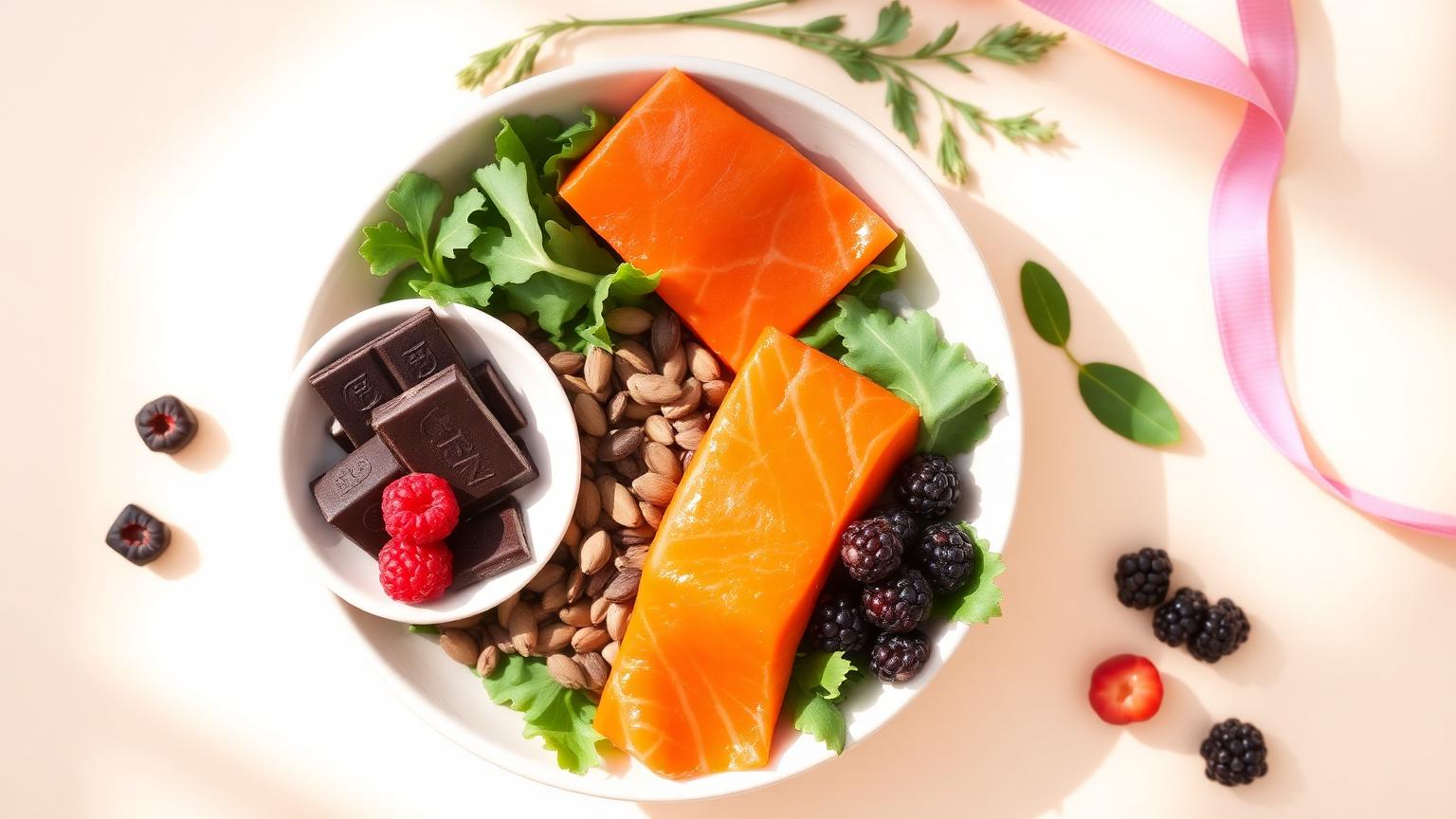
Magnesium is a bit of an MVP around your period. It's a nutrient that supports muscle function and overall balance, and it's a favorite for the days when everything feels tight and tense. You'll find it in foods like dark leafy greens, nuts, seeds, beans, and (great news) dark chocolate. Many people also look to a supplement to top up on bloat-heavy days.
6. Try ginger
Ginger has been a go-to for uncomfortable, sluggish stomachs for basically ever, and for good reason — it's a classic for supporting comfortable digestion. Fresh ginger in hot water, a ginger tea, or grating some into your food are all easy ways to sneak it in. Bonus: it's cozy, and cozy is underrated on a bad body day.
7. Don't fear fiber (but be smart about it)
Fiber supports regular, comfortable digestion, which is exactly what you want when things feel backed up and heavy. The catch: dump a mountain of fiber on a system that isn't used to it and you can feel more bloated, not less. Keep fiber steady and consistent across the month — think fruit, veg, whole grains, beans — rather than doing a dramatic fiber binge the second you feel puffy.
8. Protect your sleep
Sleep is quietly one of the biggest levers here. Poor sleep messes with the hormones that influence appetite, cravings, and stress — all of which feed the bloat cycle. Getting solid rest supports your body's overall balance and makes literally every other symptom easier to handle. Guard your sleep during period week like it's sacred, because for your comfort levels, it kind of is.
9. Watch the carbonated and sugary stuff
Fizzy drinks add actual gas to a stomach that's already feeling gassy — not a great combo. And big sugar spikes can leave you feeling puffy and rough. You don't have to swear off everything fun, but on peak bloat days, swapping the soda for still water, herbal tea, or water with lemon can be a quick win.
10. Manage stress where you can
Stress and your gut are deeply linked — when you're wound up, your digestion often feels it. Whatever helps you actually unclench (a walk, a bath, breathing exercises, an aggressively low-effort night in) supports both your mood and your midsection. This isn't "just relax" energy; stress genuinely shows up in the body, so treating it seriously is part of the plan.
11. Warmth is your friend
A heating pad or hot water bottle on your stomach can help you feel more comfortable and relaxed when everything's tight and tender. It won't drain the fluid, but comfort counts for a lot when you're just trying to get through the day, and relaxed muscles tend to feel less clenched.
Nutrients that support you on bloat days
Food-first is always a great foundation, but the days around your period ask a lot of your body, and it's normal to want some backup. A few nutrients tend to come up again and again for cycle-related comfort:
- Magnesium — supports muscle function and a sense of overall balance when everything feels tense.
- Potassium — supports healthy fluid balance to help counter the puffy, water-retention feeling.
- Ginger — a long-loved botanical for supporting comfortable, settled digestion.
- B vitamins — support energy metabolism, which is handy when bloat days drag your energy down with them.
The idea isn't to take a fistful of pills and hope. It's to give your body targeted support that fits what's actually happening in the moment — so you're not white-knuckling your way through the week. For a fuller eating game plan, see our guide to what to eat (and avoid) with PMS.
When period bloating is more than PMS
Cycle-linked bloating that shows up before your period and clears up after is one thing. Bloating that doesn't follow that pattern is worth paying attention to. You know your body better than anyone, so trust it if something feels off. It's a good idea to check in with a doctor if you notice:
- Bloating that's constant or doesn't come and go with your cycle
- Bloating that's getting worse over time or is severe
- Bloating paired with significant pain, especially pain that stops you in your tracks
- Noticeable changes in your bowel habits, unexplained weight loss, blood where it shouldn't be, or feeling full very quickly when eating
- Symptoms that feel dramatically heavier than "normal PMS" and disrupt your daily life
None of that is meant to scare you — the vast majority of period bloating is exactly what it looks like. But bloating can occasionally be a signal of other health conditions, and you deserve real answers rather than just powering through. A quick conversation with a healthcare professional is always worth it if something doesn't sit right.
And if you're weighing PMS medicine over the counter for the roughest days, our rundown of the options is honest about what each one does — and what it doesn't.
Where PMS SOS fits in
Here's the thing about most bloat advice: it assumes you have time to overhaul your diet, meal-prep potassium bowls, and become a hydration influencer overnight. Real life doesn't work like that. Sometimes it's 3pm on day one of your period, your stomach is staging a protest, and you just need something now.
That's the exact gap PMS SOS is built for. It's our as-needed reset — designed for the days that catch you off guard, when cramps, bloating, fatigue, and mood ups and downs all decide to show up at once. They're raspberry soft-chew gummies (so, genuinely nice to take, not a chalky horse pill), made to give you targeted support in the moment instead of asking you to plan your whole month around feeling rough.
Think of it as the difference between "I'll fix my entire lifestyle someday" and "I need backup for these specific days." PMS SOS is the backup. You can keep it in your bag, your desk, your nightstand — wherever the bad days tend to find you. Learn more about PMS SOS and see if it fits your particular brand of period chaos.
And if bloating is just one part of a bigger everyday-balance picture, that's worth knowing too — foundational, all-cycle support is a different job than an in-the-moment reset. The best way to figure out what your body actually needs is to stop guessing and get a read on it.
Period bloating, day by day
Bloating feels random, but it follows the same arc most months. Roughly, counting day 1 as the first day of bleeding:
- Days -7 to -5: nothing obvious yet. Progesterone is climbing and sodium handling is starting to change.
- Days -5 to -3: rings and waistbands get tighter, the scale creeps up 1–2 lbs. This is fluid, not fat.
- Days -2 to -1: the peak. Fullest belly, puffiest face and fingers, often 2–5 lbs above baseline.
- Days 1–2: bleeding starts, hormones drop, and your body begins releasing the fluid. Digestion can be loose and unpredictable at the same time.
- Days 2–3: most of the puffiness is gone.
- Days 4–5: back to baseline for most women. A lingering few days is still normal, especially if you take iron.
Bloating before, during, and after your period
Before is mostly water retention driven by progesterone, plus slower gut transit — the classic tight-jeans version. During is more digestive: prostaglandins that make the uterus contract also act on the bowel, which is why bloating and looser stools often arrive together on day one. After is usually the tail end of the fluid shift, with iron supplements a common extra cause if you have heavy periods.
The practical difference: before your period, target fluid — salt down, potassium and water up, keep moving. During and after, be gentler with your digestion — cooked over raw, smaller meals, warmth, and less caffeine. If you want the fast-relief version of all of this, we've collected it in 12 ways to get rid of period bloating fast.
FAQ
How long does period bloating usually last?
For most people, period bloating starts a few days before their period, peaks around the first day, and eases within the first couple of days of bleeding — so roughly a handful of days total. If your bloating is constant, doesn't line up with your cycle, or keeps getting worse, that's worth a conversation with a doctor rather than chalking it up to PMS.
Why do I bloat before my period but not during?
Blame the hormonal timing. In the week or so before your period, shifting estrogen and progesterone levels encourage your body to hold onto more water and can slow digestion, which is peak bloat territory. Once your period actually starts and those hormones drop, your body tends to release the retained fluid — so a lot of people feel their bloating deflate a day or two into bleeding.
Does drinking more water really help with bloating?
Counterintuitive but yes. When you're dehydrated, your body clings to water more tightly, which can make retention worse. Staying well hydrated supports normal fluid balance and helps your digestion keep moving. Pair it with easing up on salt and adding potassium-rich foods, and you're working with your body instead of against it.
Can supplements help with period bloating?
Supplements aren't medicine and won't cure anything, but certain nutrients — like magnesium, potassium, and ginger — are commonly used to support comfort and healthy fluid balance around your cycle. Feme's PMS SOS is designed as an as-needed reset for exactly those off-guard bloat days. The smartest move is to figure out what your specific body needs rather than guessing, which is what our quiz is for.
What's the fastest way to get rid of period bloating?
Move a little, drink more water than feels logical, swap salty snacks for potassium-rich ones, and give your gut a warm drink instead of a fizzy one. That's the short list. The full, step-by-step version lives in our guide on how to get rid of period bloating fast — this page is the "why" and "how long"; that one is the "do this now".
Bottom line: period bloating is common, it's usually temporary, and you have way more options than just suffering through it in your stretchiest pants. A little movement, a little hydration, the right nutrients, and some backup for the worst days can genuinely change how period week feels. Ready to stop guessing which support actually fits you? Take the 3-minute quiz and get a plan built around your body — not a phase, not a fad, just what you actually need. Less "just deal with it." More you.
How many days before your period does bloating start?
For most women it begins 1–5 days before bleeding, as progesterone peaks and then falls. It's usually worst the day before or the first day of your period and settles 2–3 days in.
Is period bloating water weight or fat?
It's water. A 2–5 lb swing across the premenstrual week is fluid retention driven by the way hormones change your kidneys' handling of sodium, and it reverses on its own once your period is underway.
Why do I bloat more some months than others?
Salt intake, sleep, stress, alcohol, travel, and how much you've moved all stack on top of the hormonal shift. A stressful, salty, sedentary week before your period will bloat you noticeably more than a calm, well-hydrated one.
When should I see a doctor about period bloating?
If bloating never fully goes away between cycles, gets worse month on month, comes with severe pain, or permanently changes your bowel habits, get it checked. Those patterns can point to IBS, endometriosis, thyroid problems, or ovarian issues rather than ordinary PMS.
These statements have not been evaluated by a regulatory authority. Feme products are supplements, not medicine, and are not intended to diagnose, treat, cure, or prevent any disease.