How to Relieve Period Cramps Fast: Science-Backed Methods
You know the feeling. You wake up, everything's fine for approximately four seconds, and then your uterus taps you on the shoulder and says, "Hi, we're doing this today." No warning. No RSVP. Just a low, insistent ache that turns "I have plans" into "I have a heating pad and a will to survive." Welcome to ambush day.
Here's the thing nobody says loudly enough: cramps being common doesn't mean they're something you just have to sit inside of, white-knuckling your way to hour six. There are real, science-backed things you can do in the next ten minutes to feel more human — and a few slower moves that make the whole ordeal less dramatic next time. This is your no-fluff, no-lecture guide to getting relief when your period decides to make it your whole personality for the day.
Let's get you comfortable. Then we'll talk about the stuff that actually matters — including when cramps are your body waving a flag you shouldn't ignore.
First, a 60-second explainer on why this hurts
Quick science, because knowing what's happening makes it feel less like a random betrayal. During your period, your uterus contracts to shed its lining. Those contractions are driven partly by natural compounds called prostaglandins — the more you have, the stronger the squeeze, and the more it can feel like your midsection is auditioning for a workout you did not sign up for. Higher prostaglandin activity is associated with more intense cramping.
That's why a lot of "how to relieve period cramps" advice circles back to two ideas: relax the muscle, and calm the inflammatory noise around it. Almost everything below is doing one of those two jobs. Now — relief.
How to relieve period cramps fast: the ambush-day playbook
1. Heat. Always start with heat.
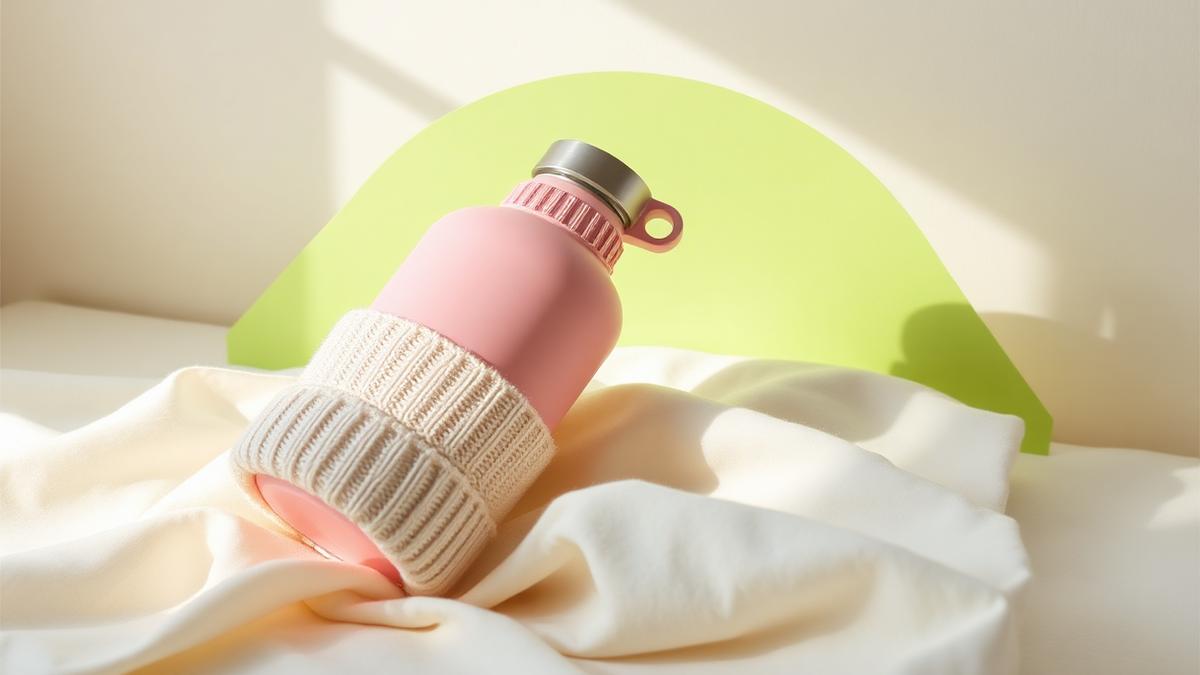
If you do one thing, do this. Heat helps relax the contracting muscle, and many women find it works about as noticeably as reaching for a painkiller — minus the pill. A heating pad, a hot water bottle, a microwavable rice sock, a stick-on heat patch you can wear under your jeans at your desk: all fair game.
- Where to put it: low on your belly, or your lower back if that's where the ache lives. Both is allowed. You contain multitudes.
- How long: 15–20 minutes at a time, with a layer of clothing or cloth between the heat and your skin so you don't trade cramps for a burn.
- On the go: adhesive heat patches are the unsung hero of the commute. Slap one on before you leave and forget it exists.
A warm bath or hot shower counts too — bonus points because the warm water gives you an excuse to lie down and dramatically stare at the ceiling, which is medically underrated.
2. Move, even though moving is the last thing you want to do
Yes, this feels like a personal attack. But gentle movement gets blood flowing and can ease the clench. Nobody's asking you to PR your deadlift. We're talking low-key, low-stakes motion.
- A slow walk around the block or literally around your apartment.
- Cat-cow: on hands and knees, arch and round your back slowly. It gives your lower back and belly a soft stretch.
- Child's pose: knees wide, chest sinking toward the floor, forehead down. Feels like a hug from the inside.
- Knees-to-chest: lie on your back, hug your knees in, rock gently side to side.
- Supine twist: on your back, drop both knees to one side, breathe, switch. Great for lower-back ache.
Many women find light stretching or a bit of yoga takes the edge off — and if all you can manage is lying in child's pose while a show plays in the background, that still counts. Do the version your day allows.
3. Breathe like you mean it
When it hurts, we tense and take shallow little sips of air, which does us zero favors. Slow, deep breathing helps switch your body toward its calm-down mode, which can loosen the full-body brace you don't even realize you're holding.
Try box breathing: inhale for 4, hold for 4, exhale for 4, hold for 4. Repeat for a couple of minutes with one hand on your belly so you can feel it rise. It's free, it's invisible, and you can do it in a meeting while nodding like a professional.
4. Hydrate — and warm drinks earn extra credit
Dehydration and bloating are a chaotic little duo, and being low on water can make you feel puffier and crampier. Keep a bottle nearby and actually drink from it. A warm drink pulls double duty here: hydration plus that soothing internal-heat effect.
- Ginger tea — warm, cozy, and ginger has a bit of a reputation in this arena (more below).
- Chamomile or peppermint tea — calming, and peppermint may help a tense, gassy belly feel less like a balloon animal.
- Water with lemon if plain water feels like a chore.
Gentle on the salty snacks today if you can — sodium loves to hold onto water and amplify the bloat. (We see you, chips. Not now.)
5. Magnesium and ginger: the two names worth knowing
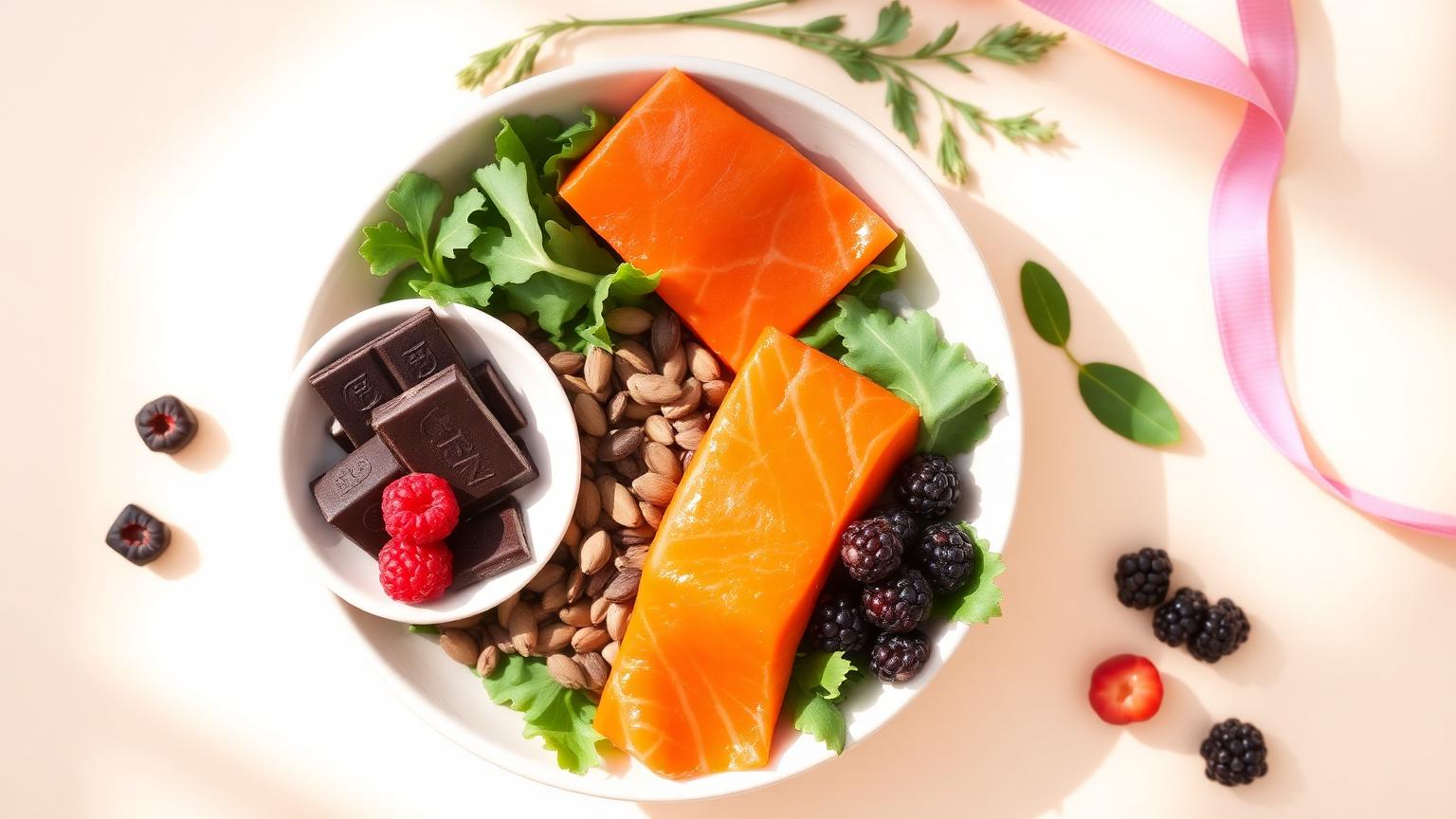
Magnesium is a mineral involved in muscle relaxation and nerve function, and it's one many women find helpful around their cycle. You'll find it in food — think leafy greens, nuts, seeds, beans, and (thank you, universe) dark chocolate — and it's a common ingredient in cycle-focused supplements.
Ginger is the other one that keeps coming up. It's a warming root with a long history of use for that heavy, achy, inflammation-y feeling, and it's genuinely pleasant as a fresh tea. Grate a little into hot water, add honey, sip slowly.
Neither is a magic switch, and results are personal — but they're low-drama additions to your ambush-day toolkit, and they pair nicely with the heat-and-movement basics.
6. Eat like you're on your body's side
You don't need a rigid meal plan while you're hunched over a heating pad. But leaning toward anti-inflammatory foods can make the day feel a touch smoother:
- Leafy greens (spinach, kale) for magnesium and iron.
- Berries, oranges, and other colorful produce for antioxidants.
- Fatty fish like salmon, or plant sources of omega-3s such as walnuts, chia, and flax.
- Bananas for potassium and magnesium — easy, portable, no effort required.
- A little dark chocolate because it has magnesium and because you deserve nice things.
And if today's real answer is toast and a smoothie, that's a perfectly valid meal plan. The goal is feeling better, not earning a nutrition badge.
7. Try a TENS unit if you've got one (or are curious)
A TENS unit is a small device that sends gentle electrical pulses through pads on your skin. The buzzing sensation is thought to interrupt some of the pain signals reaching your brain — basically giving your nervous system a shinier object to focus on. Many women who deal with cramps regularly keep an affordable one in the drawer. Follow the device instructions, start low, and place the pads over your lower belly or back.
8. Rest without the guilt tax
Radical concept: you're allowed to slow down. Curling up with your knees toward your chest is a genuinely good position for cramp relief, and pairing rest with heat is a power move. If you can nap, nap. If you can cancel the thing, cancel the thing. Your body is doing actual physical work today — treat it like the labor it is.
Your fast checklist for right now
Bookmark this one. When cramps ambush you and your brain is too foggy to strategize, run the list top to bottom:
- Heat on — belly or back, 15–20 minutes.
- Water within reach — start sipping, warm if possible.
- Two minutes of slow breathing — inhale 4, exhale 4.
- Change position — knees-to-chest, child's pose, or a slow lap around the room.
- Warm drink — ginger or chamomile tea.
- Loosen the waistband — soft clothes, no judgment.
- As-needed cycle support — if a targeted reset is part of your routine, this is the moment it's designed for.
- Permission to rest — the emails can wait ten minutes. They always could.
Not every item will be your hero on any given day. Cramps are personal; your toolkit gets to be too. Take the 90 seconds to learn what your body responds to — future-you will be grateful.
Where PMS SOS fits: your as-needed reset
Here's where we'll be honest about what a supplement is and isn't. Nothing in a bottle is going to make period cramps a thing of the myth. But if you want something purpose-built for exactly these off-guard moments — an on-the-go layer to reach for alongside your heat and your ginger tea — that's the whole reason PMS SOS exists.
PMS SOS is Feme's as-needed reset: designed for the days that catch you sideways, with support in mind for cramps, bloating, fatigue, stress, and the emotional ups and downs that like to crash the party. It comes as raspberry gummies — because "on-the-go support" shouldn't require a glass of water and a whole production. Toss them in your bag next to your heat patch and your headphones. That's the vibe.
Think of it as one more tool on the checklist, not a replacement for the basics. Heat still helps. Movement still helps. Rest still helps. PMS SOS is the layer that slots in when your body sounds the alarm and you want something made for the moment.
Not sure which Feme support actually fits your cycle and your particular brand of chaos? Take the 3-minute quiz — it starts with what you're actually feeling instead of making you diagnose yourself, and points you toward the products designed for it.
When cramps are a red flag: please read this part
Everything above is for your run-of-the-mill, annoying-but-manageable monthly cramps. But some pain is your body asking for backup, and knowing the difference matters. You deserve care, not a stiff upper lip.
Consider checking in with a doctor or gynecologist if:
- Your cramps are severe — the kind that regularly stop you from working, sleeping, or getting through a normal day.
- The pain is getting worse over time instead of staying the same, or has changed noticeably from what's normal for you.
- Cramps last longer than your period, or you get significant pelvic pain at other times of the month.
- You have very heavy bleeding, soaking through protection quickly, or passing large clots.
- Sex, using the bathroom, or bowel movements are painful around your period.
- Your usual comfort measures — heat, rest, over-the-counter PMS medicine — barely make a dent.
- You're also dealing with fever, dizziness, fainting, or unusual discharge.
Persistent, severe, or worsening period pain is worth taking seriously. Conditions like endometriosis and other underlying causes are more common than most people realize, and — this part is important — many women spend years being told their pain is just "part of being a woman" before anyone looks closer. It isn't a personality flaw to want answers. A supplement can't diagnose or rule any of that in or out, and this article can't either. Only a healthcare professional can do that, and asking for that appointment is a strong, smart move — not an overreaction.
If your gut says something's off, trust it. Common does not mean acceptable, and "just deal with it" was never good medical advice.
Building a calmer cycle, not just a calmer afternoon
Fast relief is the priority when you're mid-ambush. But a lot of the day-to-day cramp experience is shaped by the boring background stuff: steady sleep, staying hydrated most days (not just the crampy ones), moving your body through the month, and eating in a way that keeps your energy from crashing.
None of it is glamorous, and none of it is a guarantee. But many women find that treating their body kindly across the whole month — not just performing triage on day one — makes the rough days a little less rough. If you want a foundational daily layer that plays the long game while PMS SOS handles the surprise attacks, that's what the quiz can help you sort out based on what you're actually experiencing.
FAQ
How can I relieve period cramps fast at home?
Start with heat on your lower belly or back for 15–20 minutes, sip water or a warm drink like ginger tea, do two minutes of slow deep breathing, and gently change position — knees-to-chest or child's pose are favorites. Light movement like a slow walk can help too. These are the moves many women reach for first, and they stack well together. If you use an as-needed cycle support like PMS SOS, this is the moment it's designed for.
Does magnesium actually help with cramps?
Magnesium is a mineral involved in muscle relaxation and nerve function, and it's one many women find helpful around their cycle. You can get it from food — leafy greens, nuts, seeds, beans, and dark chocolate — or from cycle-focused supplements. It's not a magic switch and results are personal, but it's a low-drama addition to your toolkit. If you have kidney issues or take medication, check with your doctor before adding a supplement. For the deeper dive, here are the best supplements for menstrual cramps, with the evidence and doses laid out.
How much heat is too much, and how long should I use a heating pad?
Use heat for about 15–20 minutes at a time, and always keep a layer of clothing or cloth between the heat source and your skin so you don't risk a burn. You can repeat throughout the day. Adhesive heat patches are handy when you're out and about because they hold a gentle, steady warmth under your clothes without any fuss.
When should I see a doctor about period cramps?
Reach out to a healthcare professional if your cramps are severe enough to disrupt daily life, are getting worse over time, last longer than your period, come with very heavy bleeding or large clots, or don't respond to your usual comfort measures. Pain during sex or bathroom use around your period, or symptoms pointing toward something like endometriosis, are also worth a conversation. Persistent or worsening pain deserves real attention — asking for that appointment is a smart move, not an overreaction.
The takeaway
Cramps may be common, but you don't have to build your whole day around enduring them. Heat, movement, hydration, breathing, and a few smart nutrients can get you from "I can't" to "okay, I've got this" — and knowing when pain is a red flag means you're advocating for yourself like the capable human you are. Feel good before, during, and after your period. Period.
Want support built for the ambush days? Meet PMS SOS — the as-needed reset in raspberry gummies — or take the 3-minute quiz to find the Feme lineup that fits your cycle.
These statements have not been evaluated by a regulatory authority. Feme products are supplements, not medicine, and are not intended to diagnose, treat, cure, or prevent any disease.