Magnesium for PMS: what it does and how much to take
If you only add one mineral before your period, most clinicians would point to magnesium. It supports muscle relaxation, sleep, blood sugar steadiness and serotonin production — the exact four things that wobble in the luteal phase.
Why magnesium and PMS are linked
Magnesium is a cofactor in over 300 enzyme reactions, including the ones that relax smooth muscle (uterine cramping), regulate the stress response, and convert tryptophan into serotonin. In the second half of the cycle, progesterone rises and then falls sharply, and magnesium demand goes up while intake usually stays the same.
Several small randomised trials have looked at magnesium supplementation for premenstrual symptoms, most often at 200–360 mg per day taken through the luteal phase, with the clearest reported effects on mood-related symptoms, fluid retention and cramping. The evidence base is modest, not definitive — but magnesium is also one of the best-tolerated minerals to try.
What low magnesium tends to feel like
- Cramps that feel tight and gripping rather than dull
- Restless sleep in the week before your period
- Sugar and chocolate cravings that arrive on schedule
- A wired-but-tired mood — irritable, hard to settle
- Eye twitches, tension headaches, calf cramps at night
Which form of magnesium to choose
| Form | Best for | Notes |
|---|---|---|
| Glycinate | Sleep, mood, sensitive stomachs | Gentlest; the usual first choice for PMS |
| Citrate | Constipation, bloating | Can loosen stools — that's the point, or the problem |
| Malate | Daytime energy, muscle aches | Less sedating than glycinate |
| Oxide | Cheap bulk magnesium | Poorly absorbed; mostly a laxative |
How much, and when to take it
The US RDA for adult women is 310–320 mg per day from all sources, and the upper limit for supplemental magnesium (on top of food) is 350 mg per day. Most PMS-focused protocols sit in the 200–300 mg supplemental range, taken daily through the luteal phase — roughly from ovulation until your period starts — because the effect builds rather than working like a painkiller.
Evening is the practical time to take it: magnesium glycinate is mildly calming, and taking it with food reduces any stomach upset. Give it two full cycles before deciding whether it works for you.
Food first, always
- Pumpkin seeds — around 150 mg per ounce, the densest everyday source
- Dark leafy greens — spinach, chard, kale
- Almonds, cashews, black beans, edamame
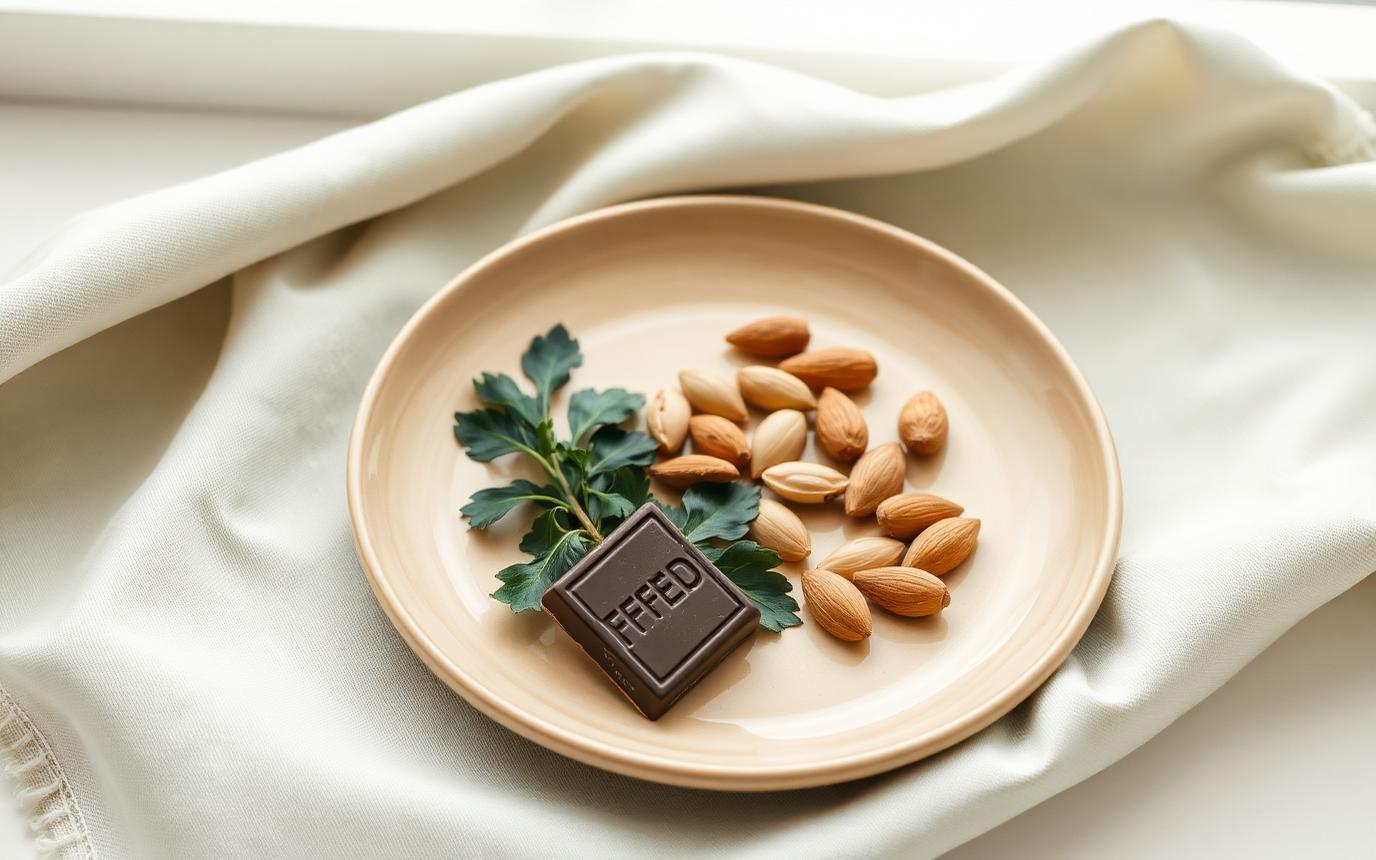
- Dark chocolate, 70% or above (the craving was not wrong)
How Feme uses it
PMS SOS pairs magnesium with the other luteal-phase nutrients we kept seeing in the research — a soft chew you take in the days before your period rather than another capsule to remember every morning. If you're not sure which of your symptoms are magnesium-shaped, the hormone quiz maps them in about three minutes.
Frequently asked
What supplements help with PMS mood swings?
Magnesium is the most-studied single nutrient for premenstrual mood symptoms, often alongside vitamin B6, calcium and chasteberry (vitex). Magnesium supports serotonin production and the stress response, which is why it tends to show up in mood-related PMS research rather than only cramp research.
How much magnesium should I take for PMS?
Most PMS studies use 200–360 mg of supplemental magnesium per day through the luteal phase. The tolerable upper intake level for supplemental magnesium in adults is 350 mg per day, so staying at or below that — and getting the rest from food — is the sensible default.
When should I start taking magnesium in my cycle?
Daily is simplest, but if you'd rather target it, start around ovulation (roughly day 14 of a 28-day cycle) and continue until your period begins. Magnesium works cumulatively, so a single dose on a bad day does much less than steady intake.
How long before magnesium helps with PMS?
Give it two complete cycles. Sleep and cramping often shift in the first month; mood and craving changes usually take longer because they depend on tissue levels rebuilding.
Which magnesium is best for period cramps?
Magnesium glycinate is the usual recommendation — well absorbed, gentle on the stomach and calming enough to help with sleep. Citrate works too, but it can loosen stools, which is unwelcome during a period.