A PMS Routine for Working Women: Plan Your Luteal-Phase Workday
You know the week: louder inbox, tighter waistband and a 3 p.m. wall. A good PMS routine for working women doesn't ask you to push harder. It helps you plan around your cycle so the week before your period stops wrecking your calendar. This guide covers how to plan the two weeks before your period, an hour-by-hour workday, symptom fixes you can use at your desk, and clear signs that it's time to see a professional.
Key takeaways
- Track your cycle so you know when your luteal phase (roughly the 1–2 weeks before your period) is coming.
- Put high-stakes work in the weeks before it. Save luteal weeks for focused solo work and wrap-up tasks.
- Build small buffers into each day: protein at breakfast, a planned afternoon snack, heat for cramps and a firm bedtime.
- If severe mood symptoms, pain or heavy bleeding disrupt your work, talk to a healthcare provider.
The Short Answer: What a PMS Routine for Working Women Looks Like
A workday PMS routine has three parts. Track your cycle. Front-load demanding work before the luteal phase. Then buffer your days with small habits that ease symptoms.
And no, this isn't you being dramatic. The U.S. Office on Women's Health says most women get some premenstrual symptoms, such as bloating, headaches and moodiness. Those symptoms follow you to work, too. A large Dutch survey published in BMJ Open found that most lost productivity from menstrual complaints came from working while feeling unwell, not from sick days. Common doesn't mean you have to put up with it. It means you deserve a plan.
Here's the routine at a glance:
- Morning: protein-rich breakfast, water, ten minutes of movement and any daily supplement you take.
- Midday: hardest task first, then a balanced lunch and a short walk outside.
- Afternoon slump: a planned snack, a stretch break and a switch to lower-stakes tasks.
- Evening wind-down: screens off, heat and a warm shower, and the same bedtime every night.
One important note: if your symptoms feel unmanageable every month, talk to a healthcare provider. That goes double for depression, rage or anxiety that affects your work or relationships. It could be premenstrual dysphoric disorder (PMDD), which needs professional care.
Why the Luteal Phase Hits Your Workday So Hard
Your cycle has four phases:
- Menstrual: your period, from day 1.
- Follicular: from the start of your period to ovulation, as estrogen rises.
- Ovulatory: a short window around the release of an egg.
- Luteal: from ovulation until your next period.
The luteal phase is the more predictable half. It begins right after ovulation and usually lasts about 11–17 days, while the follicular phase varies more from person to person. Progesterone rises during this phase and peaks around seven days after ovulation. If you're not pregnant, progesterone and estrogen then fall in the days before your period. Many women notice symptoms most during that drop.
These hormone shifts may affect your energy, focus, mood, sleep and appetite. The Office on Women's Health lists PMS symptoms that include bloating, trouble concentrating, food cravings, sleep problems, tiredness and irritability. Here's how those symptoms tend to show up at the office:
| Symptom | How it shows up at work |
|---|---|
| Cramps | Hard to sit through meetings |
| Bloating | Tight clothes, discomfort |
| Brain fog | Slower focus, more typos |
| Irritability | Shorter fuse on email |
| Sugar cravings | 3 p.m. vending runs |
| Poor sleep | Groggy mornings |
Experiences vary widely. Some women barely notice their luteal phase, while others feel it for ten days straight. For most, symptoms usually ease soon after the period starts. Your own pattern matters more than any average, so track it for two or three cycles before you redesign your schedule.
Plan Ahead: Cycle-Syncing Your Work Calendar
The best PMS routine for working women starts weeks earlier, in your calendar.
Step 1: Mark your window. Use a period-tracking app or a recurring calendar block. Count back about 14 days from your expected period and label that stretch "luteal." Flag the last 3–5 days, when symptoms often peak.
Step 2: Move big moments earlier. When you can choose, schedule presentations, negotiations, performance reviews and launches for your follicular or ovulatory weeks.
Step 3: Keep luteal weeks for deep, quiet work. These weeks suit:
- Focused solo projects
- Admin, inbox cleanup and expense reports
- Editing and reviewing drafts
- Wrapping up loose ends and documenting work
- Planning next month
Step 4: Build buffers. Give yourself extra time on deadlines that fall in your luteal weeks. Even an extra day can help. In the last few days before your period, skip late networking events and after-work drinks, or keep those plans loose.
Example two-week luteal workday plan
| Days | Energy level | Best tasks | Protect |
|---|---|---|---|
| Luteal days 1–4 | Still fairly steady | Finish big deliverables | Sleep routine |
| Luteal days 5–8 | Starting to dip | Solo deep work, editing | Afternoon snack |
| Luteal days 9–11 | Lower, foggier | Admin, reviews, planning | Evenings free |
| Luteal days 12–14 | Often lowest | Light tasks, wrap-ups | Buffer, heat, rest |
Your PMS Routine for Working Women, Hour by Hour
Shift the times to fit your hours.
| Time | Do this | Why it helps |
|---|---|---|
| 7:00 a.m. | Protein breakfast, water | Steadier energy |
| 7:30 a.m. | 10-min walk or stretch | Mood and focus |
| 9:30 a.m. | Hardest task first | Fresher focus |
| 12:30 p.m. | Balanced lunch, walk | Even blood sugar |
| 3:00 p.m. | Planned snack, stretch | Beats the slump |
| 3:30 p.m. | Lower-stakes tasks | Less strain |
| 9:00 p.m. | Screens off, heat pad | Better wind-down |
| 10:30 p.m. | Same bedtime | Protects sleep |
Morning: set your baseline
Eat a breakfast with protein, such as eggs, Greek yogurt or tofu, plus some fiber. Drink a glass of water before your coffee. Take a short walk or do a few stretches. The U.S. Office on Women's Health says regular aerobic exercise throughout the month can help with depression, difficulty concentrating and fatigue. If you take a daily supplement, pair it with breakfast so it's hard to forget.
Mid-morning: do the hard thing first
Use your late-morning focus for the task you're most likely to put off. Close chat apps and work in one 60–90 minute block.
Lunch: steady your blood sugar
Build lunch around complex carbs (brown rice, whole-grain bread, beans), fiber-rich vegetables and protein. Then get outside for ten minutes.
Afternoon slump: plan for it
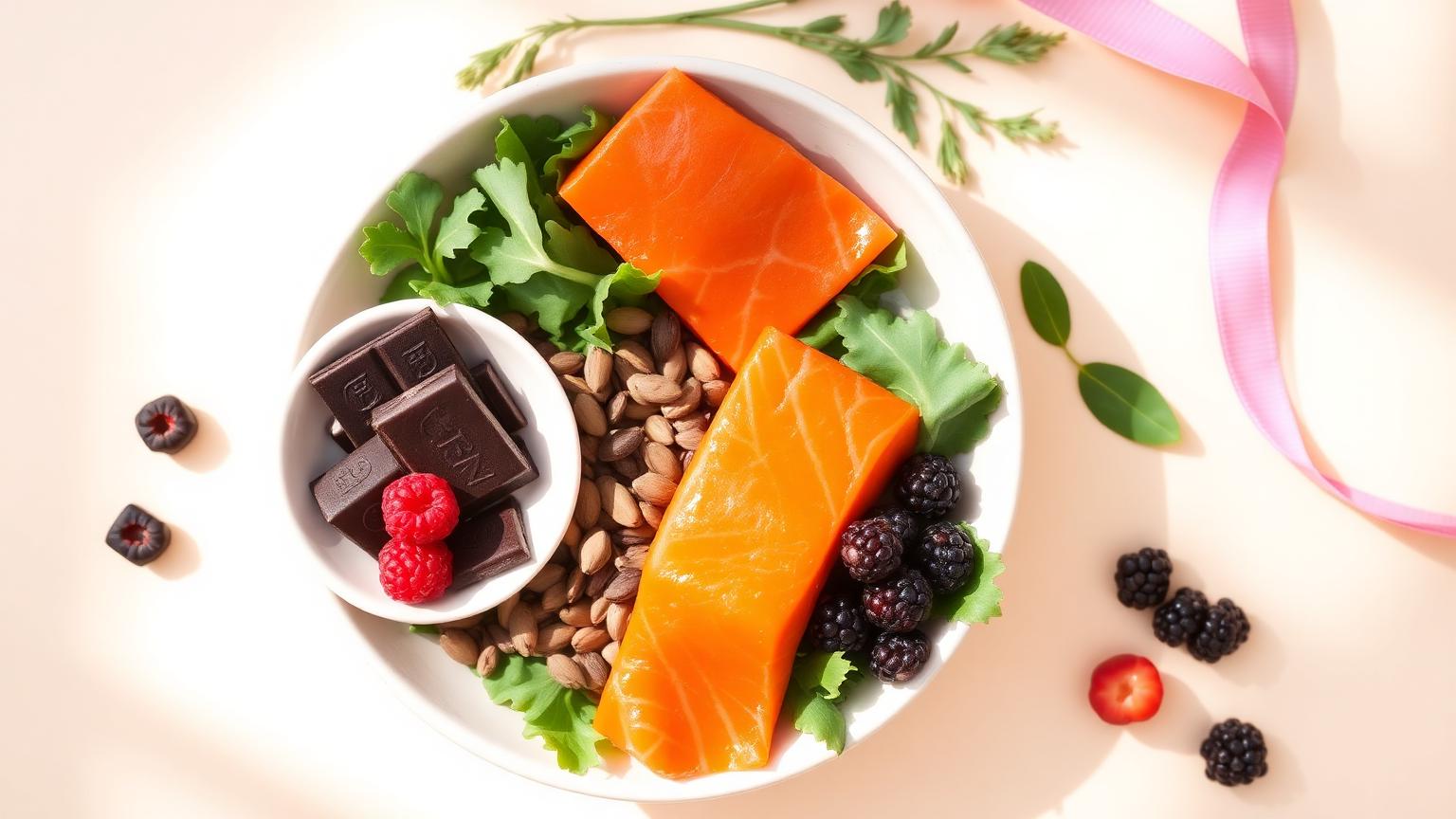
Don't wait for a craving to catch you off guard. Schedule a snack, such as apple slices with nut butter or a small piece of dark chocolate with almonds. Stand up, stretch and switch to emails, filing or routine calls.
Evening: protect tomorrow
Sleep is often patchy before your period. The Office on Women's Health lists sleep problems, from sleeping too much to too little, among common PMS symptoms. To make your evening easier:
- Turn off screens about an hour before bed.
- Take a warm shower or put a heat pad on your belly or lower back.
- Keep your bedroom cool and dark.
- Go to bed at the same time, even on Fridays.
Managing PMS at Work: Symptom-by-Symptom Fixes
Most of these are quiet fixes you can use at your desk.
| Symptom | Quick desk fix | Habit to build |
|---|---|---|
| Cramps | Heat patch under clothes | Desk stretches |
| Bloating | Sip water, walk | Fewer salty lunches |
| Brain fog | Written to-do list | Time-blocking |
| Irritability | Pause before replying | Breathing breaks |
| Sugar cravings | Pair sweets with protein | Stock desk snacks |
Cramps. Heat is worth taking seriously. A systematic review in Scientific Reports found that heat therapy eased period pain better than unheated placebo patches. A small randomized trial also found that a heat patch worked about as well as ibuprofen for primary dysmenorrhea. Stick-on heat patches stay hidden under clothing. Seated pelvic tilts, gentle twists and soft waistbands help too.
Bloating. The Office on Women's Health suggests that cutting back on caffeine, salt and sugar in the two weeks before your period may ease many PMS symptoms. Go easy on salty takeout and processed lunches. Keep a water bottle where you can see it, and take short walks between calls.
Brain fog. Write everything down. Time-block your calendar and group similar tasks so you switch gears less often.
Mood dips and irritability. Draft prickly emails, then wait 20 minutes before you send them. Try a few rounds of slow breathing, such as in for four seconds and out for six. Protect your boundaries: it's fine to say, "Let me get back to you this afternoon."
Sugar cravings. Cravings are real, so don't rely on willpower alone. Pair a treat with protein or fat to soften the blood-sugar swing. Australia's Royal Women's Hospital notes that diets rich in omega-3s, calcium and vitamin D, and low in salt and caffeine may lower the risk of troublesome PMS symptoms.
Build a PMS Survival Kit for Your Desk or Bag
Keep a kit in a drawer, locker or tote so a rough day needs zero planning:
- Period products: pads, tampons, a cup or period underwear, plus a few extras for a colleague.
- A spare pair of underwear in a zip pouch.
- Heat patches for cramps or lower-back aches.
- A water bottle you'll actually refill.
- Herbal tea bags: peppermint, ginger or chamomile.
- Protein-rich snacks: nuts, roasted chickpeas, jerky or protein bars.
- A planned treat: your favorite dark chocolate, so a craving doesn't turn into a vending-machine binge.
- Comfort layers: a cardigan, plus a loose backup outfit or stretchy pants.
- Your daily supplements, so your routine doesn't slip on travel days or early starts.
Where Hormone-Free Supplements Can Fit Into Your Routine
Habits do most of the work, but some women like adding supplements on top. The Office on Women's Health notes that certain vitamins and minerals may help relieve some PMS symptoms, and it names calcium for fatigue, cravings and depression. It also notes that the FDA doesn't regulate supplements the way it regulates medicines, so talk to your doctor first.
Feme takes a cycle-synced approach. Its formulas are hormone-free and made with vitamins, minerals and naturally derived ingredients. Each one is built around a different part of the cycle:
| Product | Role | When it fits |
|---|---|---|
| Full Balance | Daily foundation | All four phases |
| PMS SOS | Targeted PMS support | Luteal phase |
| Sweet Balance | Cravings support | Afternoon slump |
| Mojo | Energy and desire | When you need a lift |
Full Balance is the everyday habit: take it with breakfast all month. PMS SOS is designed for the luteal phase, and the brand reports results from a small consumer test. A consumer test is not the same as a controlled clinical trial. Sweet Balance is made for luteal sugar cravings, and Mojo focuses on energy and desire. If you want more than one, check Feme's site for bundles.
Be realistic about results. Some women notice a difference, others don't, and individual results vary. Supplements aren't a cure for PMS or PMDD. Check with your healthcare provider before starting any new supplement if you take medication, use hormonal birth control, are pregnant or breastfeeding, or have a health condition.
Talking About PMS at Work (If You Want To)
You don't owe anyone details about your body. Sharing is a choice, not a duty. If you do want flexibility, keep the ask short and focused on the work:
- Asking for a remote day: "I'm dealing with a recurring health issue this week. Can I work from home Thursday? I'll be fully online."
- Shifting a deadline: "To deliver this at the quality you expect, could we move it to Monday?"
- Moving a meeting: "Could we push this to next week? I'd like to come in sharper."
- Taking a break: "I need to step away for 15 minutes. I'll be back by 2:30."
Check your employee handbook too. Many workplaces have flexible-hours, remote-work or wellness policies you can use without mentioning PMS at all.
If you're comfortable, help build a cycle-aware workplace. Stock period products in the restroom, push back on "time of the month" jokes, and back the colleague who asks to move a meeting. These conversations get easier when colleagues back each other up.
When to See a Healthcare Provider
A good routine helps with typical PMS, but it can't replace medical care. Book an appointment if you notice:
- Severe pain that over-the-counter painkillers or heat don't ease, or that keeps you home from work.
- Depression, anxiety or rage that disrupts your work or relationships. If you have any thoughts of self-harm, get help right away.
- Heavy bleeding, such as soaking through a pad or tampon every hour for several hours in a row, passing large clots, or periods that last longer than usual.
- Pain during sex, bowel movements or urination, which can be possible signs of endometriosis.
- Symptoms that get worse over time or don't follow a cycle pattern.
The Office on Women's Health estimates that PMDD affects up to 5% of women of childbearing age. Conditions like endometriosis can cause pelvic pain and heavy, long periods. Both need a professional evaluation, and effective treatments exist.
Bring your cycle-tracking notes to your appointment. A few months of dates, symptoms and how they affected your workday give your provider far more to work with than "it's bad sometimes."
Supplement disclaimer: These statements have not been evaluated by the Food and Drug Administration. Feme products are not intended to diagnose, treat, cure or prevent any disease. Consult a healthcare provider before use, especially if you have severe symptoms, take medication or use birth control.
FAQ
How can I be more productive at work during PMS?
Plan around your cycle instead of pushing through it. Track your luteal window, move high-stakes meetings to earlier in your cycle, and use luteal weeks for focused solo work, editing and admin. Do your hardest task mid-morning, write everything down to get past brain fog, and plan an afternoon snack and stretch break. Add buffer time to deadlines in the last few days before your period.
What should I eat during the luteal phase to keep my energy up at work?
Build each meal around protein, fiber and complex carbs. Try eggs with whole-grain toast, a grain bowl with beans, or yogurt with nuts. Calcium-rich foods may help too. The U.S. Office on Women's Health suggests cutting back on caffeine, salt and sugar in the two weeks before your period. Plan snacks ahead so cravings don't decide for you.
Is it okay to take a sick day for PMS or period symptoms?
Yes. If cramps, pain or mood symptoms keep you from working well, a sick day is a fair use of your leave. Check your employer's policy on sick days, remote work and flexible hours. You don't have to say more than "I'm unwell." If you often need time off, see a healthcare provider to rule out conditions like endometriosis or PMDD.
How do I hide or manage period cramps at the office?
Stick-on heat patches stay hidden under clothing, and research suggests heat can ease period pain. Wear soft waistbands, do seated pelvic tilts or gentle twists, and take short walking breaks. Keep a water bottle and any pain relief your provider has approved in your desk kit. If cramps often stop you from working, get checked by a healthcare provider.
Can supplements help with PMS symptoms, and are hormone-free options safe with birth control?
Some vitamins and minerals, such as calcium, may help relieve certain PMS symptoms. Some women notice a difference, but results vary and supplements aren't a cure. Hormone-free means no hormones in the formula, but it doesn't guarantee a product won't interact with medication. Always check with your healthcare provider or pharmacist before combining any supplement with birth control or other medications.
How do I know if my PMS is actually PMDD?
PMDD is a severe premenstrual condition that mainly affects mood. Doctors typically look for five or more symptoms in the week or so before your period, with at least one being mood-related. These include depression, intense irritability, anxiety or feeling out of control. Track your symptoms for at least two cycles and share your notes with a healthcare provider.