How to Manage Period Cramps at Work: A Desk-Ready Game Plan
It's 9:47 a.m., you have a client call at ten, and your uterus has picked this moment to cramp. If you've ever wondered how to manage period cramps at work without hiding in the bathroom or pretending you're fine, this guide is for you. It walks through the whole workday: the night before, your commute, your desk, your meetings and the afternoon slump. You'll also get a discreet desk cramp relief kit, short scripts for talking to your manager, and the red flags that mean it's time to see a doctor.
You're not alone in this. A BMJ Open survey of 32,748 Dutch women linked period symptoms to nearly nine days of lost productivity a year. Most of that loss came from working while feeling unwell rather than from sick days. When women did call in sick, only about one in five gave the real reason.
The Quick Answer: How to Manage Period Cramps at Work at a Glance
Key takeaways:
- Prep the night before. Know which cycle day you're on, lay out comfortable clothes and look over tomorrow's calendar.
- Keep a desk kit. Heat patches, tea, water, snacks and spare period products stop small problems from turning into big ones.
- Use heat and gentle movement. Both are low-key, desk-friendly tools that many women find helpful.
- Take any over-the-counter pain relief as directed on the label. Ask a pharmacist or doctor if you have health conditions or take other medications.
- Adjust your schedule where you can. Moving one meeting can change your whole day.
- Take severe pain seriously. Cramps are common, but pain that is severe, getting worse or keeping you from work is worth raising with a healthcare provider.
Why cramps happen: Your uterus contracts during your period to shed its lining. According to the Mayo Clinic, hormone-like substances called prostaglandins trigger those contractions, and higher prostaglandin levels are linked to more severe cramps. That's one reason anti-inflammatory pain relievers, which reduce prostaglandin production, are a common first option.
The rest of this guide covers your desk kit, desk moves, food and drink, meetings, talking to your manager and longer-term cycle support.
The Night Before and the Morning Of: Get Ahead of the Pain
The best time to deal with cramps at work is before you get there. A little prep the evening before can make day one far more manageable.
- Track your cycle. A period-tracking app shows you when day one or two is coming, so it doesn't catch you off guard on the day of your quarterly review. Feme's hormone wellness quiz can also help you notice your patterns and how your symptoms change from month to month.
- Choose comfort-first clothes. Pick high-waisted, stretchy or non-restrictive waistbands that don't press on a bloated belly. Dress in layers in case you feel warm one minute and chilly the next.
- Plan an easy breakfast. Aim for protein, fiber and some complex carbs, like oats with nut butter or eggs on whole-grain toast. Steady meals may help keep your energy from crashing mid-morning.
- Hydrate early. Keep a glass of water by your bed and drink it before your coffee. Drinking enough water may help with bloating, even though that sounds backward.
- Put on heat before you leave. A stick-on heat patch on the inside of your clothing works quietly through the whole commute. Follow the package directions, and don't put it on bare skin unless the label says that's okay.
- Make the commute easier. Sit rather than stand if you can, and leave 10 extra minutes so you aren't rushing.
- Check your calendar. If a draining meeting falls on your worst day, see whether it can be shortened, moved or switched to a call.
Build a Discreet Desk Cramp Relief Kit
A well-stocked desk cramp relief kit means you won't be scrambling or asking a coworker for a tampon in a hurry. Keep it in a plain zip pouch.
| Item | Why it helps | Office tip |
|---|---|---|
| Adhesive heat patches | Hands-free warmth | Invisible under clothes |
| Compact heating pad | Stronger heat | Check office policy |
| Hot-water bottle | Cord-free warmth | Fill at kitchen kettle |
| Ginger, peppermint, chamomile tea | Warm, soothing ritual | Looks like any tea |
| Reusable water bottle | Hydration reminder | Keep it visible |
| Period products + spares | No emergencies | Pack two extra |
| Spare underwear | Leak backup | Small sealed bag |
| Wipes | Quick freshen-up | Unscented; bin, don't flush |
| Snacks | Steady energy | Nuts, dark chocolate |
There's good evidence for heat. In a randomized trial published in Obstetrics & Gynecology, continuous low-level heat from an abdominal patch worked about as well as ibuprofen for period pain. Women who used both a heated patch and ibuprofen also felt relief sooner than those who took ibuprofen alone.
Where to keep it: a pouch in your desk drawer, a locker, or a dedicated pocket in your work bag. If you hot-desk, the work bag is the safest option.
In-office version vs. remote/hybrid version:
- In-office: stick-on patches, tea bags, a compact pouch of products and a spare pair of underwear in a sealed bag. Some buildings restrict personal electrical devices, so check before you bring a plug-in heating pad.
- Remote or hybrid: a full-size heating pad, a hot-water bottle, a yoga mat by your desk and your favorite loose clothes. Keep a smaller travel kit in your bag for office days.
- Optional cycle-support supplements: some women add a cycle-synced supplement to their routine. Feme's products are hormone-free and made with vitamins, minerals and naturally derived ingredients. Supplements don't replace medical care. Use them alongside a conversation with your provider, not instead of one.
Desk-Friendly Moves and Stretches You Can Do in Minutes
Movement may sound like the last thing you want during cramps, but research supports it over the longer term. A Cochrane review found that both low-intensity exercise, like yoga, and high-intensity exercise, like aerobics, may provide a large reduction in period pain intensity compared with no exercise. In those studies, women exercised for 45–60 minutes three times a week. At your desk, even small doses can help you feel less stiff and tense.
Seated stretches (hold each for 5–8 slow breaths):
- Seated forward fold: Scoot to the edge of your chair with your feet wide and let your torso drape over your thighs. Let your head hang heavy.
- Seated spinal twist: Sit tall, put your right hand on your left knee and gently rotate left. Switch sides.
- Figure-four hip stretch: Cross your right ankle over your left knee, keep your spine long and hinge forward slightly. Switch sides.
- Pelvic tilts: Slowly rock your pelvis forward and back, arching and then rounding your lower back. Nobody will notice.
Discreet breathing techniques:
- Diaphragmatic breathing: Put one hand on your belly. Breathe in through your nose so your belly, not your chest, rises, then breathe out slowly. It may help release tension in your abdomen.
- 4-7-8 breathing: Breathe in for 4 counts, hold for 7 and breathe out for 8. Repeat three or four times before a call.
Micro-walks: A five-minute loop to the water cooler, a trip to refill your tea or a few flights of stairs gets your blood moving and breaks up long stretches of sitting.
When you need privacy: Book an empty meeting room for 10 minutes, use a wellness room if your office has one, or do a few standing stretches in a bathroom stall.
Important: Stop any movement that makes your pain worse. Gentle should feel gentle.
What to Eat and Drink at Your Desk During Your Period
Food won't switch off cramps, but what you eat and drink can affect your energy, bloating and mood through a long workday.
Hydration and warm drinks. Warm drinks feel comforting, and ginger tea is a popular choice. A meta-analysis of ginger for primary dysmenorrhea found ginger was more helpful than placebo for menstrual pain. In the small number of trials that compared them, ginger and NSAIDs worked about equally well. Those studies tested measured ginger doses, though, not a mug of tea.
Caffeine depends on you. Some women find coffee makes their cramps or jitters worse. The research is mixed, and at least one large, long-term study found no clear link between caffeine intake and PMS or menstrual symptoms. Watch how your own body responds and adjust from there.
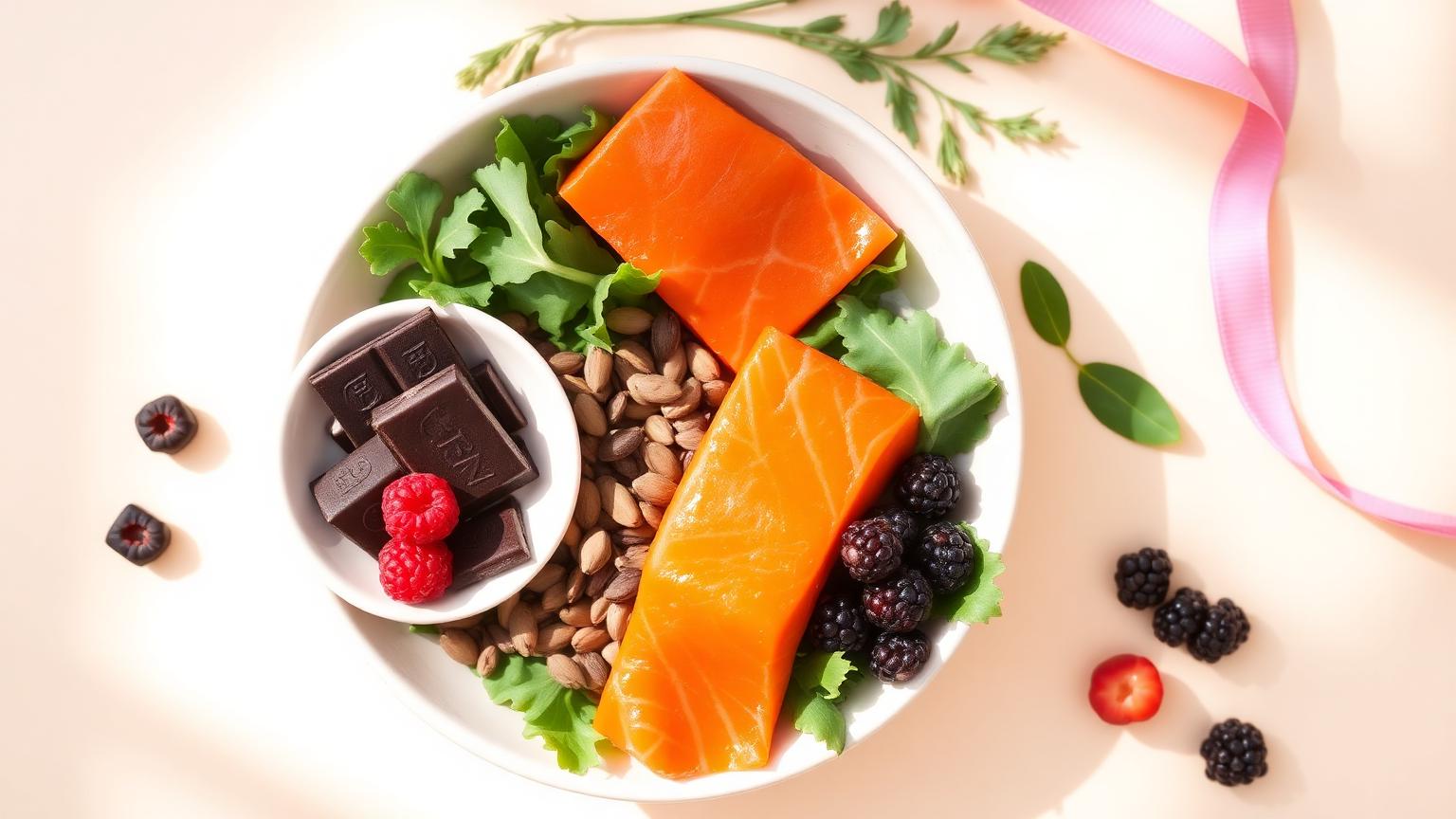
Magnesium, fiber and protein. Some studies suggest magnesium may help relax uterine muscle and reduce cramp severity, though results vary. Nuts, seeds, dark chocolate and bananas add some to your day naturally.
Cravings without guilt. Wanting salt or sugar before and during your period is common, and it isn't a failure of willpower. Pairing something sweet with protein, like dark chocolate with almonds, may help you avoid an energy crash. If luteal-phase sugar cravings regularly take over your afternoons, Sweet Balance is a hormone-free option made with vitamins, minerals and naturally derived ingredients. Some women find it fits well into their routine, but individual results vary.
Office-lunch swaps that may reduce bloating:
- Swap salty takeout soup for a grain bowl with vegetables and lean protein.
- Choose still water over fizzy drinks.
- Have a smaller lunch plus an afternoon snack instead of one heavy meal.
| Snack or drink | What it offers | Desk-friendly? |
|---|---|---|
| Almonds or cashews | Magnesium, protein | Yes, shelf-stable |
| Dark chocolate | Magnesium, comfort | Yes, small squares |
| Banana | Potassium, fiber | Yes, no prep |
| Greek yogurt | Protein, calcium | Needs a fridge |
| Ginger tea | Warmth, ginger | Yes, tea bag |
| Peppermint tea | Warm, caffeine-free | Yes, tea bag |
| Coffee | Alertness | Depends on you |
| Water | Hydration | Always |
Getting Through Meetings, Presentations and Deadlines
Cramps don't check your calendar, but you can plan your calendar around them.
- Protect your best hours. If cramps usually peak in the morning, schedule deep work for the afternoon, or the other way around. Your tracking data will show you the pattern.
- Build a buffer before big moments. Block 15 minutes before a presentation so you aren't rushing straight from one call to the next.
- Use camera-off or walking meetings when appropriate. For internal check-ins, a camera-off call lets you sit with a heating pad. A walking one-on-one gets you moving.
- Sit near the door. In in-person meetings, you can step out without making a scene.
- Do a quick reset before presenting. Put on a fresh heat patch, drink some water and do three rounds of 4-7-8 breathing. It takes about two minutes.
- Renegotiate deadlines without oversharing. "I'm running a bit behind today. Can I get this to you by noon tomorrow?" is a complete, professional request. Delegating is good teamwork, too.
- Make the most of remote days. A heating pad on your lap, comfortable clothes and the option to lie down between calls are real advantages.
How to Talk to Your Manager (Without Oversharing)
Working through period pain shouldn't mean suffering in silence, and you decide how much to share. "I'm dealing with a health issue today" is enough. You don't owe anyone details.
Short scripts you can copy:
- To work from home: "Hi [Name], I'm not feeling well this morning and would like to work from home today. I'll be online and reachable as usual."
- To start late: "I'm dealing with a health issue this morning. I'll be in by 11 and will catch up on anything I miss."
- To shift a meeting: "Could we move our 10 a.m. to this afternoon or tomorrow? I want to give it my full attention."
- If you're comfortable being open: "I get painful periods, and today's a rough day. I may need a little flexibility, but my deadlines are on track."
Know your workplace policies. Check what your employer offers for sick leave, flexible hours and remote work. Menstrual leave laws vary widely:
- Japan: its menstrual leave law dates back to 1947, according to WION.
- South Korea: one day of unpaid menstrual leave per month.
- Spain: the first European country to offer paid leave for period pain, with a doctor's note.
- Indonesia: the law gives two days of paid menstrual leave per month, though in practice many employers apply it at their own discretion.
Most countries have no specific menstrual leave, so your company's own policy usually matters most.
Push for a period-friendly workplace. Ask HR about stocking bathrooms with free period products, offering flexible scheduling and setting up a quiet room. In the Dutch study, about two-thirds of respondents (68%) said they wished they had more flexibility in their tasks and working hours during their period.
Every matter-of-fact mention of periods at work makes it a little easier for the next person to speak up.
Beyond Today: How to Manage Period Cramps at Work All Month Long
Handling period cramps at the office gets easier when you support your body all month, not just on day one.
Cycle syncing basics. Your cycle has four phases:
- Menstrual phase: your period. Energy often dips, and cramps are most likely.
- Follicular phase: after your period. Many women feel energy and focus building.
- Ovulatory phase: mid-cycle. Some women feel their most social and confident.
- Luteal phase: before your period. Cravings, bloating, fatigue and mood shifts often show up here.
Everyone's pattern is different. Tracking helps you plan demanding work for your stronger days.
Habits that may help over time:
- Regular movement throughout the month, not just during your period
- Consistent sleep, especially in the luteal phase
- Stress management, like walks, breathing or saying no to one more commitment
- Steady meals with protein, fiber and magnesium-rich foods
Where Feme fits in. Feme's range is built around the four phases:
- Full Balance is designed as a daily foundation.
- PMS SOS offers targeted PMS support.
Both are hormone-free and made with vitamins, minerals and naturally derived ingredients. Individual results vary.
These statements have not been evaluated by the Food and Drug Administration. Dietary supplements are not intended to diagnose, treat, cure or prevent any disease. Talk to your healthcare provider before starting any supplement, especially if you take medication, use hormonal birth control, are pregnant or breastfeeding, or have severe symptoms.
When Cramps Are More Than "Just Cramps": Signs to See a Doctor
Common doesn't mean you have to put up with it. See a healthcare provider if you notice:
- Pain that regularly makes you miss work or cancel plans
- Pain that doesn't get better with over-the-counter pain relievers taken as directed
- Very heavy bleeding, such as soaking through one or more pads or tampons every hour for several hours in a row, or passing large clots
- Pelvic pain outside your period
- Pain during sex
- Fever along with pelvic pain
- Sudden changes in your cycle or in how painful your periods are
What a provider may look into. According to the Mayo Clinic, conditions that can cause menstrual cramps include:
- Endometriosis
- Uterine fibroids
- Adenomyosis
- Pelvic inflammatory disease
- Cervical stenosis
These are examples of what may be checked, not a diagnosis. Only a clinician can work out what's going on for you.
How to prepare for your appointment:
- Log your pain on a 0–10 scale each day of your period for two or three cycles.
- Note your bleeding: how often you change products and whether you pass clots.
- Write down what you've tried and how well it worked.
- Record how often cramps affect work, sleep or plans. That detail helps your provider understand the impact.
If someone brushes off your pain, it's okay to ask for a second opinion.
FAQ: How to Manage Period Cramps at Work
Is it okay to call in sick for period cramps? Yes. If cramps make it hard to work safely or productively, that's a legitimate reason to use sick leave or ask for flexibility. You don't have to name the cause; "I'm unwell today" is enough. Check your employer's leave policy. If you're regularly missing work because of period pain, talk to a healthcare provider about what's behind it.
How can I relieve period cramps quickly at my desk without anyone noticing? A stick-on heat patch under your clothes is the most discreet option. Add a warm ginger or peppermint tea, slow diaphragmatic breathing and seated pelvic tilts, which look like shifting in your chair. If you use over-the-counter pain relief, take it as directed on the label. A short walk to refill your water bottle can also ease tension.
Can I use a heating pad at the office? Often, yes, but check first. Some workplaces restrict personal plug-in devices for fire safety reasons. If plug-ins aren't allowed, adhesive heat patches or a hot-water bottle filled at the office kettle work well. Research suggests continuous low-level heat may ease period pain. Always follow product directions to avoid burns, and don't fall asleep on a heating pad.
What should I eat at work to help with period cramps? Choose steady, simple foods: nuts, bananas, yogurt, dark chocolate and lunches built around vegetables, whole grains and lean protein. These provide magnesium, fiber and protein for steadier energy. Drink plenty of water and warm drinks, and go easy on salty takeout, which may add to bloating. Notice whether caffeine affects you and adjust accordingly.
Do cycle-synced supplements help with period cramps at work? Some women find cycle-synced supplements a helpful part of their routine, but they aren't a quick fix or a substitute for medical care. Feme's products, such as PMS SOS and Full Balance, are hormone-free and made with vitamins, minerals and naturally derived ingredients. Individual results vary. Check with your provider first, especially if you take medication or use birth control.
When should I see a doctor about period pain that affects my job? See a provider if cramps:
- Regularly make you miss work
- Don't improve with over-the-counter pain relief
- Come with very heavy bleeding or fever
- Show up outside your period or during sex
- Change suddenly
Bring a few cycles of symptom notes. Pain that disrupts your working life deserves a proper evaluation.