Vitex vs Magnesium for PMS: Which Fits Your Symptoms Better?
If your luteal phase shows up with cramps, tight jeans and a short fuse, you've probably seen two names come up again and again: vitex and magnesium. This vitex vs magnesium for PMS guide doesn't crown one universal winner. Instead, it matches each option to specific symptoms, timelines and safety flags. Vitex is an herb that appears to act on hormone-signaling pathways. Magnesium is a mineral your body uses every day.
PMS is common. Most menstruating women notice at least some premenstrual symptoms, and for a smaller group they're severe enough to disrupt daily activities. Common doesn't mean you have to put up with it.
Key takeaways
- Magnesium is usually the gentler first step for cramps, bloating, tension and restless luteal-phase sleep.
- Vitex (chasteberry) has more research behind it for breast tenderness and broad luteal symptoms. It takes about three cycles to judge and comes with more interaction warnings.
- Vitex isn't a hormone, but it affects hormone signaling. That matters if you use birth control or HRT, or you're trying to conceive.
- Neither one diagnoses, treats or cures PMS or PMDD. If your symptoms are severe or getting worse, see a healthcare provider.
The Short Answer: Vitex vs Magnesium at a Glance
| Factor | Vitex (chasteberry) | Magnesium |
|---|---|---|
| What it is | Herbal fruit extract | Essential mineral |
| Works via | Pituitary, dopamine, prolactin | Muscle and nerve function |
| Best known for | Breast tenderness, luteal symptoms | Cramps, bloating, tension |
| Time to judge | About 3 cycles | About 2 cycles |
| Safety factor | Vitex | Magnesium |
|---|---|---|
| Is it a hormone? | No, but affects hormone signaling | No |
| Main flags | Birth control, HRT, dopamine drugs | Kidney issues, some medications |
| Common side effects | Headache, nausea, cycle changes | Loose stools |
Quick verdict: For most women, magnesium is the easier place to start. It's a nutrient with well-understood safety limits, and national survey data suggest about half of US adults get less magnesium from food than they need. Vitex may suit some women with a clear pattern of luteal-phase symptoms such as breast tenderness. Because it has more interactions and cautions, talk to a provider before you start it.
What Vitex (Chasteberry) Is and How It May Work
Where it comes from
Vitex comes from the berries of Vitex agnus-castus, also called chaste tree or monk's pepper. It's a small deciduous tree native to the Mediterranean and Western Asia, and European herbalists have used it for centuries. The European Medicines Agency recognizes its traditional use for minor premenstrual symptoms.
The proposed mechanism
Vitex doesn't seem to work like estrogen or progesterone. Lab research suggests vitex extracts interact with dopamine D2 receptors, which may lead to lower prolactin release. Some researchers link raised prolactin to cyclical breast pain and other luteal symptoms, which is why vitex comes up so often for breast tenderness.
What to realistically expect
Vitex builds slowly. Most trials ran for three menstrual cycles, and some product guidance suggests using it for at least three months before judging whether it helps.
The evidence: promising but limited
A 2013 systematic review that included eight randomized PMS trials found that most reported benefits from vitex. It also flagged limitations in study quality and the need for more independent studies to confirm the results. NCCIH notes that a few studies suggest chasteberry may help PMS symptoms, but more research is needed. Products also vary in extract type and dose, and results differ from woman to woman.
In plain English: vitex isn't a hormone, but it has hormone-adjacent effects. If you'd rather avoid anything that acts on hormone signaling, that difference matters.
What Magnesium Does for PMS Symptoms
Magnesium helps more than 300 enzymes carry out chemical reactions in the body, including those involved in muscle contraction and nerve function. Because of its role in muscles and nerves, many women look to magnesium for PMS symptoms like:
- Cramps and muscle tension
- Water retention and bloating
- Irritability and feeling on edge
- Restless sleep in the luteal phase
There's some research behind this. In one small trial, women took 200 mg of magnesium a day for two cycles. It eased premenstrual fluid-retention symptoms more than placebo, but the difference only showed up in the second month. Give it more than a few days before you decide.
Magnesium forms, compared simply
| Form | Known for | Watch out for |
|---|---|---|
| Glycinate | Often described as gentle; popular for evening use | Usually costs more |
| Citrate | Well absorbed | May loosen stools |
| Oxide | Budget option | Less well absorbed |
Magnesium glycinate is often described as well absorbed and easy on the stomach, though head-to-head studies are limited. Magnesium oxide is generally less bioavailable than other common forms.
Food first
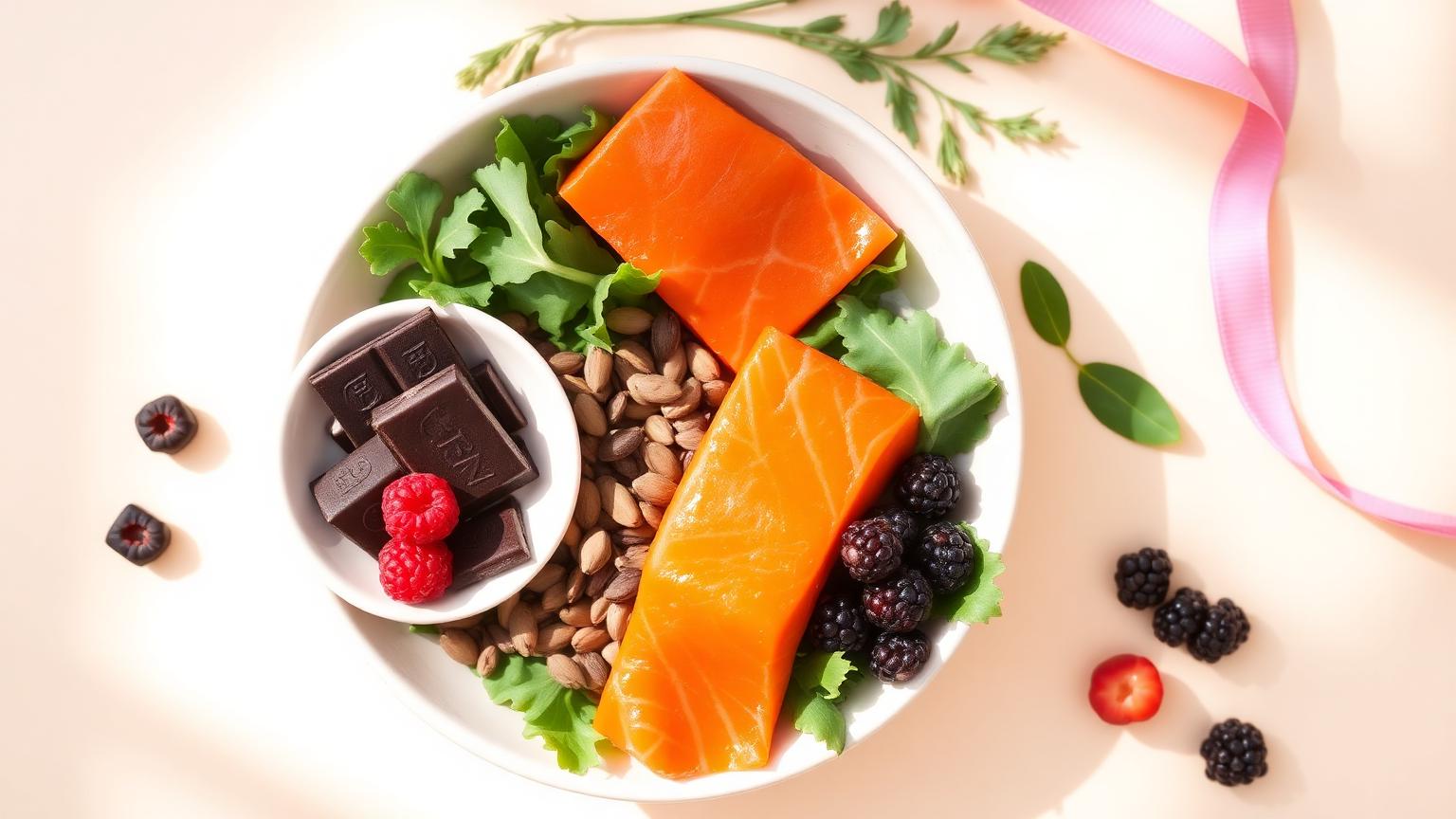
Supplements top up a diet; they don't replace one. Good sources include green leafy vegetables, unrefined grains, legumes, beans and nuts, plus seeds and dark chocolate. A handful of pumpkin seeds or a square of dark chocolate in your luteal phase counts.
The B6 pairing
Many PMS routines pair magnesium with vitamin B6. In one trial, magnesium plus B6 produced the biggest drop in PMS scores, and placebo the smallest. Research on other nutrients, such as calcium and zinc, is more mixed, and study quality varies.
Vitex vs Magnesium for PMS, Symptom by Symptom
| Symptom | Vitex | Magnesium |
|---|---|---|
| Cramps | Less direct link | More commonly used |
| Breast tenderness | Most studied | Limited data |
| Bloating | Sometimes reported | Commonly tried |
| Mood, irritability | Studied | Studied, often with B6 |
Cramps: Magnesium comes up far more often for cramps because of its role in muscle function. Vitex is linked to cramps less directly.
Breast tenderness: This is where vitex has the most research. A meta-analysis found vitex eased breast pain and lowered raised prolactin in women of reproductive age with cyclic breast pain.
Bloating and water retention: Magnesium is the more common choice here, and the fluid-retention trial above supports trying it.
Mood swings and irritability: Researchers have looked at both. If your mood changes feel severe, such as hopelessness, rage or anxiety that strains your relationships or work, ask a doctor to screen you for PMDD. It's a recognized condition, and you shouldn't have to push through it alone.
Sugar cravings and fatigue: There's little strong evidence that either one fixes cravings. Balanced meals with protein and fiber, regular snacks and good sleep tend to help with luteal-phase energy dips.
Speed and commitment: Magnesium may need about two cycles; in the fluid-retention trial, the benefit appeared only in the second month. Vitex usually takes about three cycles.
Vitex Side Effects and Who Should Be Careful
Most reported vitex side effects are mild, but they're real. They include nausea, headache, digestive upset, acne, rash and menstrual changes.
Talk to a clinician before taking vitex if any of these apply:
- You use hormonal birth control, HRT or progesterone. NCCIH advises that people taking birth control pills shouldn't use chasteberry, because it may affect hormone levels. If you use HRT or progesterone, check with your prescriber first.
- You're having fertility treatment or trying to conceive. Vitex affects reproductive hormone signaling, so your fertility team should know about it.
- You take dopamine-related medications. NCCIH advises people taking dopamine-related drugs, such as certain antipsychotics and Parkinson's disease medications, to avoid chasteberry, because it may affect dopamine activity in the brain.
- You're pregnant or breastfeeding. Avoid it unless a qualified clinician advises otherwise.
- You have a hormone-sensitive condition, PCOS or endometriosis. Experts advise avoiding vitex with a history of hormone-sensitive cancer or an active prolactinoma. For PCOS or endometriosis, ask your clinician first.
Bottom line: an herb that shifts hormone signaling deserves the same care you'd give any active ingredient.
Magnesium Side Effects, Dosing Basics and Safety
Magnesium is usually well tolerated, but the dose matters.
- Digestive effects: Loose stools are the most common complaint, especially with citrate and oxide. High-dose supplements can cause diarrhea, nausea and cramping in some people. Splitting your dose across the day may help.
- Upper limit: For adults, the tolerable upper intake level is 350 mg a day from supplements. Magnesium from food doesn't count toward it, because healthy kidneys clear the excess in urine. Some researchers have called for this limit to be re-evaluated, but it remains the official guidance.
- Check before stacking: Magnesium turns up in multivitamins, sleep blends, PMS formulas and antacids. Add up the amounts on every label before you combine products.
- Ask a doctor first if you have kidney problems. Too much supplemental magnesium is a particular concern when kidney function is impaired. Also check with a doctor or pharmacist if you take certain antibiotics, bisphosphonates, diuretics or acid-reducing medications (PPIs). Magnesium can affect how some of these are absorbed, and some of them can change your magnesium levels.
- Timing: Some women prefer an evening dose. Taking it consistently matters more than the exact time.
Can You Take Vitex and Magnesium Together for PMS?
Some women combine them, since they work in different ways. A few practical rules:
- Start one at a time. If you start both at once and feel better, you won't know which one helped, or which one caused a side effect.
- Check with a provider first, especially if you take medication or use birth control.
- Track by cycle phase for at least two to three cycles. Vitex needs about three cycles anyway, so the log gives you something concrete to compare.
A simple tracking checklist (rate each 0–3 daily in your luteal phase):
- Cramps
- Bloating or water retention
- Mood (irritability, low mood, anxiety)
- Cravings
- Sleep quality
- Energy
- Libido
- Breast tenderness
Bring this log to your next appointment. It's a much stronger starting point than "I just feel off before my period."
Hormone-Free PMS Relief: A Cycle-Synced Approach
You don't have to choose between one mineral and one herb. A middle path is a cycle-synced routine: foundational vitamins and minerals every day, plus targeted support in the phases where your symptoms show up.
That's the idea behind Feme, a women's wellness brand built around the four phases of the menstrual cycle. The brand describes its formulas as hormone-free and made with vitamins, minerals and naturally derived ingredients. The range includes:
- Full Balance: the daily foundation formula
- PMS SOS: targeted support for the luteal phase
- Sweet Balance: positioned for luteal-phase sugar cravings
- Mojo: positioned for energy and desire
Feme says it has run a consumer test of PMS SOS. Consumer feedback isn't a clinical trial, so read it as "some women noticed a difference," not a guarantee. Individual results vary. Check the brand's product page for exactly what the test measured and how many people took part.
If you're not sure where to start, Feme's hormone wellness quiz matches products to your symptoms. Before you add a cycle-synced formula to a standalone magnesium supplement, read every label for magnesium, B6 or herbal extracts. That way you won't double up or go past the 350 mg supplemental limit.
Which Should You Choose? A Quick Decision Guide
- Mostly cramps, bloating or poor sleep: Start with magnesium (glycinate is a gentle choice) or a hormone-free cycle-synced formula.
- Mostly breast tenderness and broad luteal symptoms, with no birth control or relevant medications: Vitex may be worth discussing with your provider. Plan for about three cycles.
- On birth control, pregnant, trying to conceive, or managing PCOS, endometriosis or another hormonal condition: Choose options that don't act on hormone signaling, such as magnesium, and get medical advice before trying an herb like vitex.
- See a doctor before trying either one if you have debilitating pain, heavy bleeding, mood changes that disrupt your life, or symptoms that could point to PMDD, endometriosis or another condition.
Cycle discomfort isn't something you just have to accept, and it's fine to adjust your plan as you learn what works for your body.
Supplement disclaimer: This article is for general information only. Dietary supplements, including those mentioned here, are not intended to diagnose, treat, cure or prevent any disease. Talk to a healthcare provider before starting a supplement, especially if you're pregnant, breastfeeding, taking medication or using hormonal birth control.
FAQ
Is vitex or magnesium better for PMS cramps?
Magnesium is the option more often discussed for cramps because of its role in muscle and nerve function. Vitex is studied more for breast tenderness and broad luteal symptoms, and its link to cramps is less direct. If your cramps are severe or stop you from going about your day, see a provider to rule out endometriosis or another cause.
How long does vitex take to work for PMS?
Vitex works slowly. Most studies ran for three menstrual cycles, and product guidance often suggests giving it at least three months before deciding whether it helps. Track your symptoms every day during that time so you can compare cycles. If you notice side effects such as rash, headache or unusual cycle changes, stop and talk to your provider.
Can I take vitex while on birth control?
Check with your provider first. NCCIH advises that people taking birth control pills shouldn't use chasteberry, because it may affect hormone levels. The same caution applies if you use HRT. If you use birth control, mineral-based options such as magnesium are usually the simpler choice.
What type of magnesium is best for PMS symptoms?
Magnesium glycinate is a popular choice because it's often described as well absorbed and gentle on the stomach. Citrate also absorbs well but may loosen stools. Oxide is inexpensive but generally less well absorbed. Whichever form you choose, keep total supplemental magnesium within 350 mg a day, and check your other supplements for hidden magnesium so you don't double up.
Is vitex a hormone, and does it affect hormone levels?
Vitex isn't a hormone and doesn't contain estrogen or progesterone. It's an herbal fruit extract. Research suggests it acts on dopamine receptors and may lower prolactin release, which means it can influence hormone signaling. That's why experts flag interactions with birth control, HRT, fertility treatment and dopamine-related medications. If you'd rather avoid anything that affects hormone signaling, take that into account.
What are hormone-free options for PMS relief?
Hormone-free options include magnesium, vitamin B6, magnesium-rich foods, regular movement, steady meals and good sleep habits. Cycle-synced supplements made with vitamins, minerals and naturally derived ingredients are marketed as phase-based support without hormones. Track your symptoms for a few cycles to see what helps, and see a clinician if your symptoms are severe.